Tanzania's vice-president announces resignation in unprecedented move
Tanzania's Vice-President Emmanuel Nchimbi has resigned, less than a year after taking office, marking an unprecedented move in the country's post-independence history.
Intelligence analysis by Gemini 2.5 Flash
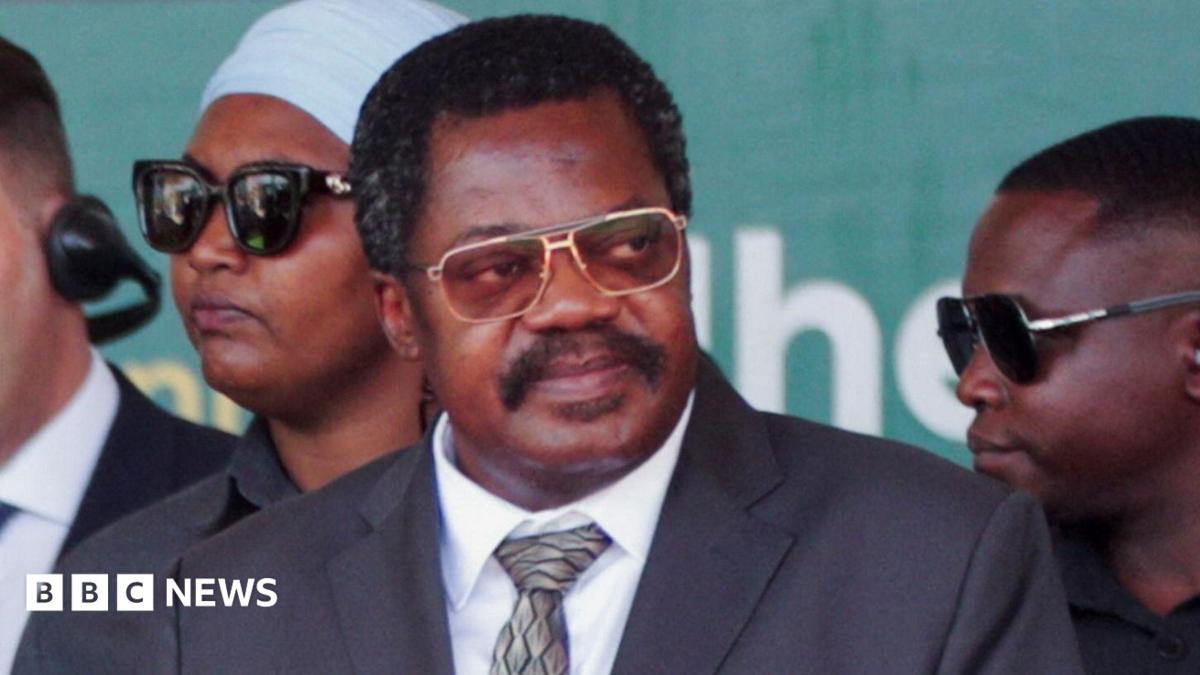
Emmanuel Nchimbi, 54, announced his resignation via a letter to President Samia Suluhu Hassan, citing a promise to step down if the president desired a change. This decision follows media reports of a fallout between the two leaders and comes after a disputed election last year that led to significant protests and casualties.
Imagine the head teacher of a big school, Mrs. Samia, had a special helper, Mr. Emmanuel, who promised to leave if she ever felt she needed a different helper. Now, after less than a year, Mr. Emmanuel has decided to leave because he thinks Mrs. Samia wants someone new. This is a really big deal because no helper has ever left like this before in the school's history, and some people think it's because they weren't getting along.
Analysis
Emmanuel Nchimbi
Emmanuel Nchimbi's resignation as Tanzania's Vice-President is a truly unprecedented event in the nation's history, marking the first time a vice-president has stepped down since Tanzania gained independence in 1964. At 54 years old, Nchimbi's departure comes less than 10 months after he was sworn into office, having served as President Samia Suluhu Hassan's running mate in the previous presidential election. His decision, communicated through a brief letter to the president shared on Instagram, cites a prior promise to resign if President Hassan felt a change in leadership was necessary.
Nchimbi's career in public service has been extensive, encompassing various high-profile roles before his vice-presidency. He previously held the influential position of secretary-general for the ruling Chama Cha Mapinduzi (CCM) party, demonstrating his deep roots within Tanzania's political establishment. Furthermore, he served as both minister of information and home affairs, and later represented Tanzania as an ambassador to Brazil and Egypt. His sudden exit, despite such a distinguished background, underscores the significant political pressures at play within the Tanzanian government.
Samia Suluhu Hassan
The resignation of Vice-President Nchimbi is closely linked to President Samia Suluhu Hassan, with media reports widely suggesting a fallout between the two leaders. Nchimbi himself alluded to this in his resignation letter, stating, "I have become convinced, without doubt, that the president wants changes, and I have therefore decided to fulfil my promise." This statement directly implicates President Hassan's desire for a new deputy, indicating a potential divergence in vision or strategy within the executive.
The political backdrop to this development includes the presidential election that brought both Hassan and Nchimbi to power. The outcome of that election, where the winning ticket secured a reported 98% of the vote, was heavily disputed by opposition parties. This period was also marred by violent protests, which an official inquiry claimed led to the deaths of at least 500 people, with security forces accused of a brutal crackdown. The current reshuffle at the top could be seen as President Hassan's move to consolidate her authority following this contentious electoral process and its aftermath.
Chama Cha Mapinduzi (CCM)
The ruling Chama Cha Mapinduzi (CCM) party, which has dominated Tanzanian politics since independence, is at the heart of this political upheaval. Emmanuel Nchimbi's long-standing affiliation and leadership roles within the CCM, including his tenure as secretary-general, highlight his significance within the party's hierarchy. His resignation, therefore, is not merely a personal decision but a significant event for the party's internal dynamics and public image.
This high-profile departure could signal a period of internal realignment within the CCM as President Hassan seeks to appoint a new vice-president who aligns more closely with her agenda. Such a move could either strengthen her grip on power by removing perceived dissent or create new factions and challenges within the party. The stability of the CCM, and by extension the Tanzanian government, will depend on how smoothly this transition is managed and whether the new appointment can foster unity or exacerbate existing tensions within the party's ranks.
Key points
- Tanzania's Vice-President Emmanuel Nchimbi has resigned, less than 10 months after being sworn in.
- This is the first time a vice-president has stepped down since Tanzania's independence in 1964.
- Nchimbi cited a promise to President Samia Suluhu Hassan to resign if she felt a change was needed.
- The resignation follows media reports of a fallout between President Hassan and Nchimbi.
- Nchimbi previously held senior government and party positions, including secretary-general of the ruling CCM party.
President Samia Suluhu Hassan could use this opportunity to appoint a new vice-president who is more aligned with her vision, potentially leading to a more cohesive and effective government. This could consolidate her leadership and allow for smoother implementation of policies without internal friction.
The resignation could signal deeper political instability or power struggles within Tanzania's ruling Chama Cha Mapinduzi (CCM) party, potentially leading to further crackdowns on dissent or a more authoritarian approach by the presidency to maintain control, especially given the context of past disputed elections and protests.