Tarbela Dam Project Cost Explodes by Rs. 23,400 Crore, 282% Over Budget
Pakistan's Tarbela 5th Extension Hydropower Project cost has surged 282% from Rs. 82 billion to an estimated Rs. 316 billion, with ECNEC approving the revised figure amid concerns over planning and oversight.
Intelligence analysis by Llama
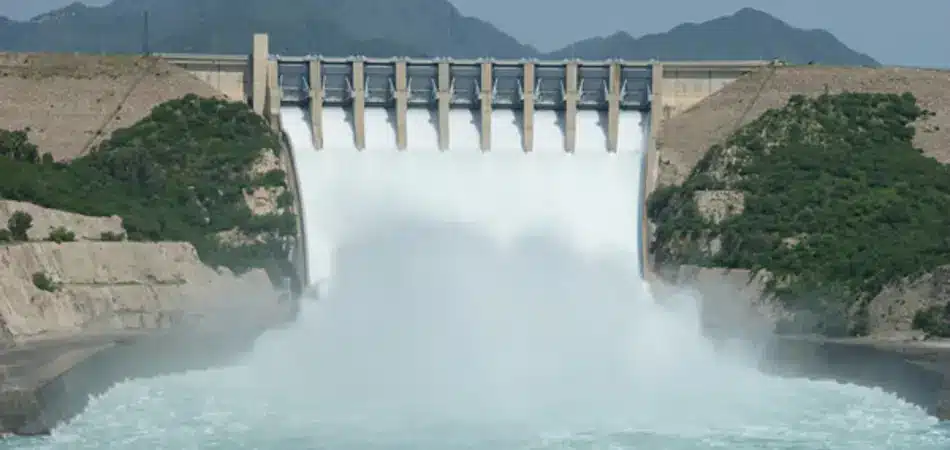
ECNEC approved a near-tripling of the Tarbela 5th Extension Hydropower Project budget to Rs. 316 billion from Rs. 82 billion, a 282% jump that has intensified scrutiny of how major public-sector infrastructure projects are managed and financed in Pakistan.
Imagine you asked your parents for Rs. 82 billion to build a big dam that makes electricity. They said yes. But then the builders kept running into problems, took longer, and the price kept going up — until the whole thing costs Rs. 316 billion, almost four times more! The grown-ups in charge said okay to the higher price, but now everyone is asking why it got so expensive and who's going to pay for all of it.
Analysis
The Rs. 316 Billion Price Tag
The Tarbela 5th Extension Hydropower Project, once approved at Rs. 82 billion, now carries an estimated price tag of Rs. 316 billion, according to the report. That Rs. 234 billion difference, framed in the headline as Rs. 23,400 crore, represents a 282% jump over the original sanction. The Executive Committee of the National Economic Council (ECNEC) has signed off on the revised cost, but the article notes that the underlying causes of the escalation remain murky. Without a detailed breakdown from authorities, observers are left to wonder whether the surge reflects genuine scope changes, currency depreciation, commodity price swings, or plain cost-plus contracting without adequate discipline. The scale of the overrun — nearly four times the original figure — is unusual even by the standards of large hydropower projects, which routinely face double-digit-percentage cost growth but rarely approach triple digits.
ECNEC Approval and the Accountability Gap
The fact that ECNEC ultimately approved the ballooning budget, despite acknowledged delays and structural setbacks at the construction site, is arguably the most consequential detail in the report. ECNEC is the country's highest forum for clearing public-sector development projects, and its endorsement effectively converts a controversial overrun into a sanctioned liability. The article flags concerns over what factors led to the massive increase and whether the additional financial burden could have been avoided through better planning and supervision. It also raises the question of financing and repayment: with the revised cost standing at Rs. 316 billion, stakeholders are seeking clarity on how the additional funds will be arranged and ultimately repaid. Pakistan's energy sector already carries circular-debt overhangs running into hundreds of billions of rupees, and any new cost escalation feeds directly into that pressure on the national exchequer.
Strategic Stakes of Tarbela 5
The project's strategic rationale has not changed: the Tarbela 5th Extension is intended to increase hydropower generation capacity and strengthen Pakistan's energy supply, according to the article. In a country where thermal fuel imports drain foreign exchange and load-shedding remains a recurring political irritant, additional clean, domestic baseload generation has clear economic value. The question raised by the report is whether the project is being delivered efficiently and whether adequate accountability mechanisms are in place. A 282% cost overrun, paired with reported delays and technical setbacks, suggests the answer is no. The episode is likely to feed into broader debates about how major public-sector infrastructure projects are procured, supervised, and audited — debates that cut across hydropower, road, and rail investments across the federation.
Key points
- Tarbela 5th Extension Hydropower Project cost has surged 282% from Rs. 82 billion to an estimated Rs. 316 billion.
- ECNEC approved the revised cost despite acknowledged delays and structural setbacks at the construction site.
- Stakeholders are seeking clarity on how the additional Rs. 234 billion will be financed and repaid.
- The report raises broader concerns over planning, supervision, and accountability in major public-sector infrastructure projects.
- The project aims to expand Pakistan's hydropower capacity but the cost escalation has intensified scrutiny of delivery efficiency.
If the underlying drivers of the 282% overrun are not publicly disclosed and ring-fenced, future hydropower and infrastructure projects risk repeating the pattern, deepening Pakistan's circular debt and adding to the foreign-exchange burden of energy imports already crowding out development spending.