Targeted strikes will continue until the enemy's total surrender
Iran's Supreme National Security Council secretary says retaliatory strikes will continue until the US achieves 'complete surrender,' accusing Washington of violating a Pakistan-brokered ceasefire.
Intelligence analysis by Llama
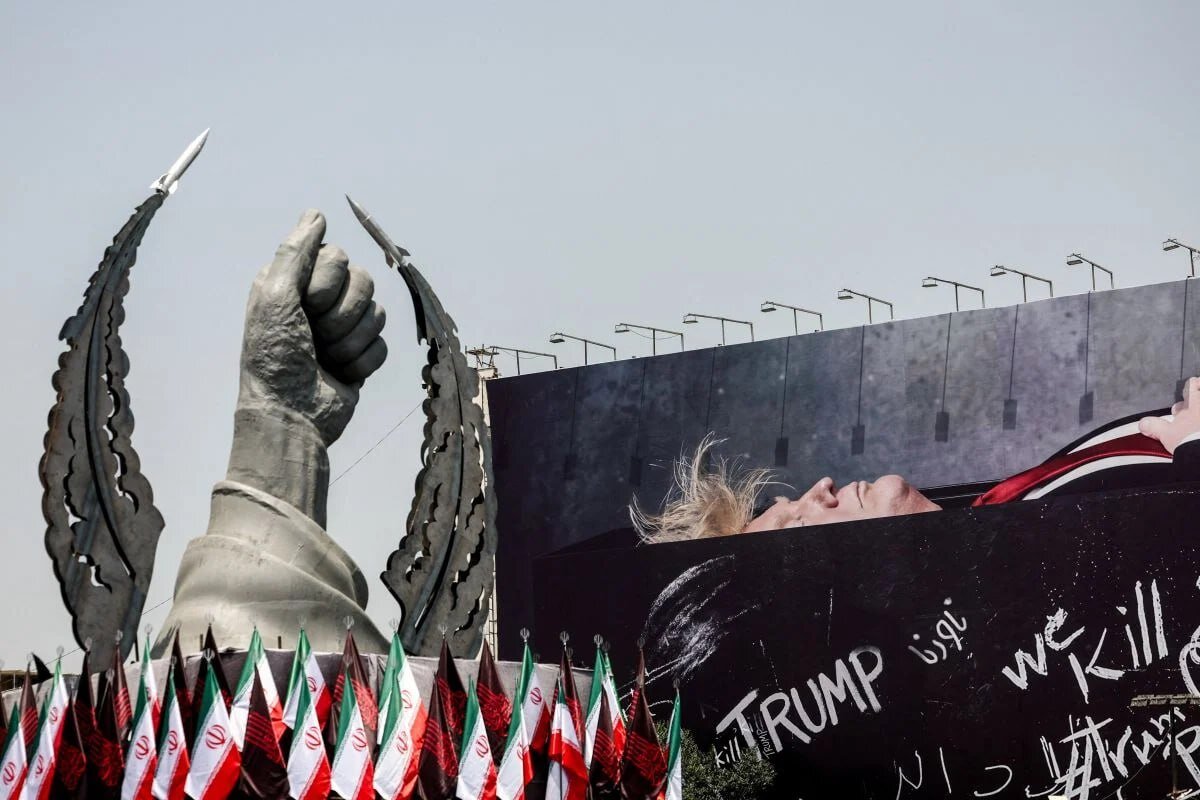
Tehran escalates rhetoric as senior military commanders announce a new retaliatory doctrine following alleged US ceasefire violations. Former Israeli and European voices suggest Washington, not Tehran, undermined the framework.
Imagine two kids on a playground who agreed to stop fighting, but one kept poking the other. The poked kid says, 'Every time you hurt one of my friends, I will get one of yours back, and I won't stop until you give up.' Some grown-ups who were watching say the first kid broke the promise first, and now the second kid has stronger slingshots than before.
Analysis
A New Battlefield Equation
Iran's military leadership has formally adopted what Major General Ali Abdollahi called 'a new battlefield equation,' one that links every Iranian civilian casualty to the death of an American service member. According to the Tehran Times, Abdollahi framed this not as a wartime expedient but as a 'permanent operational doctrine,' suggesting the rule of engagement will outlast the current crisis. Mohammad Baqer Zolqadr, secretary of the Supreme National Security Council, escalated the language further, declaring that Iranian strikes would persist until the enemy's 'complete surrender' and characterizing every smoke plume in the region as evidence of attacks on US military, security, or financial assets. The framing matters: Tehran is repositioning from a posture of proportionate retaliation to one of declared strategic attrition, raising the political cost of continued US pressure far beyond a single round of strikes.
The Ceasefire That Wasn't
The most striking element of the reporting is the coordinated criticism of Washington's conduct from figures outside Iran. Former Israeli negotiator Daniel Levy told an interviewer, according to the article, that the United States — not Tehran — was responsible for undermining the Pakistan-brokered framework negotiated largely by Vice President JD Vance. Levy cited Washington's failure to release frozen Iranian assets and the introduction of new demands on commercial shipping through the Strait of Hormuz that were not part of the original agreement. Former EU foreign policy chief Josep Borrell offered a parallel European assessment, calling the military campaign unsuccessful for its initiators and arguing that the brief diplomatic window ultimately strengthened Tehran's position. Coming from Israeli and European sources, these critiques complicate the Western narrative of Iranian intransigence and suggest that the diplomatic collapse may be self-inflicted.
Iran's Missile Transformation and the Erbil Shadow
Beyond rhetoric, military analysts quoted by The Guardian describe what Andreas Krieg of King's College London called a 'real transformation' in Iran's missile force: improved precision guidance, terminal maneuverability, and coordinated salvo operations, with optical and thermal seekers that resist electronic jamming. The report claims roughly 70 percent of Iran's missile arsenal remained operational even after extensive US and Israeli strikes, and notes that dwindling US Patriot and THAAD interceptor stockpiles have complicated the defense of American installations. A separate drone incident near Erbil airport — intercepted before reaching US facilities — underscored that the confrontation is no longer bilateral but multi-theater, stretching from the Persian Gulf into Iraqi Kurdistan. The combination of doctrine, capability, and geography suggests that any renewed escalation would be qualitatively different from the earlier phase of the conflict.
Key points
- Iran's Supreme National Security Council secretary Zolqadr vowed strikes will continue until 'complete surrender.'
- Major General Abdollahi announced a permanent retaliatory doctrine linking US civilian-casualty strikes to American service-member deaths.
- Former Israeli negotiator Daniel Levy accused Washington, not Tehran, of violating the Pakistan-brokered ceasefire framework.
- Analysts quoted by The Guardian said Iran's missile capabilities have undergone a 'real transformation,' with 70% of arsenal surviving prior strikes.
- A drone was intercepted near Erbil airport, highlighting the multi-theater expansion of the confrontation.
If the US genuinely honors the original Pakistan-brokered framework, releases frozen assets, and refrains from imposing new conditions on Strait of Hormuz shipping, the de-escalation channel Levy describes could reopen. International pressure from European capitals and former Israeli negotiators may give Washington political cover to step back without appearing to capitulate.
If Iran's declared 'new battlefield equation' is implemented, civilian-to-service-member casualty equivalence could produce a rapid spiral of escalation, particularly given the Erbil-area drone incident and the multi-theater reach already demonstrated. The reported 70 percent missile survival rate combined with shrinking US interceptor inventories suggests the cost of any new campaign could be significantly higher than the previous one, while fragile ceasefires across West Asia risk collapse.
Market signals
- OIL Renewed US-Iran hostilities and reported disputes over Strait of Hormuz shipping rules directly threaten Gulf oil supply routes, per the article's framing.
- XAU Escalation rhetoric, multi-theater drone incidents, and ceasefire collapse typically drive safe-haven demand for gold.
AI-generated analysis of potential market relevance. Not financial advice.