Tehran showcases urban market management, food security expertise to foreign delegations
Tehran Municipality recently hosted foreign delegations to showcase its urban market management, logistics, and food security capabilities, aiming to foster international cooperation and urban diplomacy.
Intelligence analysis by Gemini 2.5 Flash
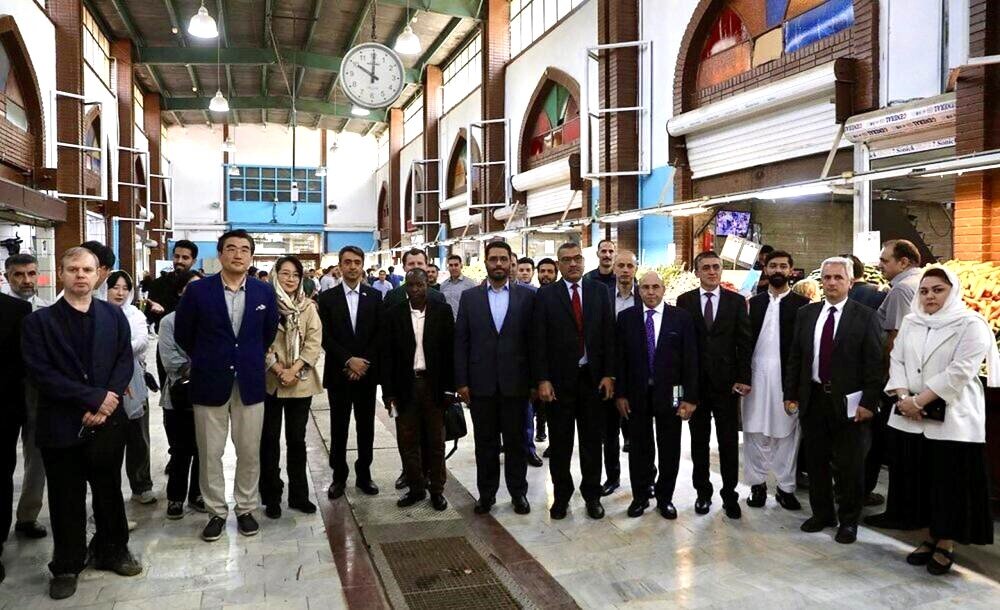
Tehran Municipality organized a specialized visit for representatives of foreign countries and international organizations, including the ECO and AMF, to demonstrate its extensive network of fruit and vegetable markets and Shahrvand stores. The initiative sought to highlight Tehran's expertise in supplying and distributing essential goods, with a focus on developing urban diplomacy an…
Imagine Tehran, a big city, showing off how good it is at making sure everyone has fresh food and well-run shops. They invited people from other countries to see their big fruit and veggie markets and grocery stores, like a school showing off its best projects. The idea is to teach others how they do it and maybe even sell some of their yummy fruits and vegetables to those countries, making friends and helping everyone get good food.
Analysis
Tehran's recent program, "Introducing Tehran’s Urban Management Capabilities," marks a strategic effort to project its expertise in urban market management and food security onto the international stage. By inviting foreign delegations from organizations like the Economic Cooperation Organization (ECO) and the Asian Mayors Forum (AMF), the municipality is actively pursuing urban diplomacy, aiming to build stronger commercial and technical relationships. The visits to key facilities such as the Jalal Al-e Ahmad Fruit and Vegetable Market and the Beihaghi Shahrvand Store provided tangible examples of Tehran's operational capacities in ensuring the supply and distribution of essential goods to its citizens. This proactive engagement underscores a broader ambition to position Tehran as a regional leader in urban logistics and food supply chain management.
320 Fruit and Vegetable Markets
The CEO of the Organization for Management of Fruit and Vegetable Markets of Tehran Municipality highlighted the impressive scale of the capital's market network, which includes approximately 320 fruit and vegetable markets. This extensive infrastructure ensures that citizens have convenient access to food distribution centers, with an average travel distance of less than 900 meters. The organization emphasized its commitment to food security, focusing on providing high-quality, healthy, and reasonably priced products. Furthermore, stringent quality control mechanisms, including a direct supply chain and continuous testing, are in place to prevent substandard goods from entering the markets, reinforcing consumer trust and health standards. This robust system forms a strong foundation for potential international partnerships.
The organization expressed its readiness to engage in international cooperation, specifically in transferring technical knowledge, sharing management models for food product distribution, and expanding the export of Iranian agricultural and protein products. Leveraging Iran's diverse agricultural capacity, the municipality sees an opportunity to facilitate trade with countries present at the meeting. By strengthening existing trade relations and developing new export routes through its extensive network, Tehran aims to create more sustainable commercial and technical collaborations, ultimately benefiting both Iran's economy and the food security of partner nations.
Shahrvand Company
Davood Qorbanian, CEO of Shahrvand Company and Vice Chairman of the Chain Stores Union, underscored the importance of expanding international cooperation. He articulated Shahrvand's readiness to facilitate the exchange of knowledge, experience, and technology, as well as to develop commercial exchanges with trade and retail actors from various countries. The company's invitation to foreign representatives to introduce capable companies from their nations for joint cooperation signals a clear intent to forge new business partnerships.
Qorbanian also highlighted Iran's significant capacities in agricultural and foodstuff production, coupled with a broad consumer market. He suggested that foreign companies could identify new opportunities for commercial activities by understanding the needs of the Iranian market. The potential areas of cooperation extend beyond just the supply of food and agricultural products to include retail technologies, such as enterprise resource planning (ERP) systems. This comprehensive approach aims to integrate foreign expertise and investment into Iran's retail sector, fostering mutual growth and technological advancement.
Key points
- Tehran Municipality hosted foreign delegations to showcase its urban market management and food security expertise.
- The program aimed to develop urban diplomacy and explore joint cooperation in logistics and essential goods distribution.
- Tehran's network includes approximately 320 fruit and vegetable markets, ensuring widespread access to food products.
- The municipality expressed readiness to transfer technical knowledge and expand exports of Iranian agricultural products.
- Shahrvand Company is open to exchanging knowledge, experience, and technology with foreign retail companies, including in retail technologies like ERP.
The initiative could lead to enhanced urban diplomacy, fostering stronger commercial and technical ties between Iran and participating countries. Increased exports of Iranian agricultural products and the exchange of retail technologies could boost Iran's economy and improve food security for its partners.
Despite the showcased capabilities, translating these visits into concrete, long-term commercial agreements might face challenges due to geopolitical factors or competitive market dynamics. The actualization of proposed knowledge transfer and export development could be slower than anticipated, requiring significant sustained effort and overcoming potential logistical hurdles.