Teodorín Obiang against France: the battle for control of 42 avenue Foch rages
Tensions are escalating between Equatorial Guinea and France over the ownership of a Parisian building at 42 avenue Foch, formerly Teodorín Obiang's residence and now claimed as an embassy.
Intelligence analysis by Gemini 2.5 Flash
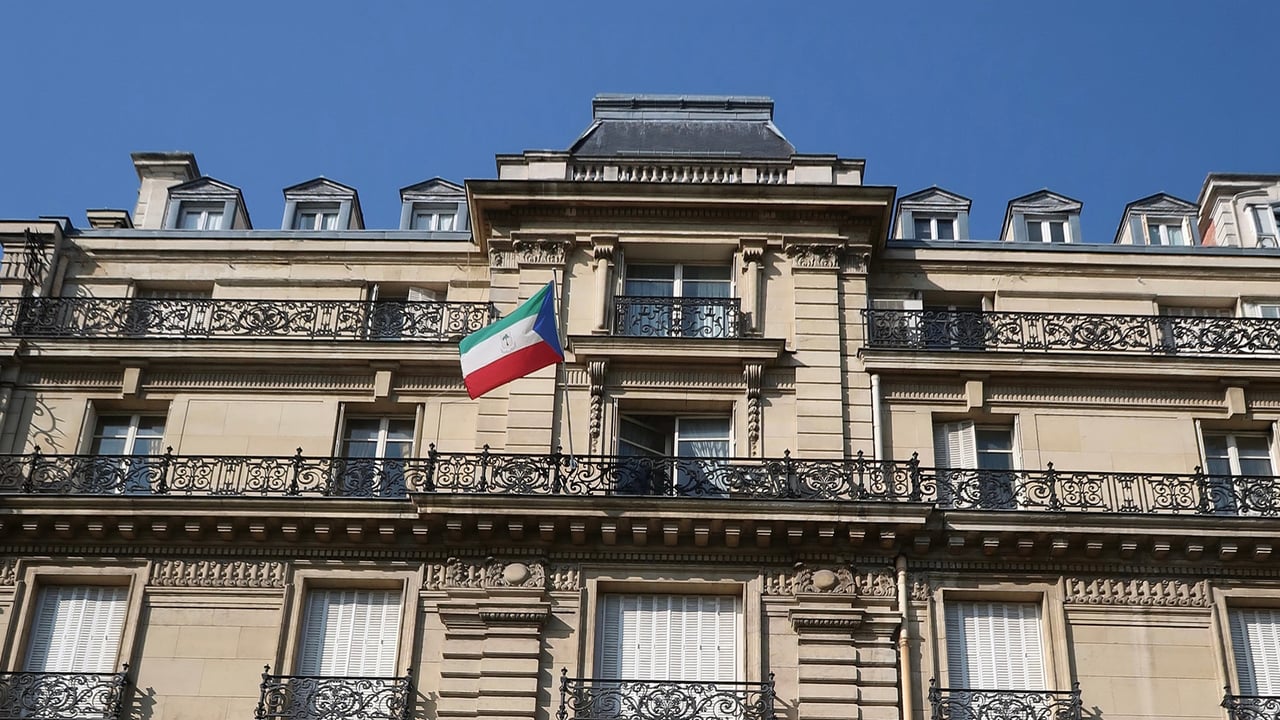
The dispute centers on a luxury property in Paris, once owned by Equatorial Guinean Vice-President Teodorín Obiang and later converted into an embassy to avoid seizure in an 'ill-gotten gains' case. Obiang is now reportedly escalating threats against France, leveraging the 'Africa Corps' as a diplomatic pressure point.
Imagine a rich kid from a country called Equatorial Guinea bought a super fancy house in Paris. But the French police thought he bought it with money that wasn't really his. To stop them from taking the house, his country quickly said, "No, it's our embassy now!" Now, France and Equatorial Guinea are having a big fight over who really owns the house, and the rich kid is even making threats, mentioning a group called 'Africa Corps' to make France back down.
Analysis
The Foch Avenue Diplomatic Chessboard
The dispute over the opulent building at 42 avenue Foch in Paris has escalated into a significant diplomatic standoff between Equatorial Guinea and France. This property, once the lavish residence of Teodoro Nguema Obiang Mangue, commonly known as Teodorín, the son of President Teodoro Obiang Nguema Mbasogo and Vice-President of Equatorial Guinea, became a focal point in France's "ill-gotten gains" investigation. French authorities had targeted Obiang for allegedly acquiring vast wealth through corruption and money laundering, using state funds to purchase luxury assets abroad. In an attempt to shield the property from seizure, Equatorial Guinea controversially converted it into its embassy, claiming diplomatic immunity. This move, however, did not fully deter French legal proceedings, leading to a complex legal and diplomatic battle over its status and ownership.
Escalating Tensions and the "Africa Corps" Card
The article highlights a hardening stance from Malabo, with Teodorín Obiang reportedly "multiplying threats" against France. A particularly striking element of this escalation is his brandishing of the "Africa Corps" as a "joker." While the article does not elaborate on the specific nature of this threat, the mention of "Africa Corps" likely refers to the growing presence and influence of Russian-backed security forces, often seen as a counter-balance to traditional Western military partnerships in Africa. By invoking such a force, Obiang signals a potential shift in alliances or a willingness to leverage alternative security partners, thereby increasing pressure on France to concede in the Foch Avenue dispute. This tactic underscores the evolving geopolitical landscape in Africa, where nations are increasingly exploring diverse partnerships beyond their historical colonial ties.
Broader Implications for Franco-African Relations
This specific conflict over a Parisian property is emblematic of the wider, often fraught, relationship between France and several African nations. The "ill-gotten gains" cases, which target leaders accused of siphoning state resources for personal enrichment, have long been a source of contention, with African governments frequently decrying them as neo-colonial interference. The current dispute with Equatorial Guinea, coupled with Obiang's veiled threats, reflects a broader trend of African states asserting greater autonomy and challenging perceived French dominance. As France seeks to redefine its engagement with the continent, such high-profile legal and diplomatic battles, especially those involving allegations of corruption and the invocation of new geopolitical players like the "Africa Corps," complicate efforts to foster stable and mutually beneficial partnerships. The outcome of the Foch Avenue saga could set a precedent for future interactions and influence the trajectory of Franco-African diplomacy.
Key points
- A diplomatic dispute has erupted between Equatorial Guinea and France over the building at 42 avenue Foch in Paris.
- The property was formerly the residence of Equatorial Guinean Vice-President Teodorín Obiang, targeted in a French 'ill-gotten gains' investigation.
- Equatorial Guinea converted the building into its embassy to claim diplomatic immunity and prevent its seizure.
- Teodorín Obiang is reportedly escalating threats against France, using the 'Africa Corps' as a point of leverage.
- The conflict highlights tensions in Franco-African relations, particularly concerning corruption allegations and evolving geopolitical alliances.
The ongoing dispute and Teodorín Obiang's escalating threats suggest a further deterioration of diplomatic relations between Equatorial Guinea and France. This could lead to prolonged legal battles, increased political friction, and potentially impact broader Franco-African relations as other nations observe the outcome.

