Tesla Starts Offering Cybercab Robotaxi Rides
Tesla has launched its Cybercab robotaxi service, initially available in Austin, Texas, via its app. Customers can hail autonomous rides, though Cybercab selection is not yet an option.
Intelligence analysis by Gemini 2.5 Flash Lite
Tesla's Cybercab robotaxi service is now live in Austin, Texas, allowing users to hail autonomous rides through a dedicated app. While the service is expanding to other Texas cities, direct selection of a Cybercab is not yet possible, with Tesla owning the initial fleet.
Imagine a car that drives itself, like a robot! Tesla is now letting people in Austin, Texas, use these special robot cars, called Cybercabs, to go places. You can use an app to call one, but you can't pick a Cybercab yet – it's like a surprise ride!
Analysis
Tesla's Robotaxi Ambitions
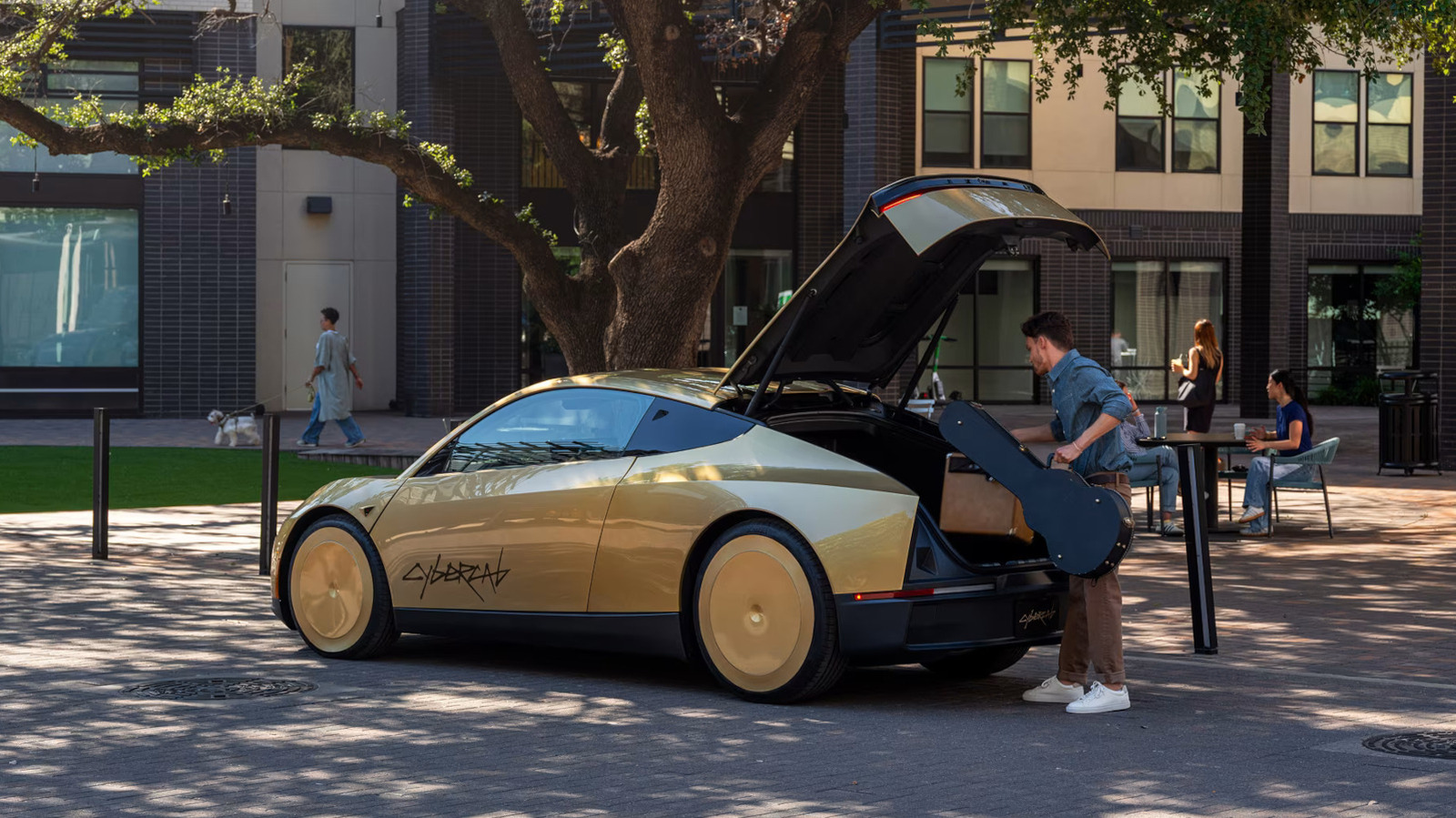
Tesla has officially entered the robotaxi market with the launch of its Cybercab service, a move that has been anticipated for years. The company has begun offering rides through its dedicated app, initially focusing on Austin, Texas. This rollout signifies a crucial transition from development and testing phases to a consumer-facing service, demonstrating Tesla's commitment to autonomous transportation. The Cybercab itself is designed from the ground up for full autonomy, featuring no steering wheel or brake pedals, and accommodating up to two passengers with bench-style seating and ample trunk space. The interior is minimalist, dominated by a large central touchscreen, reflecting a vision of a driverless future.
Austin as a Testbed
Austin, Texas, has been chosen as the initial operational hub for the Cybercab service. Tesla has received authorization to operate a substantial fleet of driverless vehicles in the state, with a portion of these being the new Cybercabs. While the exact number of Cybercabs currently deployed as taxis versus those used for ongoing testing remains unclear, their presence on public roads marks a tangible step towards widespread autonomous ride-hailing. The company's strategy appears to involve owning the initial fleet, but with a long-term vision of enabling individuals and businesses to own and operate their own robotaxi fleets, generating income through a ridesharing network.
Future Fleet Expansion
The current Cybercab offering in Austin is limited, with customers unable to specifically request a Cybercab at this time; availability depends on group size and general demand. Tesla is also actively seeking partners interested in building its robotaxi network, suggesting a phased approach to sales and deployment. The company plans to eventually sell these vehicles, likely starting with fleet purchases for businesses. This phased rollout, starting with a controlled environment in Austin and a limited number of vehicles, allows Tesla to gather real-world data, refine its autonomous driving software, and address regulatory and operational challenges before a wider expansion.
Key points
- Tesla has officially launched its Cybercab robotaxi service.
- The service is initially available in Austin, Texas, via the Robotaxi app.
- Customers cannot currently choose to hail a Cybercab specifically.
- Tesla is authorized to operate a significant fleet of driverless vehicles in Texas.
- The company plans to eventually sell Cybercabs to individuals and businesses.
The launch of Cybercab rides signifies a major stride towards fully autonomous transportation, potentially revolutionizing personal mobility and logistics. If successful, this could lead to safer, more efficient, and more accessible travel options for the public.
Challenges remain, including regulatory hurdles, public acceptance of driverless technology, and the significant technical complexities of ensuring absolute safety in diverse driving conditions. The limited initial availability and lack of direct customer choice also suggest a long road to widespread adoption.