Tesla teases Cybercab with a built-in Starlink V5 antenna
Tesla showed a Cybercab cutaway with Starlink V5, 5G LTE, and GPS built in. The company says it is for high-speed internet from space.
Intelligence analysis by GPT-5.4 Mini
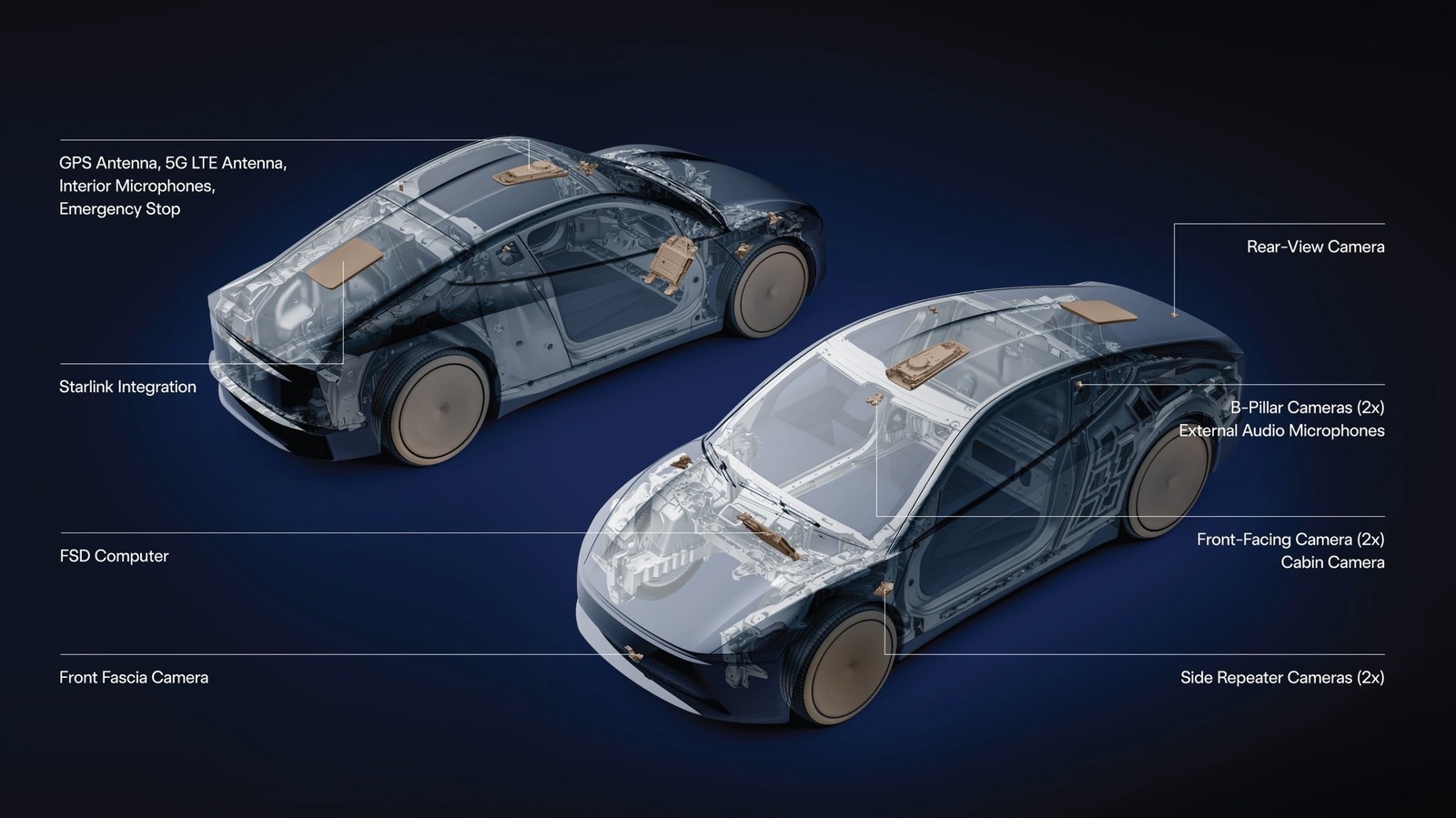
Tesla is framing the Cybercab as a vehicle with layered connectivity, not just a car with one modem. The unusual part is the Starlink dish, which appears aimed at giving the robotaxi another link to the outside world alongside cellular and GPS.
Tesla showed a small driverless taxi that has internet from the cell network and from space, like carrying both a phone and a satellite radio. That could help it stay in touch even if one signal gets weak.
Analysis
A Cybercab Built Around Connectivity
Tesla's cutaway puts network access on the same level as propulsion and sensors. The company is not just showing a robotaxi with a standard cellular modem; it is presenting a vehicle that appears designed to stay connected in several different ways at once.
That matters because autonomous vehicles depend on more than driving hardware. They also need navigation, remote oversight, fleet coordination, and a way to handle edge cases when local systems are not enough. In that sense, the Starlink dish is part of Tesla's autonomy story, not a decorative add-on.
Why Starlink Looks Bigger Than the Rides
The article makes clear that the Cybercab already has 5G LTE and GPS, and that the V5 Starlink dish is smaller and more efficient than earlier versions. That immediately raises the question of why a city taxi would need satellite internet at all when urban cellular coverage is already common.
Tesla's answer seems to be redundancy and fleet utility. The piece suggests Starlink could help with inter-vehicle communication, navigation, and remote support without relying on a cellular signal. That is a more plausible use case than simply trying to make a short city trip faster on paper.
The Musk-to-Musk Business Overlap
The strangest part of the story is not technical but corporate. Tesla is effectively showcasing a vehicle that channels benefits from SpaceX's Starlink system, which makes the design feel like a crossover between two companies that are already linked by one executive.
There is a practical upside to that overlap if the system works: Tesla can market the Cybercab as a connected fleet product with its own communications layer. But the article also notes the awkwardness of adding a satellite dish to a car that already has 5G and is meant to operate mainly in cities, which makes the feature look more ambitious than obviously necessary.
Key points
- Tesla showed a Cybercab cutaway with a built-in Starlink V5 dish, plus GPS and 5G LTE.
- The company says the setup is meant to provide high-speed internet from space for autonomous vehicles.
- The article questions the need for satellite internet in city driving, where 5G is already common.
- Potential uses include inter-vehicle communication, navigation, and remote support for a taxi fleet.
- Tesla has not said when the Cybercab will appear, and the current fleet remains very small.
If Tesla can make the setup work well, the Cybercab could have more reliable connections for navigation, remote support, and fleet coordination. That would make the vehicle less dependent on any single network and could help it operate more smoothly in different conditions.
The feature may be more impressive on paper than in daily use, since the article says city 5G is already widely available and the Starlink V5 speeds are slightly lower than V4. It could also remain a limited showcase if Tesla's Cybercab fleet stays tiny and the company never explains a clear need for the dish.