The Bitcoin Market Has Plenty of Reasons to Freak Out, Yet Calm Pervades
The bitcoin market has several reasons to freak out, including the multimillion-dollar Coldcard hack, anemic institutional demand, and uncertainty in the regulatory and macroeconomic environment. However, the market remains calm, with the 30-day implied volatility index (…
Intelligence analysis by Llama
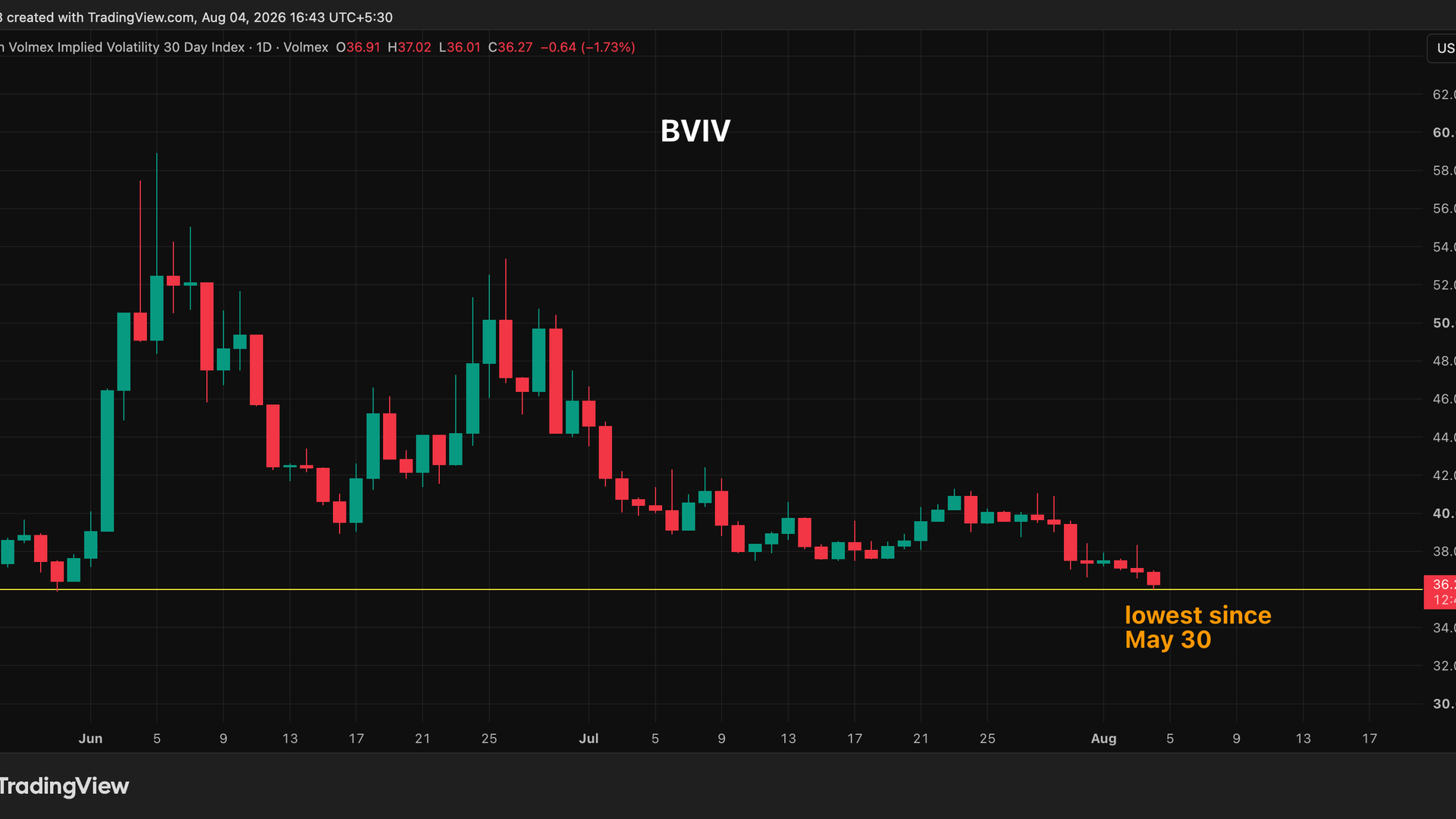
The bitcoin market is facing several challenges, including a multimillion-dollar hack, low institutional demand, and uncertainty in the regulatory and macroeconomic environment. Despite these challenges, the market remains calm, with the BVIV dropping to 36%.
Imagine you're at a big party, and everyone's talking about how scary the music is getting. But instead of panicking, everyone's just dancing and having fun. That's kind of like what's happening in the bitcoin market right now. There are a lot of things that could go wrong, but people are still calm and not freaking out. This could be a good sign for the market, but it's also possible that things could get worse before they get better.
Analysis
A $60B Vote of Confidence
The bitcoin market has several reasons to freak out, including the multimillion-dollar Coldcard hack, anemic institutional demand, and uncertainty in the regulatory and macroeconomic environment. However, the market remains calm, with the 30-day implied volatility index (BVIV) dropping to 36%, its lowest since May 31. This calm is a bullish sign, indicating that the market is poised for a notable upswing. However, volatility tends to be mean-reverting, and a surge in the BVIV could be accompanied by a big directional move, bullish or bearish.
Why Cursor?
The U.S.-listed spot bitcoin ETFs posted $61.53 million in outflows last week, snapping a three-week streak of tepid inflows. Moreover, USDT's market capitalization, the largest among dollar-pegged stablecoins, fell to the lowest level since October, while USDC's also remains in a downtrend. Real or inflation-adjusted returns on longer-duration Treasury notes have risen to the highest since 2008, denting the appeal of investing in emerging technologies and risk assets. Further, the U.S. Clarity Act's passage remains uncertain.
The Road Ahead
Despite these challenges, the market remains calm, with the BVIV dropping to 36%. This calm is a bullish sign, indicating that the market is poised for a notable upswing. However, volatility tends to be mean-reverting, and a surge in the BVIV could be accompanied by a big directional move, bullish or bearish. The number of BTC acquired around current price levels is also a positive sign, with approximately 155,000 BTC moving into the $62,000-$65,000 cost-basis range, indicating that selling was absorbed by buyers near current prices.
Key points
- The bitcoin market has several reasons to freak out, including the multimillion-dollar Coldcard hack, anemic institutional demand, and uncertainty in the regulatory and macroeconomic environment.
- The market remains calm, with the 30-day implied volatility index (BVIV) dropping to 36%, its lowest since May 31.
- The U.S.-listed spot bitcoin ETFs posted $61.53 million in outflows last week, snapping a three-week streak of tepid inflows.
- USDT's market capitalization, the largest among dollar-pegged stablecoins, fell to the lowest level since October, while USDC's also remains in a downtrend.
- Real or inflation-adjusted returns on longer-duration Treasury notes have risen to the highest since 2008, denting the appeal of investing in emerging technologies and risk assets.
The calm in the bitcoin market despite several challenges is a bullish sign, indicating that the market is poised for a notable upswing. The number of BTC acquired around current price levels is also a positive sign, with approximately 155,000 BTC moving into the $62,000-$65,000 cost-basis range, indicating that selling was absorbed by buyers near current prices.
The U.S.-listed spot bitcoin ETFs posted $61.53 million in outflows last week, snapping a three-week streak of tepid inflows. Moreover, USDT's market capitalization, the largest among dollar-pegged stablecoins, fell to the lowest level since October, while USDC's also remains in a downtrend. Real or inflation-adjusted returns on longer-duration Treasury notes have risen to the highest since 2008, denting the appeal of investing in emerging technologies and risk assets.