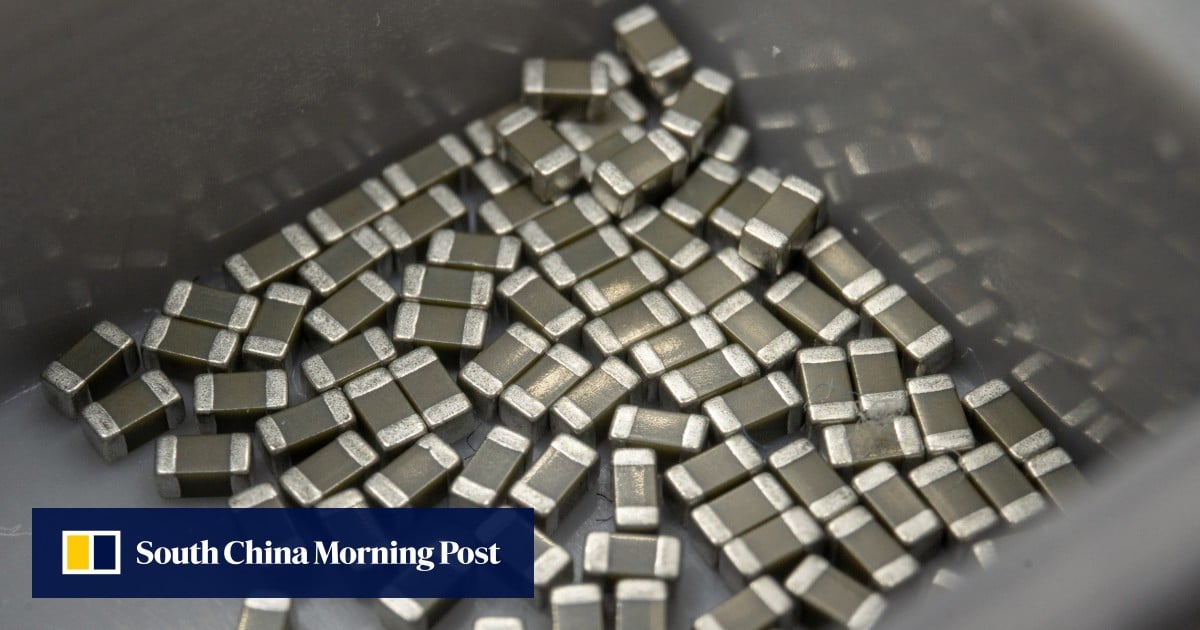
The CXMT shock: how China’s viable alternatives punch Nvidia, Micron, SK Hynix shares
China's growing influence in the semiconductor supply chain and advancements in AI models are disrupting global tech stocks, threatening the market dominance and margins of established leaders.
Intelligence analysis by Gemini 2.5 Flash
Chinese companies are emerging as viable alternatives in critical tech sectors, with CXMT's expansion impacting memory chip rivals and domestic breakthroughs in lithography challenging equipment giants. This shift, coupled with China's progress in AI model development, is reshaping the global AI trade by introducing cheaper substitutes and intensifying competition.
Imagine a big race where a few fast runners have always won. Now, a new runner from China is getting really good and making their own special running shoes and training gear. This new runner is so good that the old champions are starting to worry because the new runner might offer cheaper shoes or run just as fast, making it harder for the old champions to win as much money. It's making everyone rethink who will be the best in the future.
Analysis
The article highlights a significant shift in the global technology landscape, driven by China's accelerating advancements in critical semiconductor and artificial intelligence sectors. This progress is not merely incremental but is actively disrupting established market leaders and reshaping investor perceptions of the lucrative AI trade. The narrative suggests a transition from a largely Western-dominated AI supply chain to a more competitive, "two-sided" market where Chinese alternatives are poised to challenge the margins and market share of global giants.
China's Memory Chip Ascent
The recent US$9.8 billion stock offering by ChangXin Memory Technologies (CXMT) in Shanghai marks a pivotal moment for China's domestic semiconductor industry. This substantial equity funding is earmarked for CXMT's expansion, signaling its intent to aggressively grow its market share both within China and internationally. The immediate market reaction was palpable, with shares of major global DRAM chip rivals, South Korea's SK Hynix and US-based Micron Technology, experiencing significant declines. This event underscores the growing viability of Chinese manufacturers as direct competitors, capable of eroding the long-held advantages of established players in the memory chip sector.
Domestic Lithography's Market Ripple
Beyond memory chips, China is also making strides in the highly complex and strategically vital field of semiconductor manufacturing equipment. A media report indicating that China is on the verge of delivering home-made immersion deep-ultraviolet (DUV) lithography machines to its domestic chipmakers this year sent shockwaves through the market. This technological breakthrough is perceived by investors as a direct threat to the dominance of Dutch manufacturer ASML, which has historically held a near-monopoly on advanced lithography equipment. Such a development could significantly reduce China's reliance on foreign technology for chip production, further complicating the global semiconductor supply chain and intensifying competition.
Bridging the AI Model Gap
China's technological ambitions extend deeply into the realm of artificial intelligence model development, where it is rapidly closing the performance gap with Western leaders. The recent release of Kimi K3, a 2.8-trillion-parameter open-weight model by start-up Moonshot AI, exemplifies this progress. The article notes that Kimi K3's performance almost matches that of the most sophisticated models from prominent US-based AI companies like OpenAI and Anthropic. This advancement suggests that China is not only building its own hardware capabilities but also developing competitive software and AI models, creating a comprehensive domestic ecosystem that could offer viable, potentially lower-cost alternatives across the entire AI value chain. This dual-pronged approach in both hardware and software development positions China as a formidable challenger in the global AI landscape.
Key points
- China's CXMT secured US$9.8 billion in funding, impacting shares of global DRAM rivals SK Hynix and Micron Technology.
- Reports of China delivering home-made DUV lithography machines threaten the market dominance of Dutch manufacturer ASML.
- China's Moonshot AI released Kimi K3, a 2.8-trillion-parameter AI model, nearly matching top models from OpenAI and Anthropic.
- These advancements signal China's growing ability to provide cheaper tech alternatives, reshaping the global AI and semiconductor industries.
- Investors are re-evaluating the AI trade, anticipating margin compression for existing leaders due to increased Chinese competition.
The rise of Chinese alternatives could foster greater innovation and competition in the global tech market, potentially leading to more affordable and diverse products for consumers worldwide. This increased competition might also accelerate technological advancements as established players strive to maintain their edge.
The emergence of low-cost Chinese alternatives could significantly compress profit margins for existing global tech leaders, potentially leading to reduced investment in R&D or job losses. This shift could also exacerbate trade tensions and further fragment the global technology supply chain, creating geopolitical complexities.