The Future of Age Verification: Your Face Never Leaves Your Device
Age checks are becoming law worldwide, and the question is no longer whether platforms verify age, but what happens to the faces they collect. Incode's on-device age estimation technology allows users to verify their age without transmitting their face.
Intelligence analysis by Llama
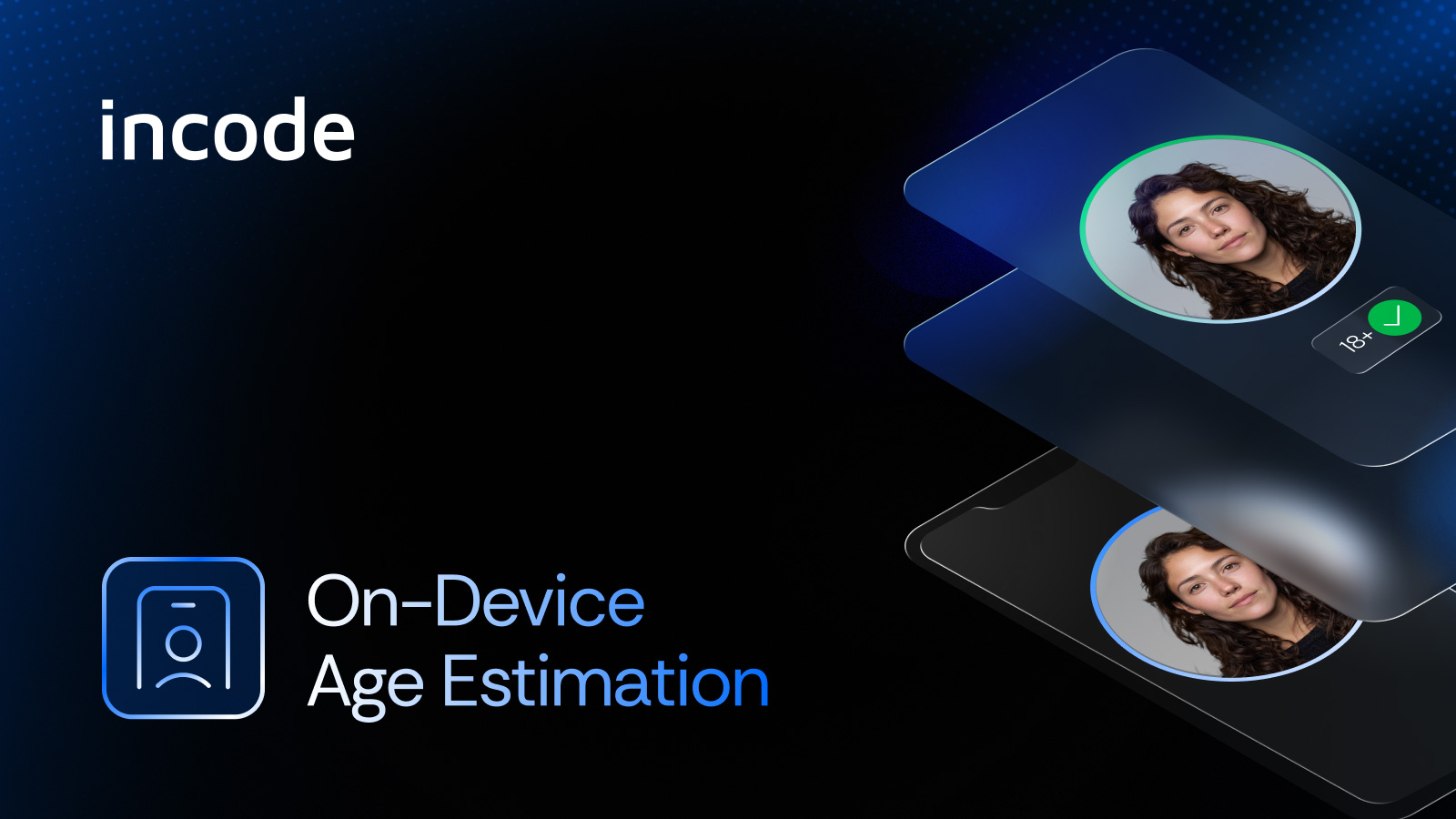
Incode's on-device age estimation technology allows users to verify their age without transmitting their face, addressing concerns around biometric data collection and the risk of data breaches.
Imagine you want to buy a movie ticket, but you're not old enough. A special computer on your phone or tablet can look at your face and figure out how old you are without sending your face to anyone else. This way, your face stays safe, and you can still buy the ticket.
Analysis
The Problem with Server-Based Age Estimation
The record shows why server-based age estimation is a growing liability, especially for vendors relying on third-party tech stacks. According to the Identity Theft Resource Center's 2025 Annual Data Breach Report, the U.S. recorded 3,322 data compromises last year, a record high and a 79% increase over five years. The same organization found that 63% of consumers have expressed serious concern over biometric data collection. Meanwhile, the attacks are scaling faster than the defenses.
On-Device Age Estimation: Verify Age Without Collecting the Face
Incode's facial age estimation and passive liveness models now run entirely on the user's phone, tablet, or laptop, the face is never transmitted and never stored. This approach addresses the concerns around biometric data collection and the risk of data breaches. By running the models on the user's device, Incode ensures that the sensitive data never becomes accessible in the first place.
A $100 Million Commitment, in Two Parts
Incode Technologies has announced a $100 million commitment to advancing privacy-preserving identity infrastructure, alongside its acquisition of Identiq, a company specializing in privacy-enhancing cryptographic solutions for peer-to-peer anti-fraud collaboration. The funds are directed at on-device processing capabilities, continued R&D in privacy-enhancing technologies, and expanded engineering resources and global footprint.
Key points
- Age checks are becoming law worldwide, and the question is no longer whether platforms verify age, but what happens to the faces they collect.
- Incode's on-device age estimation technology allows users to verify their age without transmitting their face.
- The technology addresses concerns around biometric data collection and the risk of data breaches.
- Incode has announced a $100 million commitment to advancing privacy-preserving identity infrastructure.
If Incode's on-device age estimation technology becomes widely adopted, it could lead to a significant reduction in data breaches and biometric data collection, making online transactions safer and more secure for users.
However, the adoption of on-device age estimation technology may be slow due to the need for significant changes in existing infrastructure and the potential for resistance from companies that rely on server-based age estimation.