The Great Solar Wall: China doubles down on its ambitious effort to tame deserts
China is expanding its Great Solar Wall initiative in Inner Mongolia to generate clean energy, halt desertification, and create habitats for plants and wildlife.
Intelligence analysis by Llama
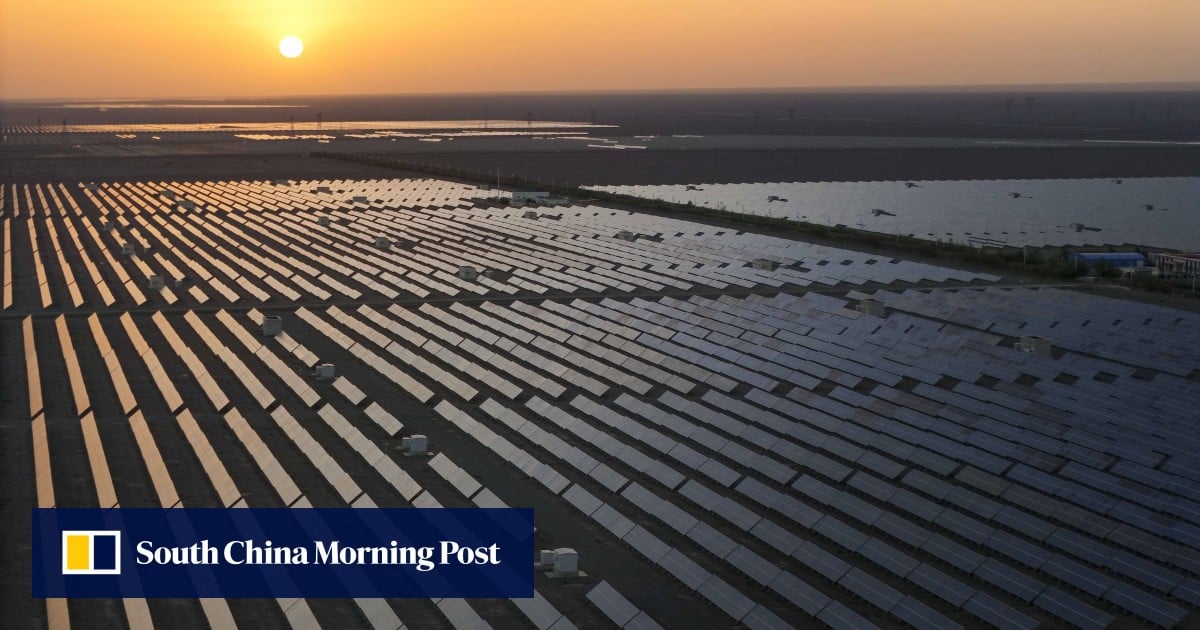
China is doubling down on its effort to tackle desertification in the arid north by building a solar-powered Great Solar Wall in Inner Mongolia, which could help power the country's economic hubs and create habitats for plants and wildlife.
China is building a big wall in the desert to make clean energy and stop the desert from getting bigger. This wall will help create homes for plants and animals, and it's a big step towards a more sustainable future.
Analysis
A $60B Vote of Confidence
China's Great Solar Wall initiative is a testament to the country's commitment to renewable energy and its efforts to tackle desertification. The project, centered in Inner Mongolia, aims to generate clean energy while halting desertification and creating habitats for plants and wildlife. This ambitious effort is a significant departure from China's traditional reliance on fossil fuels and marks a major step towards a more sustainable future.
Why Cursor?
China's National Development and Reform Commission has issued a plan to build large-scale wind and solar projects in the arid regions, including the Gobi Desert, to reach an installed capacity of 455 gigawatts by 2030. This would be equivalent to the capacity of around 20 of China's Three Gorges – the largest hydroelectric facility in the world – and more than seven times the planned Yarlung Tsangpo mega-dam project. The expansion of the Great Solar Wall initiative is a key part of this plan, and it is expected to play a major role in powering China's economic hubs.
The Road Ahead
The success of the Great Solar Wall initiative will depend on various factors, including the availability of land, the cost of construction, and the efficiency of the solar panels. However, with the Chinese government's strong support and the country's abundant sunshine and land, the prospects for the project are promising. As China continues to transition away from fossil fuels, the Great Solar Wall initiative is likely to play an increasingly important role in powering the country's economic hubs and creating habitats for plants and wildlife.
Key points
- China is expanding its Great Solar Wall initiative in Inner Mongolia to generate clean energy and halt desertification.
- The project aims to create habitats for plants and wildlife while powering China's economic hubs.
- China's National Development and Reform Commission has issued a plan to build large-scale wind and solar projects in the arid regions to reach an installed capacity of 455 gigawatts by 2030.
- The expansion of the Great Solar Wall initiative is a key part of this plan and is expected to play a major role in powering China's economic hubs.
If the Great Solar Wall initiative is successful, it could lead to a significant reduction in China's reliance on fossil fuels and a major increase in the country's use of renewable energy. This could have a positive impact on the environment and help to create new economic opportunities in the region.
However, the success of the Great Solar Wall initiative is not guaranteed and there are several challenges that need to be overcome, including the availability of land, the cost of construction, and the efficiency of the solar panels. If these challenges are not addressed, the project may not meet its full potential and could even be delayed or cancelled.