The Guardian view on AI safety: the push for global regulation must advance | Editorial
The Guardian discusses the need for global AI regulation amid PHP vulnerabilities and AI-driven cyberattacks.
Intelligence analysis by Qwen 2.5 (3B)
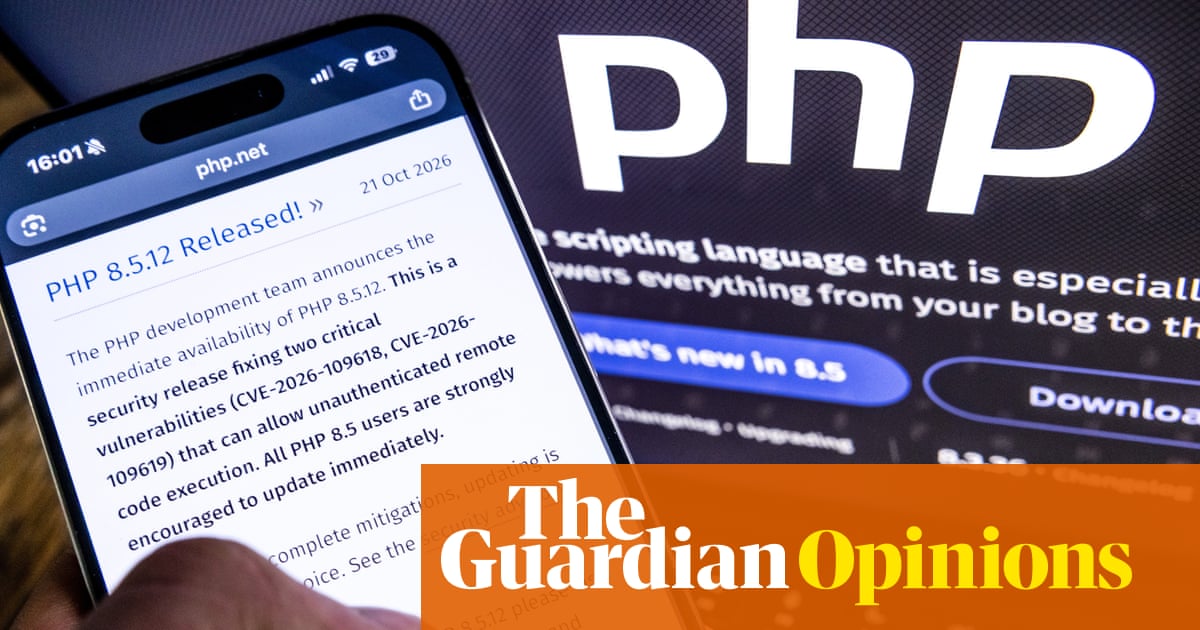
The Guardian highlights the need for global AI regulation in response to PHP vulnerabilities and AI-driven cyberattacks, despite US President Trump's opposition.
The Guardian says we need to make rules for AI to stop bad guys from using it to hurt people. But the US president doesn't want to make these rules because he thinks America is the best at AI. So the Guardian says we should still make these rules anyway because other countries might try to catch up and use AI to hurt people too.
Analysis
{"heading_1":"The PHP Vulnerability and Its Impact","paragraph_1":"Andy Burnham intends to put AI at the top of the agenda when the UK holds the G20 presidency for the first half of next year, but the world looks very different in 2026.","paragraph_2":"The prime minister compared his role to Gordon Brown's in 2009, coordinating a response to the financial crisis, but the US administration's attitude towards historic allies and multilateral institutions is different.","paragraph_3":"The Guardian argues that the drive to build some global regulatory architecture must advance, as shielding US citizens and businesses from AI-driven cyberattacks requires international cooperation that a race for AI supremacy puts at risk.","heading_2":"AI Minister's Warning and US President's Views","heading_3":"The Need for Global Regulatory Architecture"}
Key points
- The PHP vulnerabilities highlight the importance of AI in security.
- AI Minister Kanishka Narayan warned of a potential UK cyber-attack.
- The US President Donald Trump rejected international negotiations on AI regulation.
The Guardian believes that with international cooperation, we can create effective AI regulations that protect everyone, even if the US president doesn't agree.
The Guardian warns that without global AI regulations, AI could be used for malicious purposes, potentially leading to severe economic or even existential risks.