The Guardian view on Andy Burnham’s buses: a blueprint for governing Britain
Andy Burnham's buses plan is a blueprint for governing Britain, connecting people to cities and reducing social exclusion. The prime minister is right to think that taking Manchester's model national could widen opportunity, clean the air, and rebuild state capacity.
Intelligence analysis by Llama
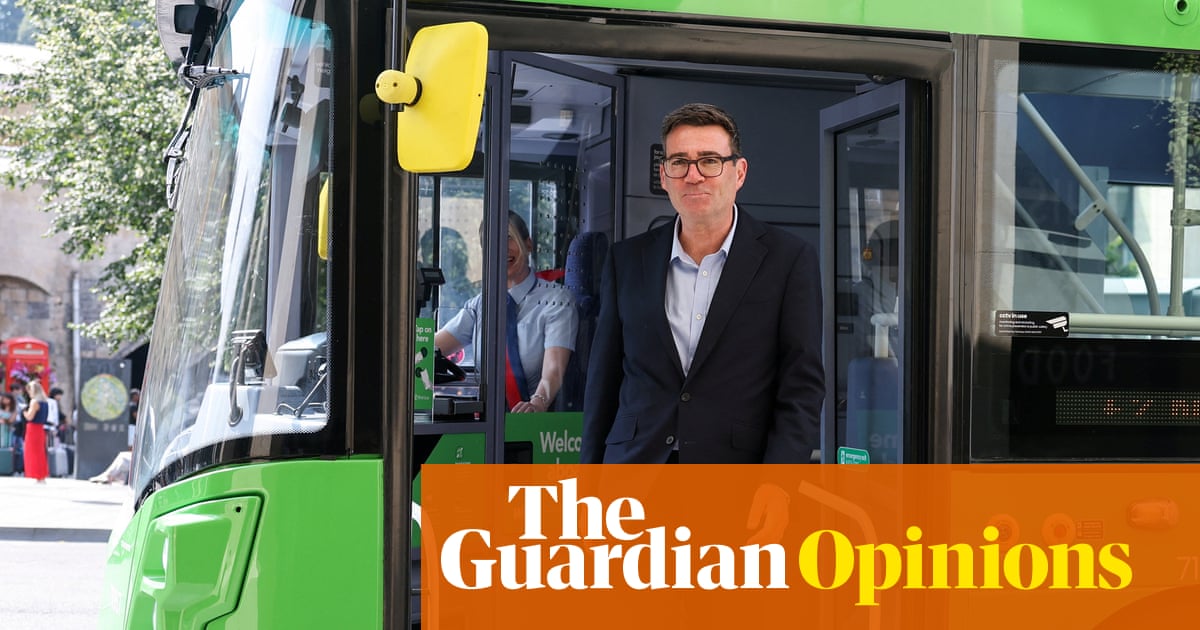
Andy Burnham's buses plan is a blueprint for governing Britain, connecting people to cities and reducing social exclusion. The prime minister is right to think that taking Manchester's model national could widen opportunity, clean the air, and rebuild state capacity.
Andy Burnham's buses plan is like a blueprint for how he wants to govern Britain. He wants to make public transport more affordable and reliable, and to connect people to cities. This will help to widen opportunity, clean the air, and rebuild state capacity. It's like a big puzzle, and buses are just one piece of the puzzle.
Analysis
A Blueprint for Governing Britain
Andy Burnham's buses plan is more than just a way to connect people to cities. It's a blueprint for how he wants to govern Britain. By taking Manchester's model national, he's aiming to widen opportunity, clean the air, and rebuild state capacity. This is a key part of his cost of living programme, which aims to make public transport more affordable and reliable. By determining the shape of the network, even where private companies run the services, the government can make provision cheaper and more reliable. This is a crucial step in rebuilding state capacity and giving the government the power to shape services around the public interest.
The Cost of Inaction
The consequences of inaction are clear. Outside London, buses clock up about 736m miles a year, nearly a third below 2005. Getting back to a decent service would cost a paltry sum. For £300m a year, England could get buses back into its worst-served communities. For about £1bn, the Campaign for Better Transport calculated, ministers could provide decent, frequent services in towns and rural areas. In 2021, the Campaign to Protect Rural England put the price of a Swiss-style bus network – an hourly service from 6am to midnight for every village of more than 300 people – at £2.7bn a year. Accounting for inflation, that would be £3.4bn today, just 1.5% of the NHS budget.
A Politically Shrewd Sequence
It's worth noting that Mr Burnham abandoned Manchester's clean-air charging zone when the post-pandemic cost of replacing dirty vehicles threatened to fall heavily on businesses. He instead pressed ahead with the Bee Network, giving Manchester a more affordable public-transport alternative, while simultaneously spending public money cleaning up the city's bus fleet. This was a politically shrewd sequence: improve the alternative so that you could persuade people to use their cars less.
Key points
- Andy Burnham's buses plan is a blueprint for governing Britain, connecting people to cities and reducing social exclusion.
- The prime minister is right to think that taking Manchester's model national could widen opportunity, clean the air, and rebuild state capacity.
- The buses plan is a key part of Andy Burnham's cost of living programme, aiming to make public transport more affordable and reliable.
- The government can make provision cheaper and more reliable by determining the shape of the network, even where private companies run the services.
- Getting back to a decent bus service would cost a paltry sum, and could be achieved for £300m a year.
If Andy Burnham's buses plan is successful, it could lead to a more connected and sustainable Britain. People will have better access to jobs, education, and healthcare, and the air will be cleaner. This could also lead to a more prosperous economy, with more opportunities for businesses and individuals.
However, there are also risks associated with Andy Burnham's buses plan. For example, the cost of implementing the plan could be higher than expected, and there may be resistance from private companies that currently operate bus services. Additionally, the plan may not be effective in reducing social exclusion and improving air quality if it is not implemented correctly.