The Guardian view on the Aberdeen South byelection: the politics of energy take centre stage
Aberdeen South’s byelection has become a test of how Britain balances North Sea oil with the green transition.
Intelligence analysis by GPT-5.4 Mini
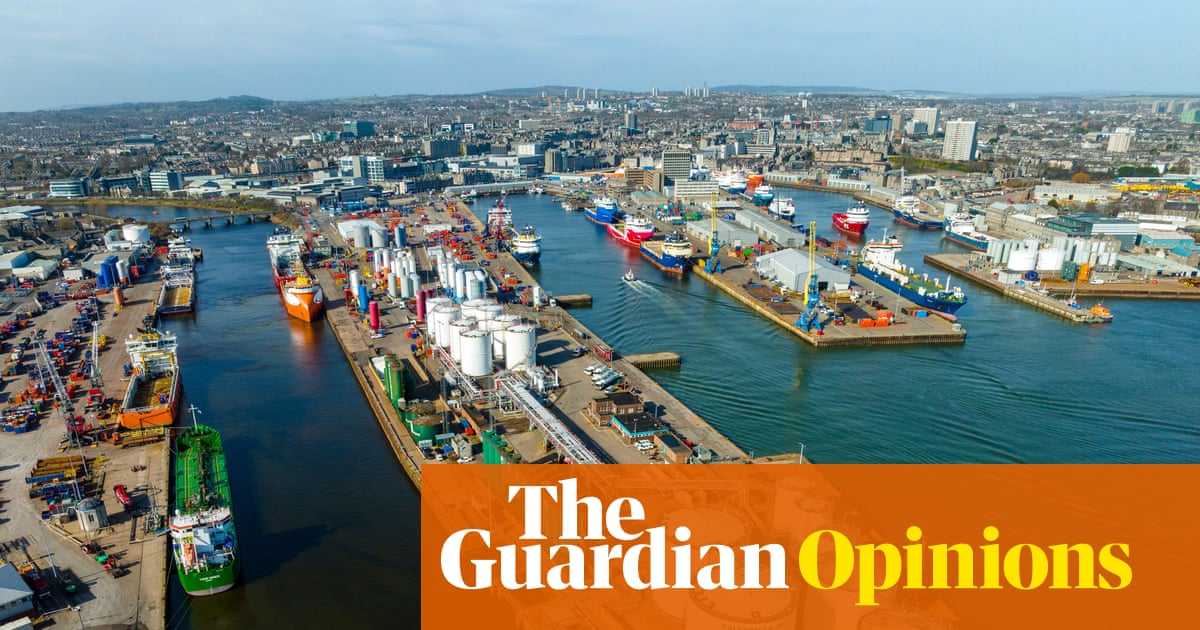
The Guardian says the Aberdeen South byelection is a warning shot for Westminster: energy security, oil jobs and the shift to clean power are colliding in a city shaped by North Sea oil. The paper argues the answer is a faster, fairer transition, not retreat from net zero.
Aberdeen used to be famous for oil. Now it is in the middle of a big argument about what should come next: more drilling, or more clean energy.
The article says this matters because oil prices can jump when trouble happens far away, and that can make life more expensive at home. It also says many oil jobs have already gone, while new clean-energy jobs are growing.
It is a bit like a town built around one old factory. If that factory slows down, people need a new way to make a living. The paper says the government should help make that change faster and fairer.
Analysis
What the editorial argues
The Guardian treats Aberdeen South as more than a local contest. It says the byelection sits at the centre of a bigger fight over how Britain should respond to energy shocks, the future of North Sea oil and gas, and the politics of net zero.
The paper notes that Donald Trump’s war in Iran and the closure of the Strait of Hormuz have reminded voters how exposed the UK still is to fossil-fuel price shocks. That has given the Conservatives and Reform UK an opening to argue for more oil and gas production, while the SNP and Labour stay formally committed to net zero.
Aberdeen’s economic reality
Aberdeen is described as a city that once saw itself as Europe’s oil capital. The editorial says that identity is changing as the oil and gas sector sheds jobs and the clean-energy economy grows. It cites figures from the Energy Transition Institute at Robert Gordon University showing UK oil and gas employment has fallen by 70,000 over the past decade to 115,000, while 39,000 clean-energy jobs have been created in the same period.
The paper says there is support in Scotland for GB Energy, the state-owned company planned for Aberdeen, but also real anxiety that communities could be left behind in a repeat of the painful deindustrialisation seen in the 1980s. It argues that the government must provide more resources for a faster and more equitable transition.
Political warning
The editorial suggests that if the Conservatives or Reform were to win on an anti-net-zero message, it would be a warning sign before the next UK general election. Its main message is that Britain should not treat the energy transition as a future issue; it is already reshaping jobs, prices and local politics.
Key points
- Aberdeen South’s byelection is presented as a test of Britain’s energy politics, not just a local vote.
- The editorial says recent energy shocks have exposed the UK’s dependence on fossil fuels.
- The Conservatives and Reform are pushing more oil and gas production, while the SNP and Labour still back net zero.
- The paper cites falling oil and gas employment and rising clean-energy jobs as evidence of a shifting economy.
- It argues the government should speed up the transition and protect communities from industrial decline.