The Importance of STEAM in Early Childhood
STEAM education in early childhood encourages children's curiosity, creativity, and problem-solving skills. It helps build communication, teamwork, and critical thinking skills, supporting lifelong learning.
Intelligence analysis by Llama
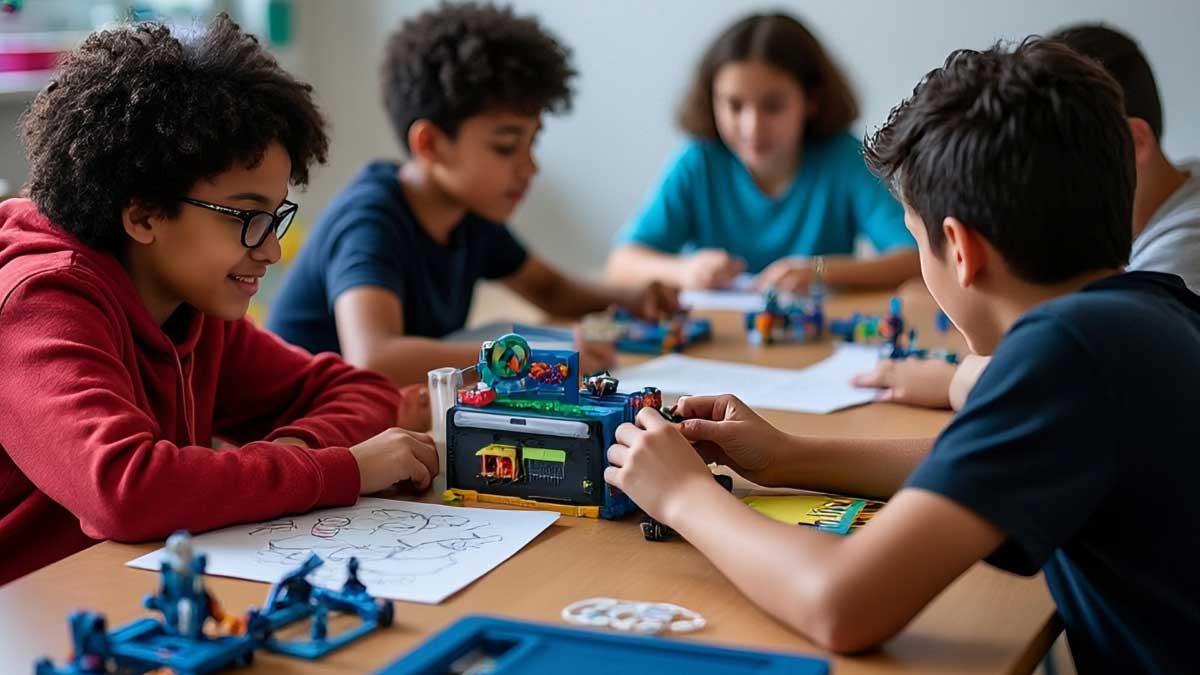
STEAM education in early childhood is crucial for developing children's curiosity, creativity, and problem-solving skills. It helps build essential skills for lifelong learning, including communication, teamwork, and critical thinking.
STEAM education in early childhood is like giving kids a superpower. It helps them learn by doing, exploring, and playing. This makes them curious, creative, and confident, which helps them succeed in life.
Analysis
The Importance of STEAM in Early Childhood
STEAM education is incredibly important during early childhood because it encourages children's curiosity, creativity, and ability to solve problems from a young age. Children learn by touching, playing, experimenting, questioning, solving problems, and discovering how the world around them works. Furthermore, STEAM introduces children to activities that help them build communication, teamwork, and critical thinking skills, which support lifelong learning.
Building Confidence and Independence
By building with blocks, painting, and observing patterns, children learn through discovery, which allows them to gain confidence, independence, and a love of learning that supports their cognitive, social, emotional, and physical development. At home, STEAM learning can be encouraged as children explore, experiment, and discover the world around them. Children can learn about the scientific method, develop mathematical skills, be creative, and solve problems by cooking together, gardening, sorting items around the house, playing with blocks, going on nature walks, or even finger-painting.
Encouraging Exploration and Play
Parents can ask questions that do not require a yes-or-no answer. Instead of giving children the answer, they should allow them to think and explain what they know. Children should also be given opportunities to fail and try new things in a safe environment. This allows them to become confident and curious while having fun through exploration and play. Schools should design classrooms as engaging learning environments. This should include integrating STEAM into everyday lesson plans by providing children with hands-on and play-based learning opportunities. Educators can challenge children to discover, explore, create, design, and work together to find solutions to problems. Classrooms should include blocks, art materials, recycled materials, science-centre resources, and natural materials. Schools can also support teachers by offering professional learning on how to plan meaningful STEAM experiences. A quality early learning centre does not offer STEAM as a stand-alone programme but integrates it into all learning that occurs throughout the school day. The best early childhood STEAM experiences maintain an emphasis on the child through concrete activities that appeal to children's natural curiosity. By building a programme in which exploration is celebrated, children are able to ask questions and test their ideas by trying things for the first time. This leads them to develop their own solutions and strengthens their understanding of how they learn.
Conclusion
In conclusion, STEAM education in early childhood creates meaningful opportunities for children to explore, question, create, and solve problems. Through supportive experiences at home, in schools, and across the curriculum, children can develop the confidence, curiosity, and essential skills needed for lifelong learning.
Key points
- STEAM education in early childhood encourages children's curiosity, creativity, and problem-solving skills.
- It helps build communication, teamwork, and critical thinking skills, supporting lifelong learning.
- STEAM education in early childhood lays the foundation for children's future academic and professional success.
- It helps develop essential skills, including problem-solving, critical thinking, and creativity.
If implemented effectively, STEAM education in early childhood can lead to a more curious, creative, and confident generation of children. This can have a positive impact on their future academic and professional success.
If not implemented correctly, STEAM education in early childhood can lead to a lack of engagement and motivation among children. This can result in a lack of essential skills, including problem-solving, critical thinking, and creativity.