The once destroyed community that's now a global energy giant
Cameron Parish in Louisiana was devastated by Hurricane Rita in 2005, but it has since become one of the wealthiest counties in the region due to the export of liquefied natural gas (LNG).
Intelligence analysis by Llama
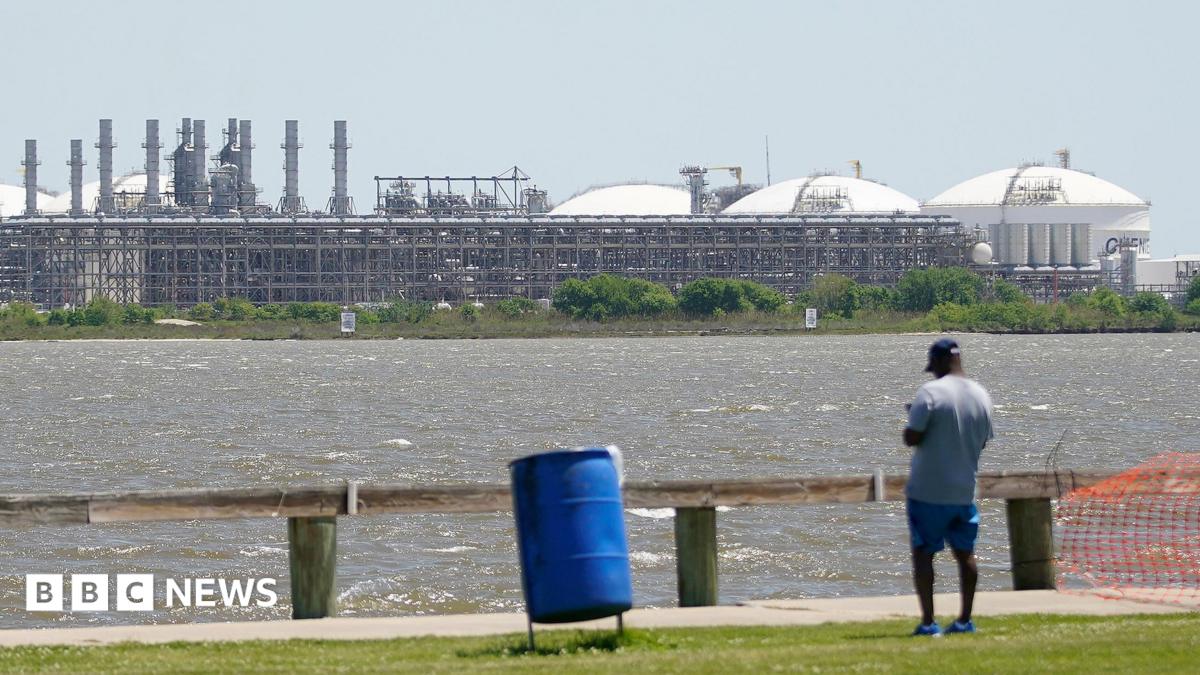
The parish is home to the world's largest LNG export terminal, Sabine Pass, which started sending fuel overseas in 2016. The county is projected to receive tax revenues of more than $4bn over the next decade.
Cameron Parish in Louisiana was once a poor community, but it's now getting rich because of a big business called liquefied natural gas (LNG). LNG is like super-cooled gas that's sent to other countries to help them heat their homes. The parish is home to the world's largest LNG export terminal, which sends a lot of gas to Europe. This has made the parish very wealthy, but it also has some problems, like big ships and spills in the water.
Analysis
A $60B Vote of Confidence
Cameron Parish, Louisiana, was once a community ravaged by Hurricane Rita in 2005, with over 90% of homes destroyed or badly damaged. The repair bill was a staggering $2.75bn. However, in a remarkable turnaround, the parish is now on course to become one of the wealthiest counties in the region, thanks to the export of liquefied natural gas (LNG).
The parish is home to the world's largest LNG export terminal, Sabine Pass, which started sending fuel overseas in 2016. This terminal alone can process 29.5 million tonnes of LNG per year. The county is also home to two other LNG terminals, and a fourth is under construction. Work on the latter, called Commonwealth LNG, started in May and is expected to produce 9.5 million tonnes of LNG per year by 2030.
The county's projected tax revenues from its LNG terminals over the next decade are more than $4bn. This is a significant increase from a decade ago, when the US barely exported any LNG. Today, the US is the world's biggest supplier of LNG, and Louisiana ships around 60% of it, sourced via pipelines from elsewhere in the state, Texas, and even from as far away as Pennsylvania.
Two-thirds of Louisiana's LNG exports come from Cameron Parish. The parish's president, Michael Fewell, says that the county's fortunes have improved significantly since the LNG boom began. He points to the median local household income, which was $75,000 in 2024, up by a quarter from $59,555 in 2010.
Why Cursor?
The demand for American LNG comes primarily from Europe, which has been rushing to replace Russian natural gas since the invasion of Ukraine in 2022. The US now supplies about two-thirds of Europe's gas imports, up from roughly a quarter in 2021. This has created a reliance on US LNG supplies, with Europe competing with Asia for the same cargoes, which pushes up prices.
Susan Bourgeois, secretary of Louisiana Economic Development, says that the state's LNG exports have helped Europe improve its supply security. 'They want reliable relationships for their energy,' she says. However, Ana Maria Jaller-Makarewicz, an analyst for the Institute for Energy Economics and Financial Analysis, argues that Europe's reliance on US LNG supplies has a cost. 'The EU is expected to get as much as 80% of its LNG imports from the US by 2030,' she says.
The Road Ahead
The LNG boom has brought significant economic benefits to Cameron Parish, but it also has its challenges. LNG tankers are so large that shipping channels must be dug deeper and wider. If the dredged mud isn't contained properly, it spills into nearby waters. In one incident last year, around 15,000 cubic yards of removed material spread beyond its permitted area.
Despite these challenges, the parish is projected to continue to benefit from the LNG boom. The county's president, Michael Fewell, says that the parish is on course to become one of the wealthiest counties in the region. 'We are going to have more money than we need,' he says.
Key points
- Cameron Parish, Louisiana, was once a community ravaged by Hurricane Rita in 2005, but it's now on course to become one of the wealthiest counties in the region due to the export of liquefied natural gas (LNG).
- The parish is home to the world's largest LNG export terminal, Sabine Pass, which started sending fuel overseas in 2016.
- The county is projected to receive tax revenues of more than $4bn over the next decade.
- The demand for American LNG comes primarily from Europe, which has been rushing to replace Russian natural gas since the invasion of Ukraine in 2022.
- The US now supplies about two-thirds of Europe's gas imports, up from roughly a quarter in 2021.
The LNG boom is expected to continue, with the parish projected to receive tax revenues of more than $4bn over the next decade. The county's president, Michael Fewell, says that the parish is on course to become one of the wealthiest counties in the region. 'We are going to have more money than we need,' he says.
The reliance on US LNG supplies by Europe has a cost, with prices pushed up by competition with Asia for the same cargoes. The EU is expected to get as much as 80% of its LNG imports from the US by 2030, which could lead to a decrease in European energy security.
Market signals
- Liquefied Natural Gas The US is now the world's biggest supplier of LNG, and Louisiana ships around 60% of it, sourced via pipelines from elsewhere in the state, Texas, and even from as far away as Pennsylvania.
- Crude Oil The conflict between the US and Iran has pushed up oil prices, and the US is now a major supplier of LNG to Europe, which has increased demand for oil.
AI-generated analysis of potential market relevance. Not financial advice.