The Story of the Sherpa Who Miraculously Survived on Mount Everest: 'For Two Days He Ate Nothing, Then Started Chewing Ice'
A Nepali Sherpa presumed dead after six days missing on Everest survived by chewing ice, eating chocolates and slowly making his way back to base camp.
Intelligence analysis by GPT-5.4 Mini
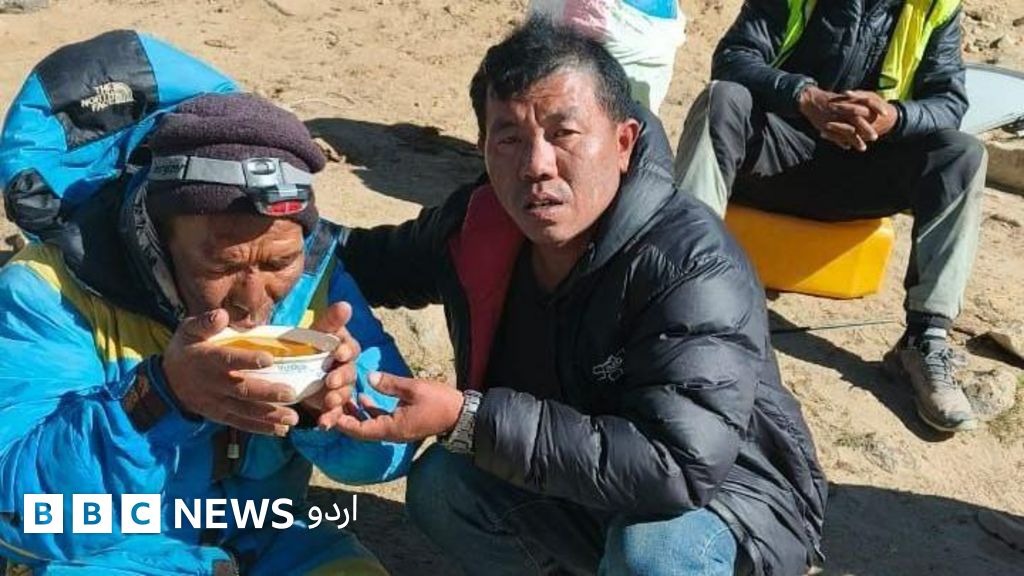
Dawa Sherpa was left behind after his oxygen ran out, then fell into a crevasse and spent days surviving on ice, melted snow and a few chocolates before crawling toward base camp, where a cleanup team found him alive.
A climber got stuck high on a huge icy mountain, ran out of oxygen, and had almost no food. He stayed alive by chewing ice and eating a little chocolate until people found him, like someone lost in a giant freezer finding a tiny path home.
Analysis
What happened
Dawa Sherpa, a 57-year-old Nepali climber, was missing for six days on Mount Everest and was widely believed to have died. His family in Kathmandu had begun funeral rituals before he was unexpectedly spotted alive near base camp by a cleanup team.
According to the article, Sherpa said he did not disappear by choice. During the descent, his oxygen ran out and he could no longer keep walking. He survived the first two days without food, then began chewing ice. He later found a few chocolates in his pocket and managed to drink some water made from melted snow.
How he survived
He told BBC Nepali that he believed he would die there. Other climbers had last seen him sitting on his backpack high above Camp Three, around 7,500 meters, near the Khumbu Icefall area. The article says he may also have fallen into a crevasse and spent about two and a half days trapped before an avalanche covered the crevasse with snow, which gave him a chance to escape.
He eventually found ropes, continued descending on his hands and feet, and stayed moving through the night until he reached near base camp. There, people collecting rubbish met him and brought him down.
What the article emphasizes
The rescue was described by expedition staff as a real self-rescue and, in their words, close to a miracle. The piece also places his survival in the context of Everest danger: five people have died in the current climbing season, and more than 300 have died since records began in the 1920s.
Key points
- Dawa Sherpa was missing for six days on Everest and was thought to be dead before being found alive near base camp.
- He said he survived by chewing ice, drinking melted snow and eating chocolates from his pocket.
- The article says he ran out of oxygen, may have fallen into a crevasse, and was later found with dehydration, frostbite and a broken bone.
- His family had begun funeral rites in Kathmandu before the rescue became known.
- The piece frames his survival as a rare self-rescue in one of the world's most dangerous climbing environments.
If Sherpa recovers fully, his survival will stand as a rare example of endurance and successful rescue on Everest. The story also shows that cleanup crews and other climbers can still spot and help missing people near base camp.
His condition shows how fast high-altitude climbing can become deadly once oxygen runs out and movement becomes impossible. The article also underlines that crevasses, frostbite and avalanches can still defeat even experienced climbers.