The war united the nation in defending Iran
The war against Iran has united the nation in defending the country, despite previous divisions over economic sanctions and freedoms. The barbaric manner in which the war began has made the Iranian nation feel that Iran itself is the target, leading to a unified defense.
Intelligence analysis by Llama
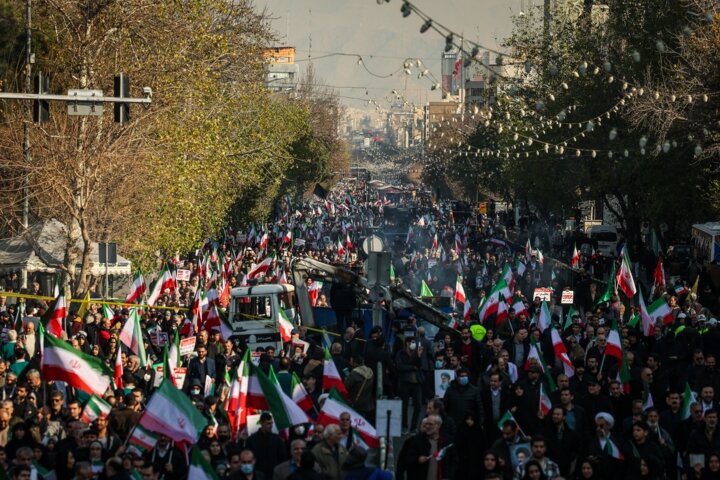
The war against Iran has united the nation in defending the country, despite previous divisions. The barbaric manner in which the war began has made the Iranian nation feel that Iran itself is the target, leading to a unified defense.
The war against Iran has made the nation feel like it's being attacked, which has brought everyone together to defend the country. This is different from the divisions that existed before the war, which were about economic sanctions and freedoms.
Analysis
Infiltration vs. Division
The war against Iran has brought about a new reality, one in which the nation is united in defending the country. This unity is not a result of the divisions that existed before the war, but rather a response to the barbaric manner in which the war began. The killing of the Supreme Leader and the targeting of the first- and second-tier leadership made the Iranian nation feel that Iran itself was the target, leading to a unified defense.
Infiltration and Its Impact
The infiltration of Iran by foreign intelligence agencies is a well-established fact. For decades, American, Israeli, and Western intelligence agencies have been forming and establishing cells of their own. These cells expanded and developed into networks that became widespread institutions capable of carrying out attacks during assassinations or periods of unrest. This is what they attempted and carried out during protests over living conditions, turning demonstrations across large parts of the country into violent movements led by these intelligence-linked cells.
The Strength of Iran's Institutions
Despite the existence of infiltration, Iran's strong institutions dedicated to protecting the revolution and the state are capable of resisting such efforts. The people, driven by their sense of national loyalty, do not respond to such efforts and instead resist them. The infiltrations do exist and may have contributed to the assassinations of nuclear scientists and state leaders, as well as to obtaining information about the whereabouts of these leaders. However, they remain at an individual level rather than a collective level capable of bringing about political change or a coup.
Key points
- The war against Iran has united the nation in defending the country.
- The barbaric manner in which the war began has made the Iranian nation feel that Iran itself is the target.
- The infiltration of Iran by foreign intelligence agencies is a well-established fact.
- Iran's strong institutions dedicated to protecting the revolution and the state are capable of resisting such efforts.
If the war against Iran continues to unite the nation in defending the country, it could lead to a more stable and secure Iran. This, in turn, could attract foreign investment and improve the country's economy.
The existence of infiltration in Iran could lead to further violence and instability in the country. If the infiltrations are not addressed, they could continue to contribute to the assassinations of nuclear scientists and state leaders.