Think Musk the billionaire was bad? Brace yourself for Musk the trillionaire
Mahdawi argues Musk’s possible leap to trillionaire status would deepen his political power and push the U.S. closer to oligarchy.
Intelligence analysis by GPT-5.4 Mini
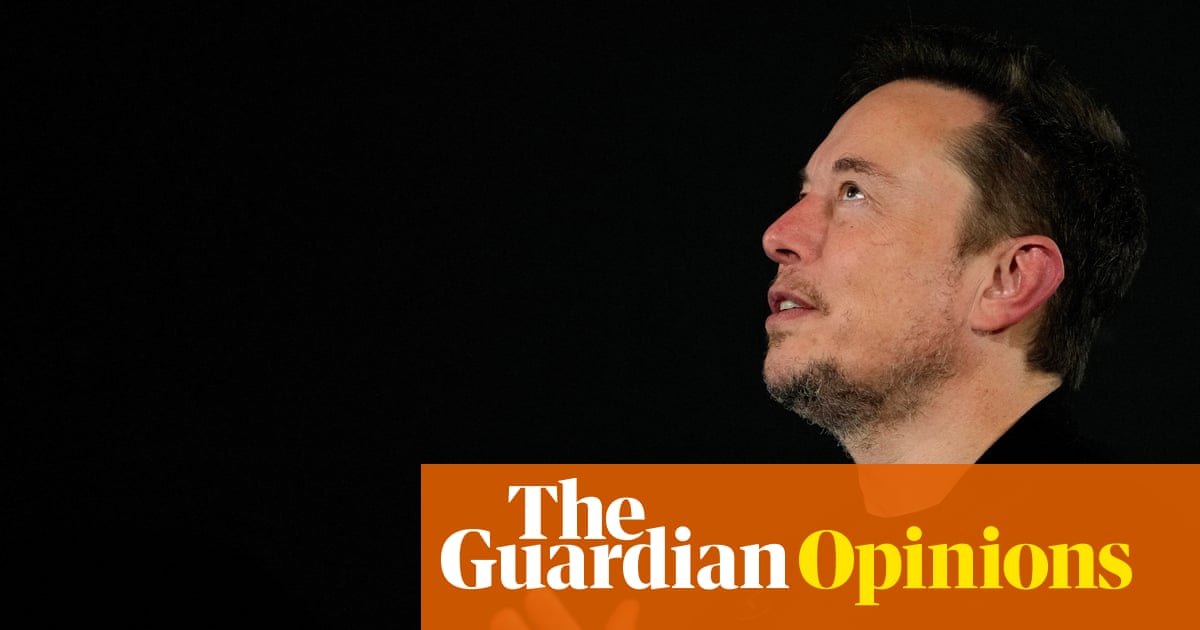
The column treats Musk’s near-trillionaire status less as a wealth milestone than as a warning sign. It argues that extreme private wealth is already distorting U.S. politics, and that Musk’s money and influence show how far that trend has gone.
The article says one person having a mountain of money is a problem because money can act like a giant megaphone in politics. If a billionaire gets even richer, it can be like one kid in class suddenly getting to choose the rules for everyone.
Analysis
Wealth as power
The column argues that Elon Musk’s possible rise to trillionaire status is not mainly about personal fortune; it is about what that fortune buys in politics and public life. It says Musk has already used enormous resources to affect elections and gain access to power, and that his wealth gives him leverage ordinary voters cannot match.
From billionaire to system-shaper
Mahdawi points to Musk’s role around Donald Trump, including major political spending and a highly visible presence in the orbit of government. The piece describes Musk as a kind of shadow president, with influence that extends beyond business into state visits, contracts, and policy decisions. It also criticizes his role in the “department of government efficiency,” arguing that cuts linked to it damaged agencies and foreign aid.
The bigger structure
The column widens the lens to the wider economy and political system. It cites the Supreme Court’s 2010 Citizens United decision as a turning point that helped open the door to unlimited election spending by corporations and special interests. It also cites reporting that billionaire political spending has grown sharply, and a study suggesting the ultra-wealthy are less willing than others to back public investments like healthcare and education.
The central claim is that this is not just about Musk. He is presented as the most extreme example of a system in which wealth is becoming more concentrated, richer people are gaining more political influence, and democratic checks are weakening. The article ends by framing today’s wealth levels as historically extreme, with concentration now described as worse than in the Gilded Age.
Key points
- The article argues Musk’s possible trillionaire status is a democracy problem, not just a wealth milestone.
- It says Musk has already used his fortune to gain influence in politics and government.
- The column links his rise to broader trends in billionaire political spending after Citizens United.
- It warns that extreme wealth concentration is making the U.S. resemble an oligarchy.
- It frames billionaire power as harmful to public spending, regulation, and democratic accountability.
If the concentration of wealth keeps drawing attention, it could strengthen pressure for tighter campaign-finance rules and more scrutiny of billionaire political spending. The article’s own alarm suggests a public debate that could push institutions to set clearer limits on money’s influence.
If the trend continues, a handful of ultra-rich people could keep gaining outsized control over elections, regulation, and public policy. The piece warns that this can encourage lower taxes, less oversight, and further cuts to public goods and aid.