Thiruvananthapuram Startup HEX20 Plays Key Role in UAE's 5 Billion Km Asteroid Mission
Kerala-based space tech startup HEX20 is a crucial partner in the UAE's Emirates Mission to the Asteroid Belt (EMA), developing a probe and systems for a spacecraft that will travel 5 billion kilometers to study asteroid 269 Justitia by 2036.
Intelligence analysis by Gemini 2.5 Flash
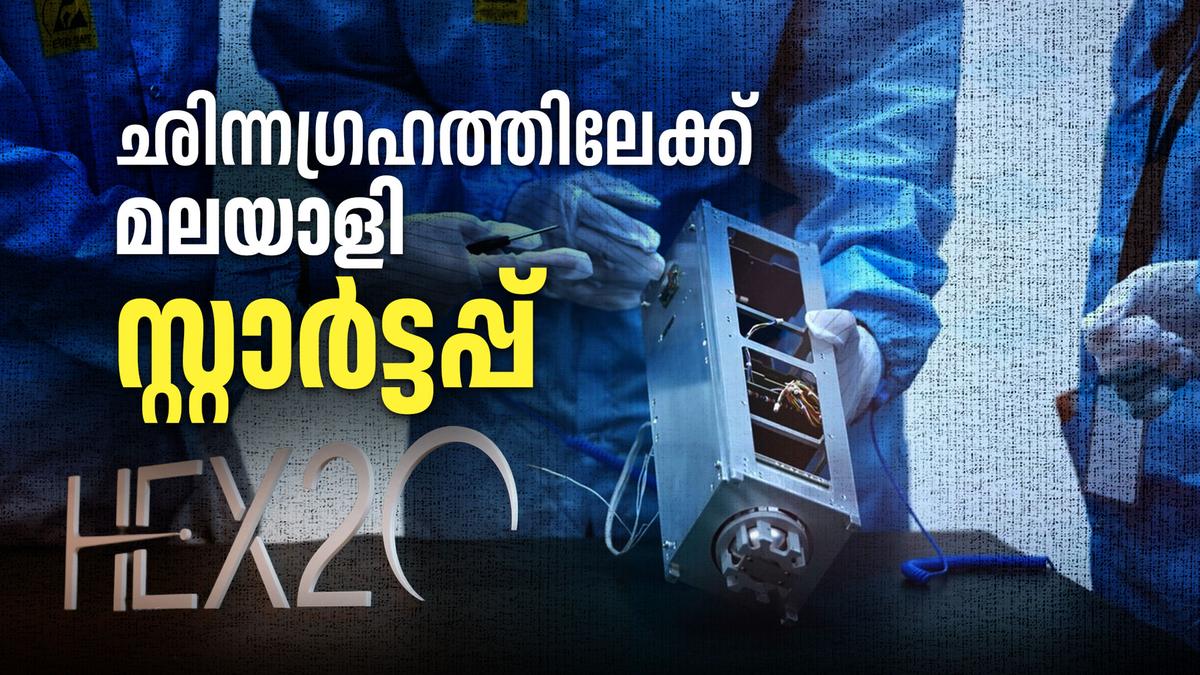
The UAE's ambitious deep space mission, EMA, aims to explore the asteroid 269 Justitia, known for its reddish hue, to understand the early solar system. A significant aspect of this mission involves the Thiruvananthapuram-based startup HEX20, which has developed key components, including a self-controlled probe, highlighting India's growing contribution to global space endeavors.
Imagine a tiny robot made by smart people in Kerala is going on a super long trip, like 5 billion kilometers, with a big spaceship from the UAE. Its job is to fly off the main ship and land on a special red space rock called 269 Justitia to take pictures and learn about how our solar system started, like finding clues about water and tiny life bits.
Analysis
HEX20's Contribution to EMA
Thiruvananthapuram-based space tech startup HEX20 is at the forefront of the UAE's Emirates Mission to the Asteroid Belt (EMA), a deep space exploration endeavor targeting the asteroid 269 Justitia. The company's pivotal role involves the development of a sophisticated satellite, which is slated for handover to the UAE Space Agency this month. This satellite is not merely a component but a critical probe designed to separate from the main spacecraft and autonomously descend to the asteroid's surface, capturing vital images and transmitting them back to Earth. HEX20's involvement extends to crafting the mission's onboard computer and power systems, a collaborative effort between their teams in Thiruvananthapuram and Abu Dhabi. This significant contribution underscores the startup's advanced technical prowess and its capacity to deliver complex solutions for demanding space missions.
Before embarking on this deep space venture, HEX20 had already demonstrated its capabilities by successfully launching two satellites, establishing a track record that likely contributed to its selection for the EMA mission. The company's operational center in Masdar City, UAE, played a central role in the satellite's development, showcasing an international footprint in its R&D efforts. This partnership not only elevates HEX20's profile but also signifies a major leap for space technology developed in Kerala, positioning it on a global stage and opening new avenues for international collaboration and technological exchange.
The Asteroid 269 Justitia
The primary target of the EMA mission is the asteroid 269 Justitia, an object of considerable scientific interest located approximately five billion kilometers away in the asteroid belt between Mars and Jupiter. This particular asteroid has garnered attention from the scientific community due to its distinctive reddish color, a characteristic that suggests unique surface compositions. The mission's objective is to conduct an in-depth study of 269 Justitia's surface, with the expectation that such research will yield crucial insights into the early formation of our solar system. Scientists hope to understand the presence and distribution of organic matter, water, and other volatile substances that were prevalent during the solar system's nascent stages.
The data collected from 269 Justitia could provide invaluable clues about the conditions that existed billions of years ago, potentially shedding light on the origins of life and the distribution of essential elements in our cosmic neighborhood. The choice of this specific asteroid highlights the mission's focus on fundamental questions about planetary science and astrobiology. By analyzing its composition and geological features, researchers aim to reconstruct the primordial environment of the solar system, offering a window into its evolutionary history and the processes that shaped the planets we see today.
MBR Explorer's Eight-Year Journey
The Emirates Mission to the Asteroid Belt (EMA) is an ambitious undertaking, with its main spacecraft, the MBR Explorer, embarking on an arduous eight-year journey to reach its ultimate destination, 269 Justitia. This extensive travel time underscores the vast distances involved in deep space exploration and the technological challenges associated with navigating such immense cosmic expanses. During its lengthy transit, the MBR Explorer is not merely a passive traveler; it is designed to actively engage with its environment. The spacecraft will approach and observe six other asteroids along its path, gathering preliminary data and refining its observational techniques before its final rendezvous with 269 Justitia.
This multi-asteroid approach allows for a broader understanding of the asteroid belt's diversity and provides opportunities for comparative studies. Once the MBR Explorer arrives at 269 Justitia, the HEX20-developed probe will execute a critical maneuver: separating from the main spacecraft and autonomously descending to the asteroid's surface. This self-controlled descent is a testament to the precision engineering and advanced robotics involved in the mission. The probe's ultimate goal is to capture high-resolution images and transmit them back to Earth, providing unprecedented close-up views and data that will be instrumental in achieving the mission's scientific objectives.
Key points
- Thiruvananthapuram-based HEX20 is a key partner in UAE's Emirates Mission to the Asteroid Belt (EMA).
- The mission aims to study asteroid 269 Justitia, located 5 billion kilometers away, by 2036.
- HEX20 developed the self-controlled probe, onboard computer, and power systems for the mission.
- The MBR Explorer spacecraft will travel for eight years, observing six asteroids before reaching 269 Justitia.
- This collaboration highlights Kerala's growing expertise and global footprint in space technology.
The successful participation of HEX20 in such a high-profile international mission could significantly boost the global reputation of Indian space tech startups, attracting more investment and fostering further innovation within the sector. This collaboration also paves the way for future international partnerships, solidifying India's position as a key player in advanced space exploration.