Thousands evacuated in Indonesia after powerful earthquake kills over 50 people
A 7.7 magnitude earthquake struck eastern Indonesia, killing at least 51 people and injuring dozens, leading to the evacuation of approximately 5,000 residents and significant damage to infrastructure.
Intelligence analysis by Gemini 2.5 Flash
Eastern Indonesia was hit by a devastating 7.7 magnitude earthquake, causing widespread destruction, numerous casualties, and mass evacuations. The disaster, compounded by landslides and 341 aftershocks, has prompted a large-scale rescue and aid operation, with authorities considering a state of emergency in East Nusa Tenggara province.
Imagine a giant underground rumble shook a country called Indonesia, making the ground wobble super hard. It knocked down buildings and made roads disappear, sadly hurting and killing many people, and making thousands leave their homes. It's like when you shake a toy house too much and everything falls apart, but much, much bigger and scarier.
Analysis
East Nusa Tenggara
The province of East Nusa Tenggara bore the brunt of the 7.7 magnitude earthquake, which struck on a Saturday morning. This powerful seismic event, occurring at a depth of 15 kilometers, led to the tragic deaths of at least 51 individuals, many of whom perished in their sleep as debris collapsed upon them. The provincial governor, Emmanuel Melkiades Laka Lena, confirmed the devastating impact on the local population.
Beyond the immediate fatalities, the earthquake left 36 people seriously injured and 77 with minor wounds, overwhelming local medical facilities. The widespread destruction prompted the evacuation of approximately 5,000 residents, with over 3,300 people in the Sikka region alone either self-evacuating or seeking refuge in temporary shelters like gymnasiums. The provincial government is now considering declaring a state of emergency to streamline the mobilization of aid and resources.
Maumere
Maumere, the largest city on Flores Island and a key port, experienced significant direct impact from the earthquake. Video footage from Maumere port depicted large concrete blocks detaching from the terminal building, striking passengers awaiting inter-island ferries and causing some to fall into the sea as a walkway collapsed. This highlights the immediate danger posed to critical infrastructure and public spaces.
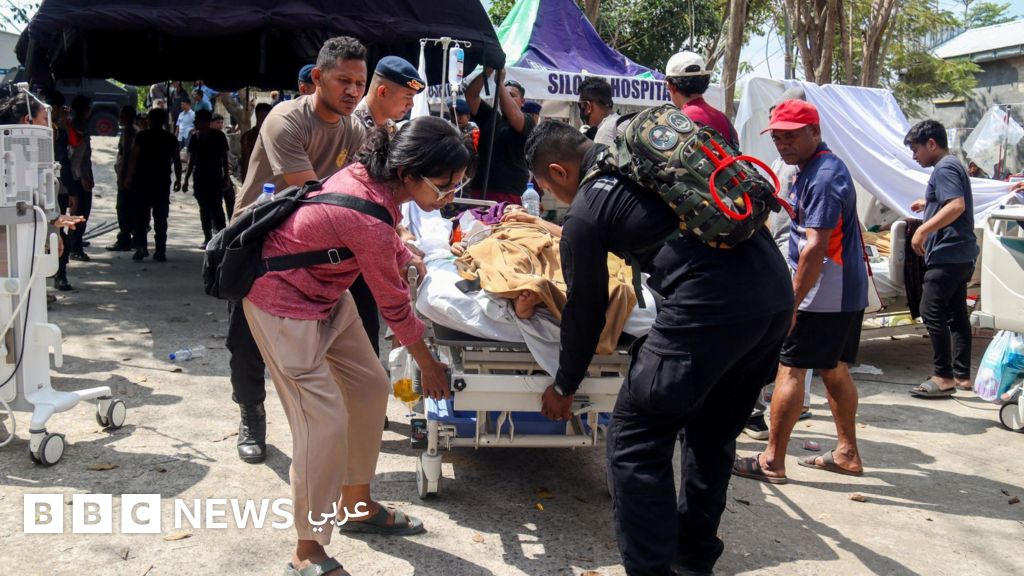
The city also became a focal point for humanitarian efforts, with temporary medical tents erected outside hospitals to treat the influx of earthquake victims. Furthermore, parts of Maumere were initially cut off due to landslides, complicating rescue operations. The state energy company, Pertamina, reported that 20 gas stations in the area ceased operations due to power outages, further disrupting essential services for the affected population.
Pacific Ring of Fire
Indonesia's geographical location along the "Pacific Ring of Fire" inherently exposes it to frequent and powerful seismic activity. This region, where several major tectonic plates converge, is notorious for its high incidence of earthquakes and volcanic eruptions. The recent 7.7 magnitude earthquake, followed by 341 aftershocks, serves as a stark reminder of the inherent geological risks faced by the archipelago.
The Indonesian Geophysical Agency noted that the same area was hit by a 7.5 magnitude earthquake in 1992, which also caused extensive destruction, underscoring a historical pattern of seismic vulnerability. This recurring threat necessitates robust building codes, advanced early warning systems, and continuous disaster preparedness strategies to protect its vast population of approximately 290 million people from future catastrophic events.
Key points
- A 7.7 magnitude earthquake struck eastern Indonesia, resulting in at least 51 deaths and 113 injuries.
- Approximately 5,000 people have been evacuated, with over 3,300 displaced in the Sikka region alone.
- The earthquake caused widespread damage to hundreds of buildings, over 1,300 homes, and infrastructure, including roads blocked by landslides.
- Rescue teams are actively searching for survivors, with over 3,500 military and police personnel deployed.
- The East Nusa Tenggara government is considering declaring a state of emergency to facilitate resource mobilization.
- The region experienced 341 aftershocks and is located on the seismically active Pacific Ring of Fire.
The rapid deployment of over 3,500 military and police personnel, along with 10,500 aid packages, suggests a robust and coordinated response that could mitigate further suffering and accelerate recovery efforts. The consideration of a state of emergency in East Nusa Tenggara also indicates a commitment to mobilizing necessary resources for the affected population.
The remote and mountainous terrain, coupled with extensive damage to over 1,300 homes and 20 non-operational gas stations, poses significant logistical challenges for aid distribution and long-term recovery. The high number of aftershocks and the region's history of powerful earthquakes suggest ongoing risks and a prolonged period of instability for residents.