‘Trade with Iraq requires unity of command’
Iran's trade with Iraq, currently estimated at $14-15 billion, needs centralized decision-making and adaptive policies to reach a $20 billion target, according to officials.
Intelligence analysis by Gemini 2.5 Flash

The Head of the Iran-Iraq Joint Chamber of Commerce, Yahya Al-e-Es'haq, and the Head of the Iran-Iraq Economic Task Force, Hassan Danaeifar, emphasized the need for a unified command structure and flexible trade policies to navigate Iraq's changing regulations and boost bilateral trade, which they view as crucial for Iran's national security and development.
Imagine Iran and its neighbor Iraq are like two friends who want to trade toys and snacks. Right now, they trade a lot, but Iran wants to trade even more, aiming for a big $20 billion goal. To do this, Iran needs to have one clear plan for all its trading with Iraq, instead of many different people making decisions. This is because Iraq's rules for trading can change often, like changing the rules of a game. Iran also needs to make sure it buys things from Iraq, not just sells, to keep the friendship fair and strong.
Analysis
The discourse surrounding Iran's trade relations with Iraq underscores a critical strategic imperative for Tehran: leveraging economic engagement to bolster national security and development. Officials like Yahya Al-e-Es'haq and Hassan Danaeifar articulate a vision where trade is not merely a commercial activity but a cornerstone of broader national interests. This perspective necessitates a re-evaluation of current trade mechanisms, particularly in light of Iraq's complex and evolving regulatory landscape. The call for a 'unity of command' reflects a recognition that fragmented decision-making hinders Iran's ability to respond effectively to market dynamics and regulatory shifts in Iraq, potentially ceding ground to competitors like the UAE and China.
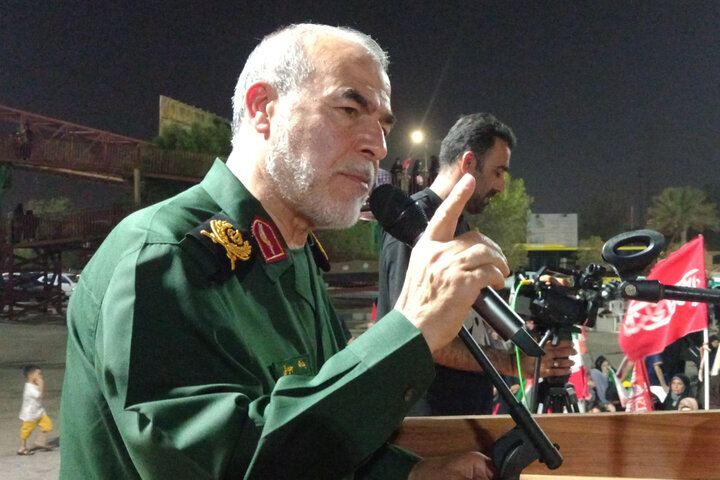
Yahya Al-e-Es'haq
Yahya Al-e-Es'haq, as the Head of the Iran-Iraq Joint Chamber of Commerce, serves as a central voice advocating for a more cohesive and agile approach to bilateral trade. His emphasis on the direct link between regional trade, national security, and development frames the economic relationship within a broader geopolitical context. Al-e-Es'haq's insights highlight the necessity for Iran to move beyond a purely economic lens, integrating trade policy with strategic national objectives. He points to the need for increased maneuverability, particularly in a market characterized by constantly changing regulations, suggesting that a centralized decision-making body is essential for effective adaptation.
Furthermore, Al-e-Es'haq champions practical solutions for exporters, such as import-against-export and goods-against-goods mechanisms, drawing on Iran's past experiences. This pragmatic stance aims to alleviate the burden of direct currency transfers to the Central Bank, which can be a significant hurdle for businesses. His advocacy for delegating authority to provincial management, citing the Khosravi border as an example, underscores a belief that localized decision-making can resolve many problems more swiftly, especially given the diverse regulatory environments within Iraq itself, including the Kurdistan Region.
$20 billion target
The ambitious $20 billion trade target with Iraq is presented by both Al-e-Es'haq and Danaeifar as not only achievable but crucial for Iran's economic trajectory. While unofficial estimates currently place exchanges at $14-15 billion, the confidence in reaching the higher figure suggests a belief in untapped capacities and the potential for strategic adjustments to unlock further growth. This target signifies Iran's commitment to deepening its economic footprint in Iraq, which has historically absorbed a substantial portion of Iran's non-oil exports, averaging around 22 percent and sometimes reaching 25-26 percent.
Achieving this target, however, is contingent upon addressing several structural and operational challenges. The officials stress the importance of balancing exports with imports, particularly for basic needs, raw materials, and production goods, to ensure the sustainability of economic relations. This balanced approach aims to prevent a one-sided trade flow that could become unsustainable in the long term. The target also implicitly acknowledges the growing competition from other regional and global players, necessitating a reform of Iran's trade and executive methods to maintain and expand its market share.
Kermanshah
Kermanshah's strategic geographical position and existing capacities are highlighted as pivotal to Iran's national role in the trade chain with Iraq. The province, with its border infrastructure, has consistently held the top position among Iranian provinces for exports to Iraq, even during periods of reduced activity at some border crossings. This demonstrates Kermanshah's inherent advantage and established channels for cross-border commerce, making it a critical hub for Iran's trade ambitions.
The emphasis on Kermanshah also points to a broader strategy of empowering provincial authorities to manage aspects of the Iraq trade relationship. By delegating authority, particularly for immediate decisions at border points like Khosravi, the aim is to streamline processes and resolve issues more efficiently. This localized approach recognizes the unique challenges and opportunities presented by different parts of Iraq, including the distinct regulatory frameworks of its various regions. The call for Kermanshah activists to explicitly convey their issues to the Joint Chamber further underscores the importance of ground-level feedback in shaping national trade policy and removing obstacles.
Key points
- Developing trade with Iraq is directly linked to Iran's national security and development.
- A centralized decision-making body and unity of command are crucial for navigating Iraq's changing regulations.
- The $20 billion trade target with Iraq is considered achievable, up from current unofficial estimates of $14-15 billion.
- Balancing exports with imports, especially for basic needs and raw materials, is essential for sustainable trade.
- Delegating authority to provincial management, particularly for border issues, can resolve problems more quickly.
If Iran implements a unified command structure and adopts flexible trade policies, it could significantly boost its trade volume with Iraq, potentially reaching the $20 billion target. This would strengthen Iran's economy, enhance national security, and provide a stable market for its non-oil exports, while also fostering more balanced and sustainable bilateral relations.
Failure to centralize decision-making and adapt to Iraq's evolving regulations could lead to Iran losing its market share to competitors like the UAE and China. This would hinder Iran's economic development, make it harder to achieve trade targets, and potentially weaken its strategic influence in a crucial neighboring market.