Train track defect found before Lewes derailment, report says
A defect was found on railway tracks in East Sussex at the site where a train derailed leaving 30 injured, a report says. Initial findings from the Rail Accident Investigation Branch (RAIB) found an 'irregularity' with the tracks near Lewes where three carriages tumbled d…
Intelligence analysis by Llama
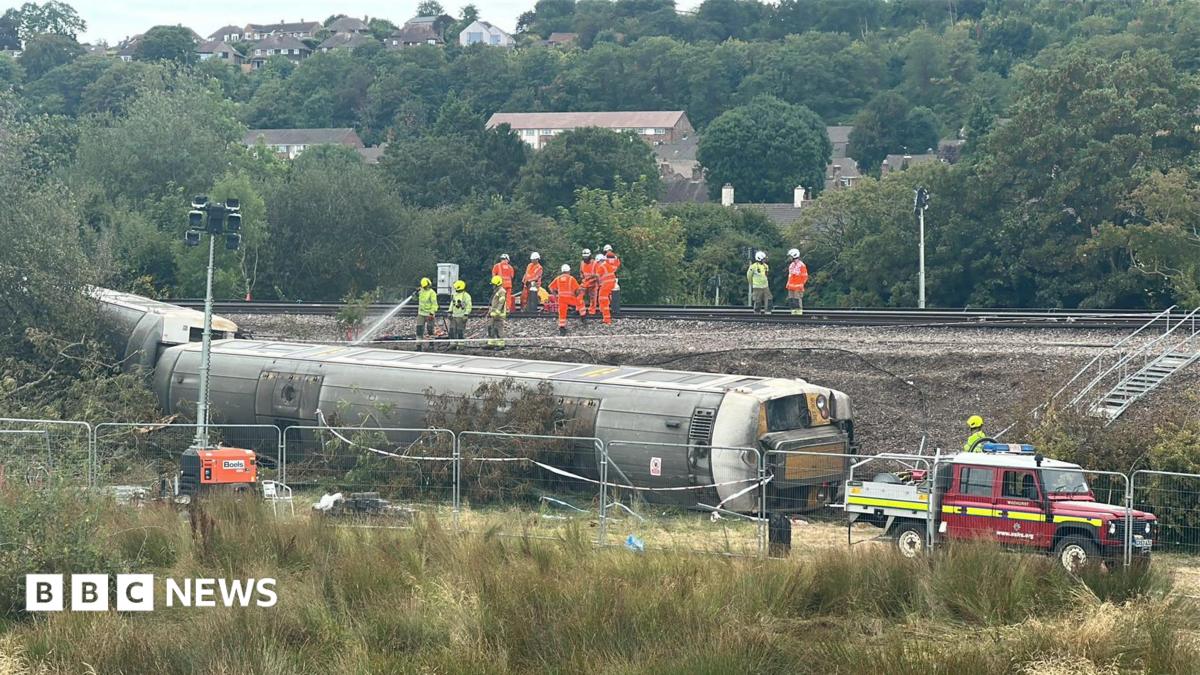
A train derailed in Lewes, East Sussex, leaving 30 people injured. An investigation found a defect in the railway tracks, which may have contributed to the accident.
A train derailed in Lewes, East Sussex, because of a defect in the railway tracks. The tracks were not properly maintained, and the hot weather made the clay embankment move, which contributed to the accident.
Analysis
Track Geometry Irregularity
The Rail Accident Investigation Branch (RAIB) has found an 'irregularity' with the track geometry near Lewes, where a train derailed last Thursday. The RAIB received several reports of rough riding at the location of the derailment from passengers on other trains. The investigation is ongoing, but it is clear that the track geometry played a significant role in the accident.
Weather Conditions
The derailment took place during a sustained period of hot and dry weather, with temperatures as high as 33°C (91.4°F) registered shortly before the crash. The RAIB says the clay embankment and the material underneath it are sensitive to changes in moisture content, and may move as moisture levels change. This highlights the importance of considering weather conditions when inspecting and maintaining railway tracks.
Investigation and Recommendations
The RAIB will now consider elements including how that section of track was inspected and maintained, the condition and maintenance of the embankment, the weather conditions and how effective any hot weather mitigation measures were. In a joint statement, Network Rail's route director for Sussex and the chief executive of Greater Thameslink Railway apologised for the derailment and committed to working across the industry to implement recommendations arising from the investigation.
Key points
- A defect was found on railway tracks in East Sussex at the site where a train derailed leaving 30 injured, a report says.
- Initial findings from the Rail Accident Investigation Branch (RAIB) found an 'irregularity' with the tracks near Lewes where three carriages tumbled down an embankment last Thursday.
- The RAIB received several reports of rough riding at the location of the derailment from passengers on other trains.
- The derailment took place during a sustained period of hot and dry weather, with temperatures as high as 33°C (91.4°F) registered shortly before the crash.
If the investigation leads to changes in the way railway tracks are inspected and maintained, it could improve the safety of the UK's rail network and prevent similar accidents in the future.
The derailment highlights the risks of not properly maintaining railway tracks, particularly in areas prone to hot and dry weather. If similar accidents occur, it could lead to a loss of public trust in the rail network and increased costs for repairs and compensation.