Trezor Safe 7 Review: The FOSS Self Custody Hardware Wallet
The Trezor Safe 7 hardware wallet offers a blend of modern design and robust self-custody features, including unique 20-word SLIP-39 backups with Shamir Secret Sharing for enhanced security and redundancy. It caters to both Bitcoin-only and multi-coin users with distinct …
Intelligence analysis by Gemini 2.5 Flash
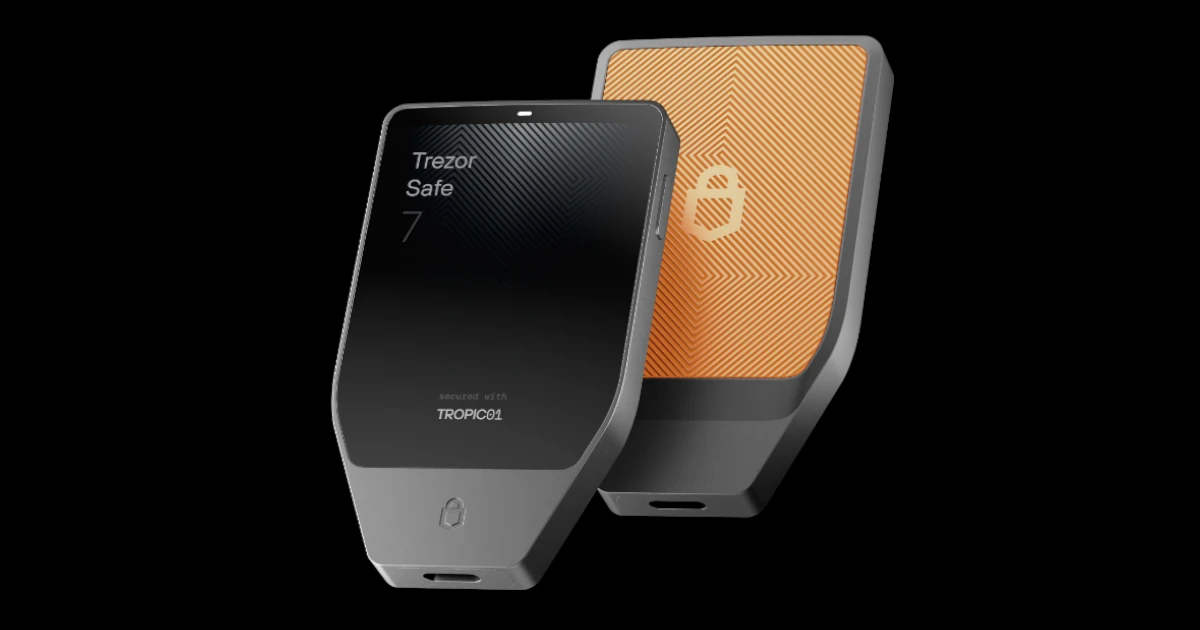
The Trezor Safe 7 is a new hardware wallet that balances user experience with advanced security, featuring a sleek design and innovative SLIP-39 20-word seed phrase standard for Shamir backups. It provides flexible firmware for Bitcoin-only or multi-coin use, aiming to make self-custody more accessible and secure for diverse crypto users.
Imagine your digital money is like treasure in a super-safe box. The Trezor Safe 7 is a special key for that box. Instead of one long secret code, it uses 20 special words that are easier to remember and harder to mix up. You can even split these words into a few smaller lists and hide them in different places, so if one list gets lost, you can still open your treasure box with the others. It makes keeping your digital money safe feel more real and secure.
Analysis
The Trezor Safe 7 represents a significant step in hardware wallet evolution, aiming to bridge the gap between advanced security and user-friendly design. Its physical construction, reminiscent of a modern smartphone with a metal exterior and wide screen, provides a tangible sense of security for digital assets. The device's tactile feedback during critical operations, such as signing transactions, enhances the user experience by making abstract digital processes feel more concrete and secure. Furthermore, Trezor's strategic decision to offer two distinct firmware stacks—a standard multi-coin version and a leaner Bitcoin-only option—caters to a diverse user base, allowing for tailored security and update frequencies.
SLIP-39
Central to the Trezor Safe 7's security architecture is its adoption of the SLIP-39 standard, a 20-word backup system introduced by Trezor in 2019. This deviates from the more common 12 or 24-word BIP-39 standard. While SLIP-39 does not inherently provide more entropy than a 12-word seed, Trezor asserts that its word list is meticulously curated to minimize confusion and similarity, thereby reducing the risk of human error during backup. A key advantage of SLIP-39 is its inherent extendability into Shamir Secret Sharing, allowing users to initially create a single 20-word backup and later convert it into a redundant set of Shamir shares without needing on-chain transactions to transfer funds. This flexibility is a notable improvement for users seeking to enhance their backup strategy over time.
Shamir Secret Sharing
Shamir Secret Sharing is a cryptographic scheme that Trezor has implemented to provide robust redundancy for wallet backups. With Shamir, users can split their 20-word seed phrase into multiple 'shards,' where only a predetermined threshold number of these shards is required to reconstruct the wallet. For instance, a 'two-of-three' setup means three lists of 20 words are created and stored separately, but any two of them suffice to restore access. This design significantly mitigates risks associated with single points of failure, such as loss, theft, or destruction of a single backup. If one shard is compromised or lost, the remaining shards can still secure the assets, offering a level of resilience comparable to multi-signature wallets but with different trade-offs. Although SLIP-39 and Shamir have less widespread adoption than BIP-39, they are supported by other prominent wallets like Sparrow and Electrum, indicating a growing recognition of their security benefits.
Key points
- The Trezor Safe 7 is a hardware wallet offering a premium user experience with a metal exterior and wide screen.
- It provides two firmware options: a standard multi-coin version and a leaner Bitcoin-only version.
- The device utilizes a unique 20-word SLIP-39 backup standard, designed by Trezor, which enables Shamir Secret Sharing.
- Shamir backups allow users to split their seed words into multiple shards, requiring a threshold number to restore the wallet, enhancing redundancy and security.
- The user experience includes distinctive tactile and visual feedback for important actions like transaction signing.
The Trezor Safe 7's focus on enhanced security features like SLIP-39 and Shamir backups, combined with a user-friendly design, could significantly lower the barrier to secure self-custody for a broader range of cryptocurrency users. This innovation may lead to increased adoption of robust security practices, reducing instances of asset loss due to single points of failure.
Despite its advanced features, the adoption of SLIP-39 remains less widespread than BIP-39, potentially limiting interoperability with other wallets and requiring users to be more technically proficient. The complexity of managing Shamir shares, even with redundancy, could still pose challenges for less experienced users, leading to potential misconfigurations or loss if not handled meticulously.