Trump accuses Zelenskyy of not wanting to end the war sparked by Russia's full-scale invasion
Donald Trump claimed Ukrainian President Volodymyr Zelenskyy does not want to end the war with Russia, criticizing his targeting of Russian oil infrastructure and suggesting he could have secured a better peace deal earlier. Trump also stated he is negotiating peace and h…
Intelligence analysis by Gemini 2.5 Flash
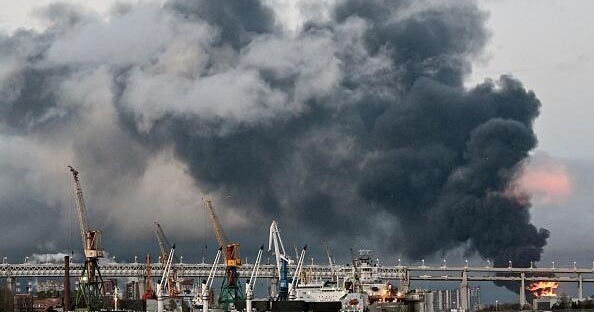
Former President Donald Trump publicly accused Ukrainian President Volodymyr Zelenskyy of prolonging the conflict with Russia, citing Ukraine's attacks on Russian oil facilities as evidence. Trump asserted his own efforts to negotiate peace and his decision to delay further sanctions on Russia, while Zelenskyy warned against siding with Moscow and highlighted the resumption of U.S.-Uk…
Imagine two kids fighting, and one kid, Zelenskyy, is trying to stop the other kid, Putin, from taking his toys. Another grown-up, Trump, says Zelenskyy doesn't really want the fight to end because he keeps trying to hit Putin's piggy bank (oil places). Trump says he's trying to make them friends again and won't punish Putin more right now. But Zelenskyy says Putin is the bully and it would be a big mistake for anyone to help him.
Analysis
Trump's Stance
Donald Trump's recent comments mark a significant departure from traditional U.S. foreign policy regarding the Russia-Ukraine conflict. His assertion that Ukrainian President Volodymyr Zelenskyy "doesn't want to end this war" directly contradicts Ukraine's stated objectives and efforts to defend its sovereignty. Trump specifically criticized Ukraine's strategy of targeting Russian diesel refineries, a tactic aimed at crippling Russia's war economy by depriving its forces of fuel and revenue.
This perspective suggests a potential shift in U.S. policy if Trump were to return to office, prioritizing a swift, negotiated settlement over sustained military support for Ukraine's defensive actions. His claim of "negotiating Peace" and holding off on new sanctions against Russia further underscores a desire to engage Moscow directly, potentially at the expense of pressing the Kremlin.
Zelenskyy's Response
Ukrainian President Volodymyr Zelenskyy's reaction to Trump's statements reveals deep concern over the implications for his country. While expressing trust in Trump, Zelenskyy unequivocally stated that any U.S. alignment with Moscow would constitute a "historic mistake" and a "tragedy" for Washington. He emphasized the moral distinction between Ukraine as the victim of aggression and Russia as the aggressor, urging Trump to be "very clear with this position."
Zelenskyy's comments highlight Ukraine's reliance on international support, particularly from the U.S., and its apprehension about any policy shifts that might legitimize Russia's invasion or weaken the international coalition against it. His remarks also touched upon the resumption of U.S.-Ukraine intelligence sharing, which he noted had been "blocked for some period of time," indicating past friction or disruptions in critical cooperation.
Starlink and Intelligence
The article also brings to light issues surrounding U.S.-Ukraine intelligence sharing and the functionality of Elon Musk's Starlink network. Zelenskyy's assertion about blocked data sharing and claims from Ukrainian officials regarding constrained Starlink data inhibiting drone operations point to potential vulnerabilities or deliberate actions affecting Ukraine's war effort.
U.S. Secretary of State Marco Rubio, however, denied any deliberate U.S. withholding of early warnings or ordering Starlink slowdowns, attributing the latter to an unexplained occurrence that has since been resolved. These incidents underscore the complex interplay of technology, intelligence, and geopolitical dynamics in modern warfare, where disruptions in communication or data flow can have immediate tactical consequences. The ongoing drone attacks by Ukraine on Russian oil facilities, and Russia's interception claims, illustrate the persistent nature of the conflict despite diplomatic overtures.
Key points
- Donald Trump accused Ukrainian President Zelenskyy of not wanting to end the war, criticizing Ukraine's attacks on Russian oil facilities.
- Trump stated he is "negotiating Peace" and has decided to hold off on new sanctions against Russia to keep them at the bargaining table.
- Zelenskyy warned that siding with Moscow would be a "historic mistake" for Washington and emphasized the aggressor role of Russia.
- U.S.-Ukraine intelligence sharing has resumed after a period of being "blocked," according to Zelenskyy.
- U.S. Secretary of State Marco Rubio denied deliberate U.S. withholding of warnings or ordering Starlink slowdowns, stating Starlink issues were resolved.
- Ukraine and Russia continued trading drone and missile strikes over the weekend, targeting oil facilities and civilian areas.
If Trump's stated efforts to negotiate peace were to genuinely lead to a viable diplomatic solution, it could potentially de-escalate the conflict and save lives, allowing for a resolution that respects international law and Ukraine's sovereignty. The resumption of U.S.-Ukraine intelligence sharing, as noted by Zelenskyy, suggests that critical cooperation channels remain open, which could strengthen Ukraine's defensive capabilities.
Trump's criticism of Zelenskyy and his stance on sanctions could undermine international support for Ukraine, potentially emboldening Russia and prolonging the conflict. A U.S. shift towards accommodating Russia, as warned by Zelenskyy, might be perceived as a betrayal by allies and could lead to a significant weakening of the Western coalition against Russian aggression, with severe consequences for Ukraine's territorial integrity and future security.
Market signals
- OIL Ukrainian attacks on Russian oil infrastructure, as described in the article, create supply-side risk and could drive up global oil prices.
AI-generated analysis of potential market relevance. Not financial advice.