Trump destroys U.S. diplomacy and global trust in America
Tehran Times opinion piece arguing that Trump has inflicted lasting damage on U.S. diplomacy through the war against Iran and the 2018 withdrawal from the Iran nuclear deal.
Intelligence analysis by Llama
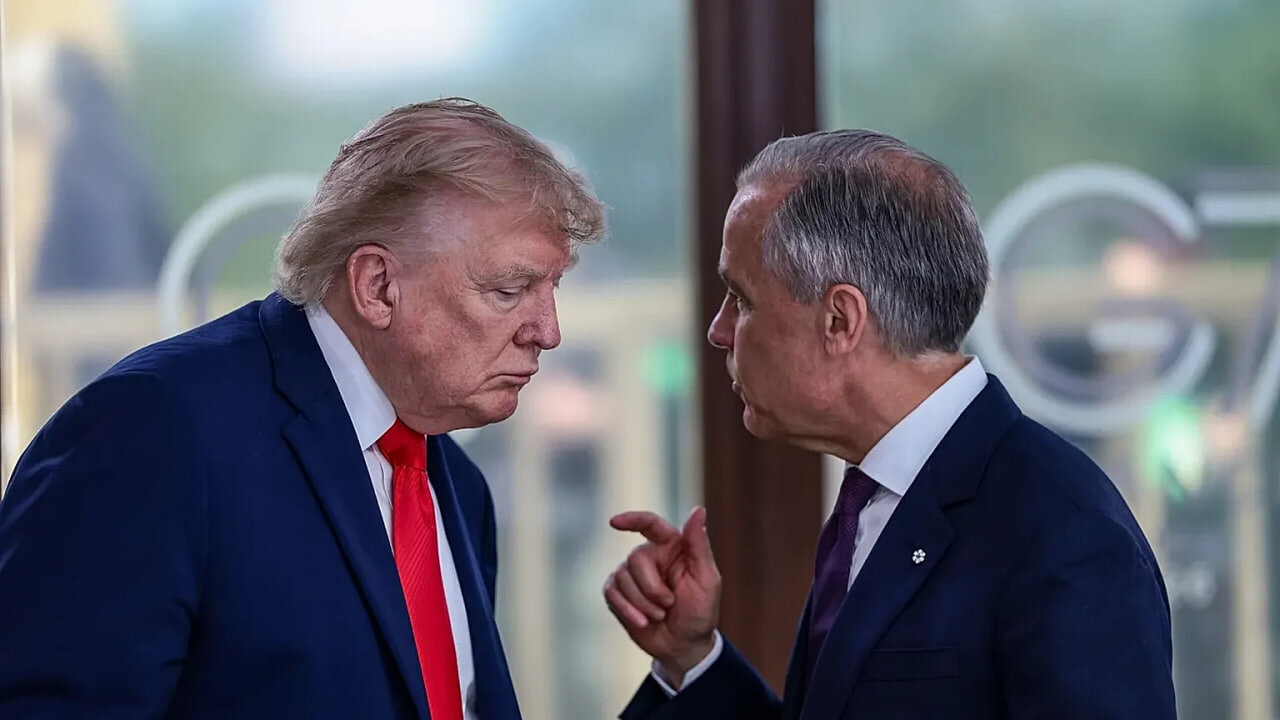
An opinion column framing Trump's tenure as a historic erosion of U.S. credibility abroad, citing the ongoing U.S.-Israeli war on Iran, the 2018 JCPOA withdrawal, and the alienation of allies like Canada.
Some people in charge of the U.S. think that when other countries make a fair deal and stick to it, America should still attack them anyway. Iran had a big deal about not making nuclear weapons, kept its side, and offered to give up even more — then got bombed two days later. The writer says this makes other countries stop trusting America's promises.
Analysis
The war's sixth month
The column anchors its critique in what it describes as the sixth month of U.S.-Israeli aggression against Iran, asserting that the campaign has produced the opposite of its stated aims. Rather than igniting an insurgency, the author claims the war rallied Iranians around the government and strengthened Iran geopolitically. The piece points to the reported cost — roughly $100 billion in additional U.S. debt, depleted American arsenals, and American military casualties — as evidence that the operation was a strategic blunder rather than a decisive strike. The column also warns that prolonging the conflict risks an economic catastrophe with global spillovers, a framing consistent with Iranian official messaging that paints the war as unsustainable for Washington.
The 2018 JCPOA withdrawal
The author traces the current crisis to May 2018, when Trump quit the Iran nuclear deal at the urging of national security adviser John Bolton and pro-Israel donors. The piece highlights the multilateral nature of the original agreement, negotiated with China, France, Germany, Russia, the United Kingdom, and the European Union, and lists the specific Iranian concessions embedded in it: elimination of medium-enriched uranium, a 98 percent cut to low-enriched stockpiles, a 3.67 percent enrichment cap, intrusive monitoring, and the disabling of a heavy water reactor. The column quotes Michael Malin of Queen's University Belfast calling the withdrawal "the most consequential foreign policy blunder yet" from an administration bent on undermining U.S. influence. Iran's year-long patience before scaling back its own commitments is presented as proof that Tehran acted in good faith and that the United States broke the deal first.
The February 28 offer
The most pointed revelation in the piece concerns the diplomatic maneuvering in the days before the U.S.-Israeli strikes. According to the column, less than 48 hours before the February 28 attack, Iran put forward a package of concessions: diluting its 60 percent enriched uranium, pausing new enrichment for years, capping future enrichment near 20 percent, and expanding IAEA oversight. British National Security Adviser Jonathan Powell is quoted as describing the proposal as a genuine basis for avoiding war. The author uses this timeline to argue that the war was a choice rather than a necessity, and that the opportunity for a negotiated settlement was deliberately rejected. The narrative dovetails with longstanding Iranian claims that Washington negotiates in bad faith and uses talks as cover for military action, a framing that will shape Tehran's posture in any future dialogue with the United States.
Key points
- Opinion column from Tehran Times frames the ongoing U.S.-Israeli war on Iran as a strategic and economic failure now in its sixth month.
- War has reportedly added roughly $100 billion to U.S. debt, depleted American arsenals, and cost American military lives.
- Author traces the crisis to Trump's 2018 withdrawal from the JCPOA at the urging of John Bolton and pro-Israel donors.
- Column claims Iran offered significant nuclear concessions — including diluting 60 percent uranium and capping enrichment at 20 percent — less than 48 hours before the February 28 attack.
- Canadian Prime Minister Mark Carney is quoted warning that America is using economic integration as a weapon against its closest allies.
If Washington reassesses the costs of the war and reopens the diplomatic track on terms close to what Iran offered on February 28, the column suggests there is a workable basis for de-escalation and a renewed nuclear arrangement that European and other partners would likely support.
The author warns that continued refusal to admit defeat risks an economic catastrophe that could engulf not just the United States but the wider global economy, while further erosion of American credibility could push allies and adversaries alike toward alternative security and trade arrangements that permanently marginalize U.S. influence.
Market signals
- OIL The article warns that a prolonged U.S.-Israeli war on Iran could trigger an economic catastrophe, sustaining geopolitical risk premia in crude oil markets.
- XAU Erosion of U.S. credibility and rising global economic risk described in the piece tend to support safe-haven demand for gold.
AI-generated analysis of potential market relevance. Not financial advice.