Trump escalates Smithsonian attack with order for signs outside history museum
US President Donald Trump has ordered the interior department to display signs outside the Smithsonian National Museum of American History accusing the institution of inaccuracy. The order escalates Trump's attacks against the Smithsonian, which he and his allies accuse o…
Intelligence analysis by Llama
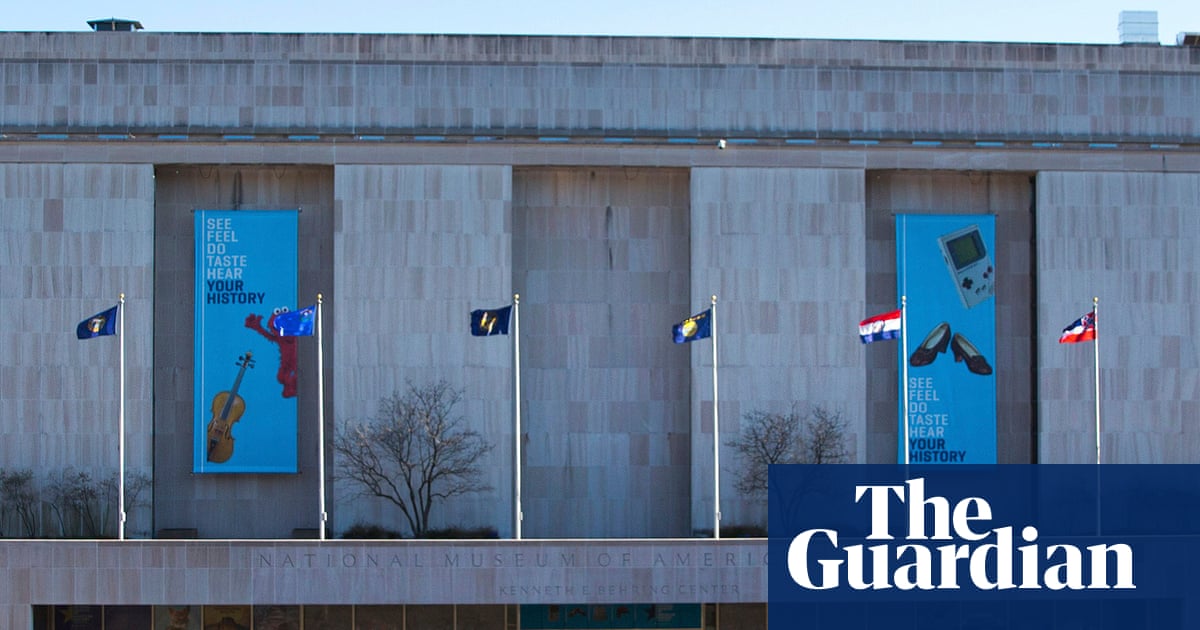
US President Donald Trump has ordered the interior department to display signs outside the Smithsonian National Museum of American History accusing the institution of inaccuracy. The order escalates Trump's attacks against the Smithsonian, which he and his allies accuse of politicizing the institution by focusing too much on injustices in American history.
The US President, Donald Trump, has ordered signs to be put up outside a museum called the Smithsonian National Museum of American History. These signs say that the museum is not telling the truth about American history. The museum is trying to tell the story of America's past, including the times when the country did not live up to its own ideals. Trump and his team think the museum is being too negative and want to change the way it tells the story.
Analysis
A $60B Vote of Confidence
The Trump administration's decision to order the interior department to display signs outside the Smithsonian National Museum of American History is a significant escalation of the ongoing tensions between the two parties. The signs, which accuse the institution of inaccuracy, are a direct attack on the Smithsonian's commitment to scholarship and accuracy. The American Historical Association, a group composed of professional historians, has praised the Smithsonian Institution's 'commitment to scholarship and accuracy' in a statement earlier this month. The AHA statement reads, 'Historians practice our craft with scholarly integrity according to established standards of evidence, historical inquiry, and professional practice.' The National Museum of American History has declined to comment on the matter, but its director, Anthea Hartig, defended the institution's interpretations in a pair of congressional hearings earlier this month. Hartig responded to Republican representatives who accused her of encouraging 'self-loathing' by saying, 'We honor the declaration, the revolution, the constitution, our national symbols. And we tell the truth about the times that the country fell short of its own founding ideals. Telling our story fully is a form of respect for the American people and a commitment to constantly being in pursuit of a more perfect union.' The recent report prepared by the White House's domestic policy council called 'Saving America's Story' accused the museum's leadership of 'ideological capture.' The Smithsonian 'explicitly adopted an ideological framework that no longer treats the American story as a shared national inheritance to be taught or celebrated, but as a political instrument to divide, dispirit, and discourage our citizens,' the report says. The Trump administration's decision to order the interior department to display signs outside the Smithsonian National Museum of American History is a clear attempt to politicize the institution and undermine its commitment to scholarship and accuracy. This move is a significant escalation of the ongoing tensions between the two parties and highlights the ongoing debate over the interpretation of American history.
Key points
- US President Donald Trump has ordered the interior department to display signs outside the Smithsonian National Museum of American History accusing the institution of inaccuracy.
- The signs are a direct attack on the Smithsonian's commitment to scholarship and accuracy.
- The American Historical Association has praised the Smithsonian Institution's 'commitment to scholarship and accuracy' in a statement earlier this month.
- The National Museum of American History has declined to comment on the matter.
- The recent report prepared by the White House's domestic policy council called 'Saving America's Story' accused the museum's leadership of 'ideological capture.'
If this development plays out positively, it could lead to a more nuanced and accurate understanding of American history. The Smithsonian Institution's commitment to scholarship and accuracy could be reinforced, and the institution's reputation as a trusted source of historical information could be preserved.
If this development plays out negatively, it could lead to a further politicization of the Smithsonian Institution and a erosion of public trust in the institution. The institution's commitment to scholarship and accuracy could be undermined, and the institution's reputation could be damaged.