Trump-Netanyahu’s war crimes against the environment
The US and Israel's war on Iran has caused significant environmental damage, including oil leaks in the Persian Gulf and the Strait of Hormuz, and the release of greenhouse gases. The war has also resulted in the contamination of Iran's coastal waters, including those aro…
Intelligence analysis by Llama
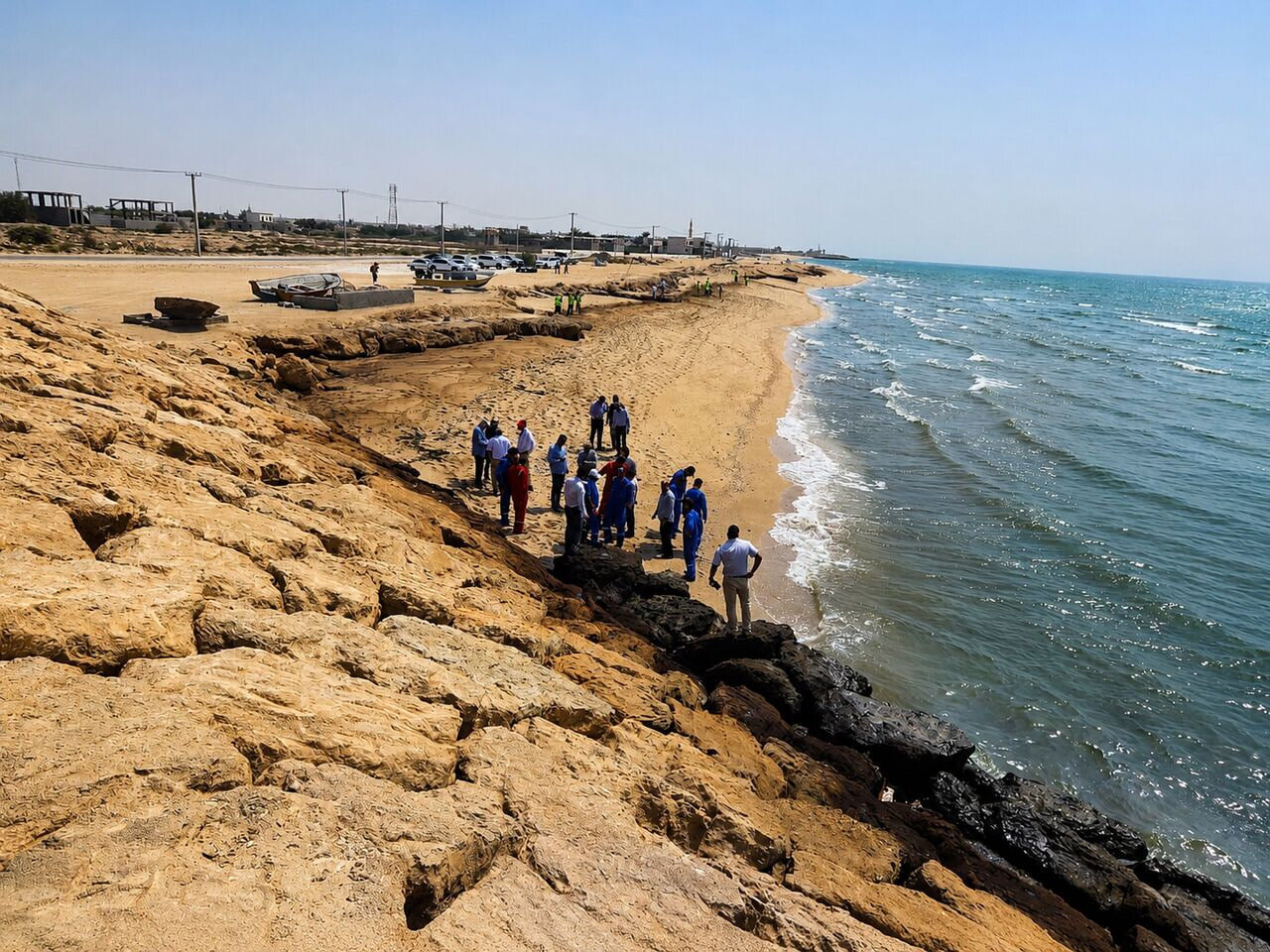
The US and Israel's war on Iran has caused significant environmental damage, including oil leaks and the release of greenhouse gases, contaminating Iran's coastal waters and threatening marine life.
Imagine a big war that's not just hurting people, but also the Earth. The war in Iran has made the air and water dirty, and it's hurting animals like sea turtles and dolphins. It's like a big mess that's going to take a long time to clean up.
Analysis
Environmental Devastation of the War on Iran
The US and Israel's war on Iran has caused significant environmental damage, including oil leaks in the Persian Gulf and the Strait of Hormuz, and the release of greenhouse gases. The war has also resulted in the contamination of Iran's coastal waters, including those around Qeshm and Kharg islands, with oil. The affected areas are home to diverse marine life, including endangered hawksbill sea turtles, dolphins, and whales.
The Carbon Footprint of the War
The war has generated a significant amount of carbon emissions, with estimates suggesting that the carbon emissions generated by Israel's war on Gaza have exceeded 30 million tons. Additionally, the war on Iran has generated more than 68 million tons of rubble, according to a 2026 UN-World Bank assessment. The bombing of oil depots in the metropolis of Tehran, and nearby cities, including Aghdesieh and Karaj, has also released a significant amount of greenhouse gases, with estimates suggesting that the fires burned between 2.5 and 5.9 million barrels of oil, releasing roughly 1.88 million tCO2e.
The Humanitarian and Environmental Costs of the War
The war on Iran has already taken thousands of civilian lives, and its environmental legacy threatens millions more. The war has also resulted in the destruction of infrastructure, including oil facilities, chemical plants, and weapons depots, which has led to the accumulation of toxic residues in soil, waterways, and across borders. The war has also caused a massive release of toxic hydrocarbons, sulfur oxides, and nitrogen compounds into the air, which has resulted in widespread health, environmental, and humanitarian damage.
Conclusion
The war on Iran has caused significant environmental damage, including oil leaks and the release of greenhouse gases, contaminating Iran's coastal waters and threatening marine life. The war has also resulted in the destruction of infrastructure, including oil facilities, chemical plants, and weapons depots, which has led to the accumulation of toxic residues in soil, waterways, and across borders. The war has also caused a massive release of toxic hydrocarbons, sulfur oxides, and nitrogen compounds into the air, which has resulted in widespread health, environmental, and humanitarian damage.
Key points
- The US and Israel's war on Iran has caused significant environmental damage, including oil leaks and the release of greenhouse gases.
- The war has contaminated Iran's coastal waters, including those around Qeshm and Kharg islands, with oil.
- The affected areas are home to diverse marine life, including endangered hawksbill sea turtles, dolphins, and whales.
- The war has generated a significant amount of carbon emissions, with estimates suggesting that the carbon emissions generated by Israel's war on Gaza have exceeded 30 million tons.
- The war has resulted in the destruction of infrastructure, including oil facilities, chemical plants, and weapons depots, which has led to the accumulation of toxic residues in soil, waterways, and across borders.
If the war ends soon, the environmental damage can be mitigated, and the affected areas can be cleaned up. Additionally, the international community can work together to prevent similar environmental disasters in the future.
The environmental damage caused by the war will have long-lasting consequences, and it may take years or even decades to fully recover. The war has also resulted in the destruction of infrastructure, which will take time and resources to rebuild.