Trump Orders Military to ‘Substantially Reduce’ Joint Exercises with South Korea
President Donald Trump has directed the Defense Department to scale down joint military exercises with South Korea, citing the country's refusal to join the war in Iran and his 'very good' relationship with North Korea's Kim Jong Un.
Intelligence analysis by Llama
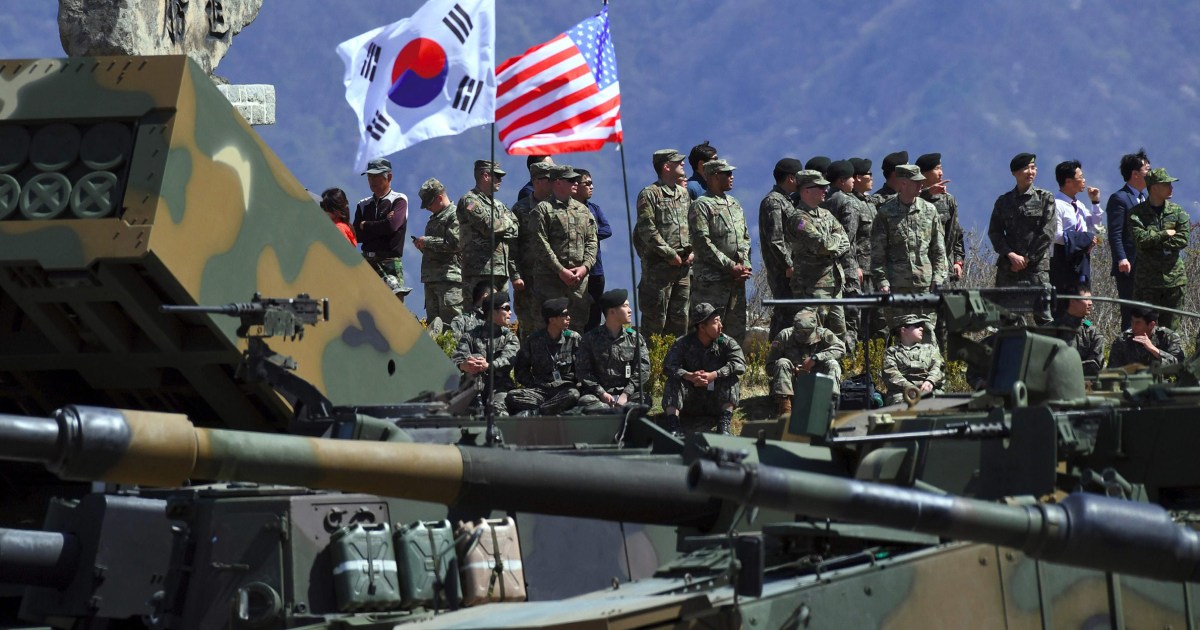
President Trump has ordered the military to reduce joint exercises with South Korea, citing the country's refusal to join the war in Iran and his good relationship with North Korea's Kim Jong Un. The decision comes after North Korea launched a ballistic missile and threatened to retaliate against the upcoming drills.
Imagine you're playing a game with your friends, and you all agree to follow some rules. But then, one of your friends decides to change the rules without telling the others. That's kind of what's happening here. President Trump is changing the rules of a game that the US and South Korea play together, and it's causing some tension with North Korea.
Analysis
Background
The decision by President Trump to reduce joint military exercises with South Korea is a significant development in the complex relationship between the US, South Korea, and North Korea. The exercises, which are meant to build understanding among several agencies and enhance the combined defense posture, have been a point of contention between the US and North Korea for years.
What Changed
The change in policy comes after North Korea launched a ballistic missile and threatened to retaliate against the upcoming drills. The US has been trying to negotiate with North Korea to reduce tensions and prevent further conflict. However, the recent launch of the ballistic missile has raised concerns about the potential for further escalation.
Implications
The decision by President Trump to reduce joint military exercises with South Korea has significant implications for regional security. It could potentially reduce tensions between the US and North Korea, but it also raises concerns about the potential for further conflict. The US has been trying to negotiate with North Korea to reduce tensions and prevent further conflict, but the recent launch of the ballistic missile has raised concerns about the potential for further escalation.
Key points
- President Trump has directed the Defense Department to scale down joint military exercises with South Korea.
- The decision comes after North Korea launched a ballistic missile and threatened to retaliate against the upcoming drills.
- The change in policy has significant implications for regional security and could potentially reduce tensions between the US and North Korea.
If this development plays out positively, it could potentially reduce tensions between the US and North Korea, and lead to further negotiations to reduce conflict. However, it's also possible that North Korea could retaliate against the reduced exercises, leading to further escalation.
The realistic downside risks or failure modes of this development include the potential for North Korea to retaliate against the reduced exercises, leading to further escalation. Additionally, the decision by President Trump to reduce joint military exercises with South Korea could potentially weaken the US-South Korea alliance, making it more difficult to respond to future threats.