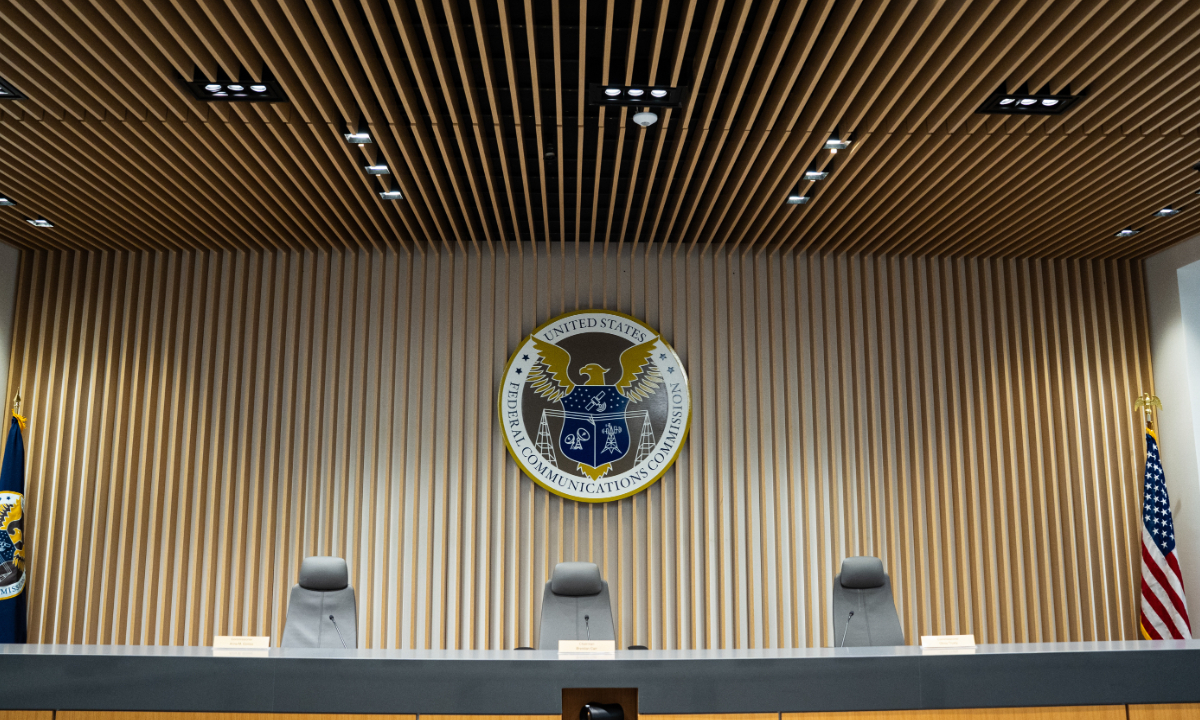
Trump tech official accuses China’s Moonshot AI of stealing from Anthropic
The Trump administration has accused Chinese start-up Moonshot AI of covertly extracting capabilities from leading US artificial intelligence models and obtaining restricted Nvidia chips abroad.
Intelligence analysis by Llama
The Trump administration has accused Moonshot AI of stealing from Anthropic's AI model, Claude Fable 5, through large-scale 'distillation'. This is part of Washington's growing concern that Chinese developers may be circumventing US efforts to preserve its AI advantage.
Imagine you have a super smart friend who knows how to do lots of things, like code and reason. Now imagine someone else is trying to copy your friend's knowledge without asking. That's basically what the Trump administration is accusing Moonshot AI of doing - copying knowledge from a US AI model without permission.
Analysis
A $60B Vote of Confidence
The Trump administration's accusations against Moonshot AI reflect a growing concern that Chinese developers may be circumventing US efforts to preserve its AI advantage. The accusations center around Moonshot AI's Kimi K3 model, which has attracted attention for its performance in coding, reasoning, and other complex tasks. The open-weight model has 2.8 trillion parameters, making it one of the largest AI systems released by a Chinese developer.
The accusations against Moonshot AI are part of a broader trend of US-China tensions in the AI space. The US has been working to preserve its AI advantage through restrictions on access to proprietary American models and controls on exports of advanced semiconductors. However, the release of Moonshot AI's Kimi K3 model has raised questions about whether Chinese developers are finding ways to circumvent these restrictions.
The timing of the two models' releases has prompted disagreement among AI researchers about whether Moonshot could have used the US model to train its latest system. While Kratsios did not present evidence that outputs from Fable 5 had been incorporated into Kimi K3, the accusations reflect a growing concern that Chinese developers may be using large-scale 'distillation' to train their AI models.
The implications of these accusations are significant. If Chinese developers are found to be circumventing US restrictions on access to proprietary American models, it could have significant implications for the global AI landscape. It could also raise questions about the effectiveness of US efforts to preserve its AI advantage.
Key points
- The Trump administration has accused Moonshot AI of covertly extracting capabilities from leading US artificial intelligence models.
- The accusations center around Moonshot AI's Kimi K3 model, which has attracted attention for its performance in coding, reasoning, and other complex tasks.
- The open-weight model has 2.8 trillion parameters, making it one of the largest AI systems released by a Chinese developer.
- The accusations reflect a growing concern that Chinese developers may be circumventing US efforts to preserve its AI advantage.
If Moonshot AI is found to be using legitimate methods to train its AI models, it could lead to increased collaboration and knowledge-sharing between US and Chinese AI researchers, potentially driving innovation and progress in the field.
If Moonshot AI is found to be circumventing US restrictions on access to proprietary American models, it could lead to increased tensions between the US and China, potentially disrupting the global AI landscape and hindering innovation and progress.