Trump Threatens 'Tremendous Economic Consequences' on Any Country Helping Iran
US President Donald Trump has threatened 'tremendous economic consequences' on any country that helps or does business with Iran. He made the statement on social media, citing the country's failure to make a deal with the US.
Intelligence analysis by Llama
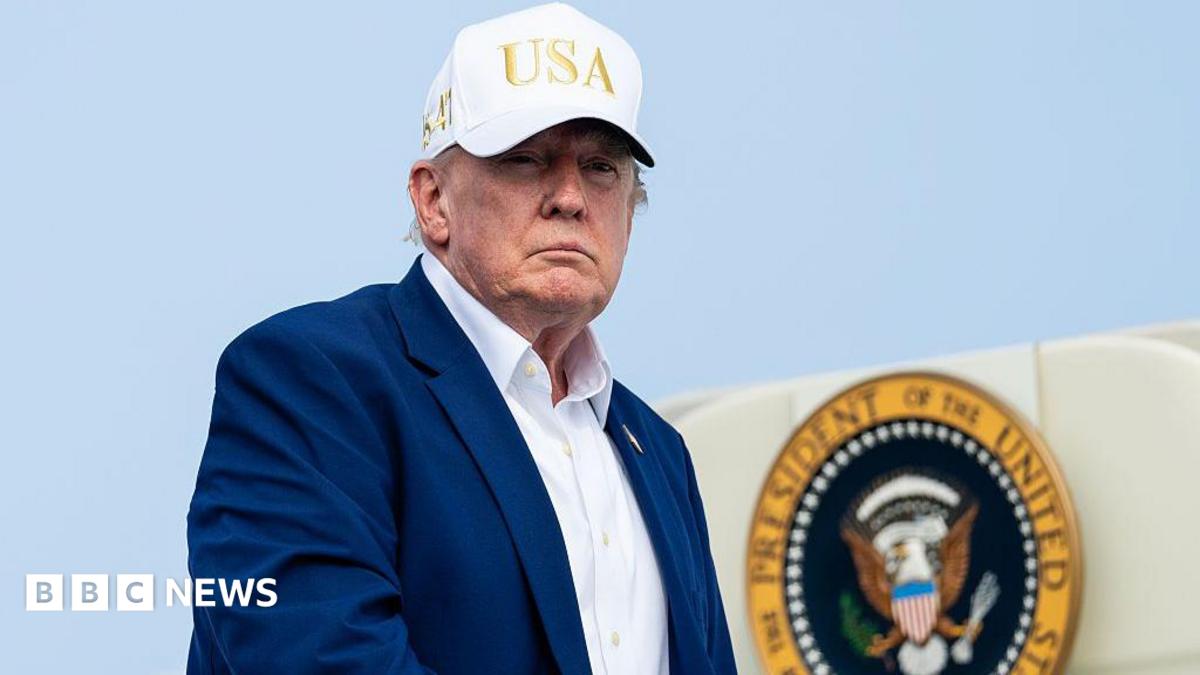
US President Donald Trump has threatened economic consequences on any country that helps or does business with Iran, citing the country's failure to make a deal with the US. The statement comes as a 60-day ceasefire with Iran expired on Monday, with no sign of a diplomatic or military off-ramp to the conflict.
Imagine you're playing a game of Monopoly with your friends. You're the US, and Iran is another player who's not playing by the rules. You're trying to stop them from getting money and resources, but they're finding ways to cheat. That's what's happening in the conflict between the US and Iran. The US is trying to stop Iran from getting money and resources, but Iran is finding ways to cheat. The conflict is like a big game of Monopoly, with the US trying to win and Iran trying to cheat.
Analysis
Operation Economic Fury: A New Phase of Sanctions Against Iran
US President Donald Trump has launched a new phase of economic sanctions against Iran, dubbed Operation Economic Fury. The operation aims to cut off Iran's access to the global financial system and cripple its economy. Trump's statement on social media, in which he threatened 'tremendous economic consequences' on any country that helps or does business with Iran, is a key part of this operation.
The US has already imposed significant sanctions on Iran, including restrictions on its oil exports and access to the US dollar. However, Trump's latest move takes the sanctions to a new level, targeting any country that does business with Iran. This includes banks, businesses, airports, and government entities that provide any type of lifeline to Iran.
The impact of these sanctions will be felt across the Middle East, particularly in countries that have close ties with Iran. The UAE's decision to sever all financial and economic ties with Iran is a significant development in this regard. Other countries in the region, such as Saudi Arabia and Kuwait, are also likely to be affected by the sanctions.
The conflict between the US and Iran has significant implications for the global economy, particularly in the energy sector. The Strait of Hormuz, which is a key shipping route for crude oil and liquified natural gas (LNG), has been disrupted by the conflict, pushing up global energy prices. The impact of the sanctions on Iran's economy will also be felt in the global energy market, as Iran is a major oil producer.
The Impact on Global Energy Prices
The conflict between the US and Iran has already had a significant impact on global energy prices. The disruption to the Strait of Hormuz has pushed up prices for crude oil and LNG, making it more expensive for countries to import these essential commodities. The impact of the sanctions on Iran's economy will also be felt in the global energy market, as Iran is a major oil producer.
The Role of China in the Conflict
China is a key player in the conflict between the US and Iran, as it is the biggest buyer of oil from Iran. The US has already imposed sanctions on several Chinese companies that do business with Iran, including teapot refineries in eastern China. However, the Chinese government has not yet commented on the situation.
The Future of the Conflict
The conflict between the US and Iran is likely to continue for the foreseeable future, with both sides dug in and refusing to back down. The sanctions imposed by the US are likely to have a significant impact on Iran's economy, but it is unclear how effective they will be in achieving the US's goals. The conflict also has significant implications for the global economy, particularly in the energy sector.
Key points
- US President Donald Trump has threatened 'tremendous economic consequences' on any country that helps or does business with Iran.
- The sanctions imposed by the US are likely to have a significant impact on Iran's economy.
- The conflict between the US and Iran has significant implications for the global economy, particularly in the energy sector.
- The disruption to the Strait of Hormuz has pushed up global energy prices.
- China is a key player in the conflict between the US and Iran, as it is the biggest buyer of oil from Iran.
If the US and Iran can come to a deal, the conflict could be resolved peacefully. This would allow for the reopening of the Strait of Hormuz, which would help to lower global energy prices. It would also allow for the resumption of trade between the two countries, which would have a positive impact on the global economy.
If the conflict continues, it could lead to a significant increase in global energy prices. This would have a negative impact on the global economy, particularly for countries that rely heavily on oil imports. It could also lead to a destabilization of the region, with potential consequences for regional security.