Trump wants South Korea to defend itself. His overtures to Kim Jong Un could delay that
Former President Trump's decision to scale down US-South Korea military drills, citing appeasement of Kim Jong Un, risks undermining Seoul's goal of taking over wartime operational control of allied forces.
Intelligence analysis by Gemini 2.5 Flash Lite
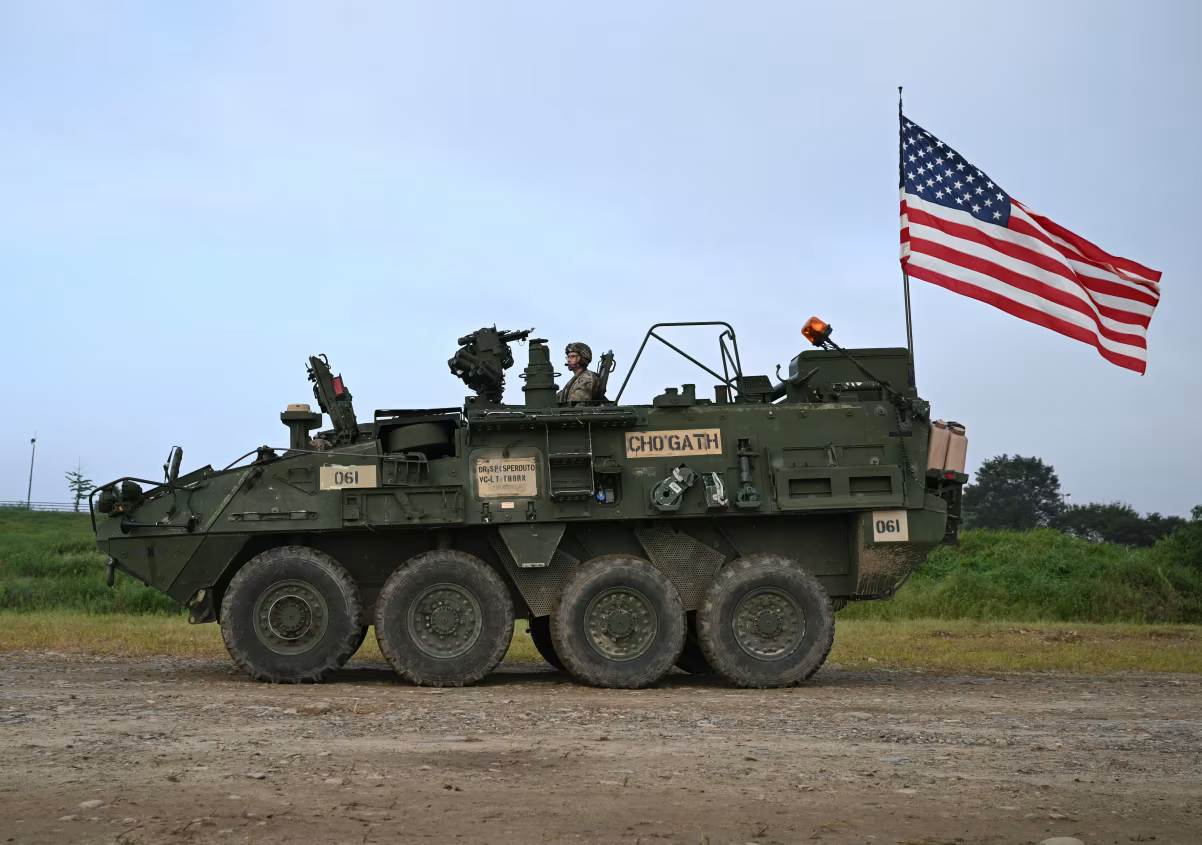
Donald Trump's move to reduce joint military exercises with South Korea, ostensibly to appease North Korean leader Kim Jong Un, paradoxically hinders Seoul's long-standing objective of assuming wartime operational control of combined forces.
Imagine two friends, South Korea and the US, practicing for a big game. The US president suddenly told them to practice less, saying it might upset another kid, Kim, who sometimes causes trouble. But practicing less makes it harder for South Korea to get good enough to play the game by itself, which is what the US president also said he wanted.
Analysis
Ulchi Freedom Shield
The annual Ulchi Freedom Shield military exercises, a cornerstone of the US-South Korea alliance, have been significantly curtailed at Washington's behest. This reduction, described by former President Trump as a measure to avoid antagonizing North Korean leader Kim Jong Un and to save costs, directly contradicts the stated aim of enhancing South Korea's defense capabilities. The exercises are crucial for training and assessing systems necessary for Seoul to assume wartime operational control of combined forces, a key objective for both nations aimed at enabling the US to take a more supportive role in future conflicts.
Trump's rationale for scaling down the drills, framing them as "inappropriate and hostile," mirrors rhetoric often employed by North Korea's state media. This stance is difficult to reconcile with the defensive nature of the exercises, which Seoul and Washington consistently emphasize as being for deterrence and defense, not territorial aggression. The reduction, particularly if implemented without prior consultation, could complicate the alliance's long-term burden-sharing goals, making it harder for Seoul to demonstrate readiness for greater responsibility.
Wartime Operational Control
The transfer of wartime operational control (OPCON) of South Korean forces from Washington to Seoul has been a protracted objective for the alliance. Since the Korean War, command of South Korean troops has largely rested with the US, initially through the United Nations Command and later the Combined Forces Command (CFC), which has always been led by an American general. While peacetime operational control was transferred to Seoul in 1994, wartime control has remained with the US. South Korean President Lee Jae Myung has expressed agreement with the principle of increased self-defense and defense spending, but Trump's actions introduce uncertainty into the established timelines and processes for OPCON transfer.
Analysts suggest that curtailing exercises like Ulchi Freedom Shield, especially last-minute changes, can disrupt the assessment of systems and readiness required for Seoul to effectively assume OPCON. This could delay a process that the US itself has long encouraged, as outlined in its National Defense Strategy. The implication is that by appeasing Kim Jong Un, Trump may inadvertently keep US forces more deeply involved in Korean Peninsula security than necessary, potentially diverting resources and attention from other global hotspots like Iran or future conflicts.
Kim Jong Un
Former President Trump's overtures towards Kim Jong Un, characterized by a desire to meet again and a willingness to scale back joint military exercises, appear to prioritize a personal diplomatic relationship over the established security architecture of the US-South Korea alliance. This approach places a nuclear-armed adversary above a treaty ally that is seeking to fulfill US-desired objectives, such as increased defense spending and greater self-reliance. The article highlights that South Korea has developed into a formidable military power, capable of defending itself against North Korea, making the continued US command structure increasingly anachronistic.
Despite Trump's efforts to appease Kim, North Korea's response, as indicated by statements from Kim Yo Jong, suggests that such concessions may not fundamentally alter Pyongyang's stance or intentions. The article points out that Kim Jong Un has significantly expanded his country's military capabilities, including its nuclear arsenal, since Trump's first term. This dynamic creates a situation where US policy appears to be driven by a desire to manage a personal relationship with Kim, potentially at the expense of strengthening an allied defense posture and creating strategic flexibility for the US in other regions.
Key points
- Former President Trump reduced US-South Korea military drills to appease North Korean leader Kim Jong Un.
- This move risks delaying South Korea's goal of assuming wartime operational control of combined forces.
- The exercises are crucial for assessing systems needed for Seoul to take over command.
- South Korea has developed significant military capabilities and aims for greater defense autonomy.
- Trump's approach prioritizes personal diplomacy with Kim over alliance security objectives.
If South Korea can successfully increase its defense spending and demonstrate readiness, it could lead to a more robust and self-sufficient defense posture on the peninsula. This might allow the US to reallocate resources to other strategic priorities, enhancing global security.
Trump's actions could embolden North Korea, while simultaneously hindering South Korea's development of independent defense capabilities and prolonging US military entanglement. This might increase regional instability and complicate future US foreign policy objectives.