Trump’s Smithsonian Trigger Warnings
Donald Trump has directed the Department of the Interior to place signs outside the National Museum of American History warning passersby about ‘ideological capture’ and detailing the findings of his administration’s recent report on the museum.
Intelligence analysis by Llama
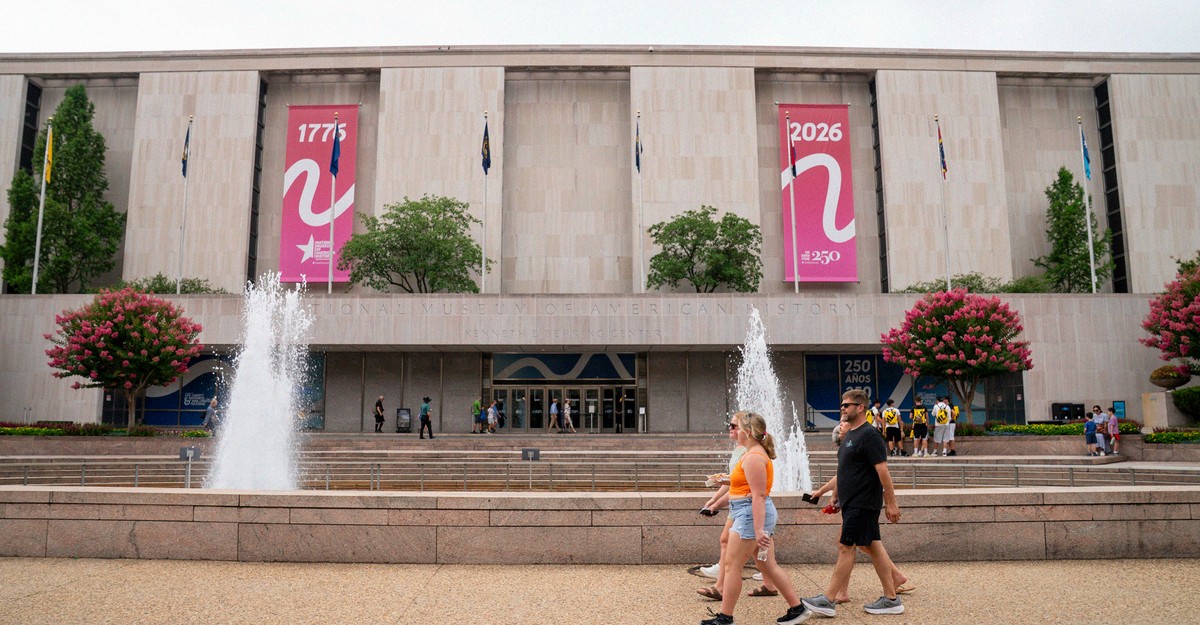
The signs will direct visitors to ‘locations and resources for accurate information’ about American history and will notify them that exhibits ‘should be renovated consistent with the findings of the Report.’ Trump feels that the museums are too negative about the country’s history and should be more patriotic.
Imagine you're walking through a big museum with lots of exhibits about American history. Some people think the museum is being too negative about America's past and wants to show a more positive view. The president has decided to put up signs outside the museum to tell people where they can find more information about American history and to remind them that some exhibits might need to be changed to fit the president's view.
Analysis
A $60B Vote of Confidence
The Trump administration's decision to place trigger warnings outside the National Museum of American History is a reflection of its broader campaign to seize control of the American story. The administration's report on the museum, which was released in July, accused the institution of being politicized and of promoting a negative view of American history. The report took specific aim at museum representations of transgender Americans and undocumented immigrants, as well as exhibits featuring Filipino and Mexican Americans. The administration's criticism of the museum's work is not new, but the decision to place trigger warnings outside the museum is a new and more aggressive move. The signs will direct visitors to ‘locations and resources for accurate information’ about American history and will notify them that exhibits ‘should be renovated consistent with the findings of the Report.’ This move is likely to be seen as an attempt to intimidate and bully the museum into presenting a more patriotic view of American history. The Smithsonian Institution is a public-private partnership and ‘independent federal trust instrumentality’ of the U.S. government. It is governed by a board of regents, which does not have presidential appointees and can’t be purged in the way that the board of the Kennedy Center was. The institution is not an executive agency and not overseen by the president like the National Park Service is. This means that the Smithsonian is not susceptible to the type of mandated history scrubbing that NPS leadership has enforced at historic sites across the country. Trump is directing Interior Secretary Doug Burgum in this new order because he cannot officially direct the museum’s director, Anthea Hartig, and neither can he direct Smithsonian Secretary Lonnie Bunch, who reports to the board of regents. The signs will go on the NPS-controlled sidewalks and walkways because that’s where the White House can have a say. The White House looks to even be aware of these limitations in the executive order, urging the heads of the Interior Department, the Office of Management and Budget, and the General Services Administration, as well as the assistant to the president for domestic policy to ‘identify and utilize any and all available authorities to promote the policy of this order.’ This includes ‘any mechanisms available to encourage correction of the issues identified in the Report.’ The naming of the OMB appears to nod to previous threats that the White House has made about hinging the Smithsonian’s apportioned funds on its compliance with Trump’s vision, which likely would be illegal. The White House has been critical of the museum's work, accusing it of promoting a negative view of American history and of being politicized. The museum has pushed back against these claims, arguing that it is nonpartisan and that it uses ‘historical evidence’ and ‘competing perspectives’ to present the American story. The museum's goal is to ‘preserve and document the evidence of American life in all of its breadth, so that the public can encounter the past and draw their own conclusions.’ The museum's work is not without controversy, and some have accused it of promoting a negative view of American history. However, the decision to place trigger warnings outside the museum is a new and more aggressive move. It is likely to be seen as an attempt to intimidate and bully the museum into presenting a more patriotic view of American history.
Key points
- The Trump administration has directed the Department of the Interior to place signs outside the National Museum of American History warning passersby about ‘ideological capture’ and detailing the findings of its recent report on the museum.
- The signs will direct visitors to ‘locations and resources for accurate information’ about American history and will notify them that exhibits ‘should be renovated consistent with the findings of the Report.’
- The decision to place trigger warnings outside the museum is a new and more aggressive move by the Trump administration to seize control of the American story.
The Smithsonian Institution may find a way to work with the Trump administration to present a more balanced view of American history, despite the challenges posed by the president's executive order.
The decision to place trigger warnings outside the National Museum of American History may be seen as an attempt to intimidate and bully the museum into presenting a more patriotic view of American history, which could have a chilling effect on the institution's ability to present a balanced view of the past.