TSMC pledges extra US$100 billion for Arizona fab expansion amid soaring AI chip demand
Taiwan Semiconductor Manufacturing Co (TSMC) has committed an additional US$100 billion to expand its Arizona manufacturing facilities, bringing its total US investment to US$265 billion. This significant boost aims to meet the booming global demand for advanced AI chips.
Intelligence analysis by Gemini 2.5 Flash
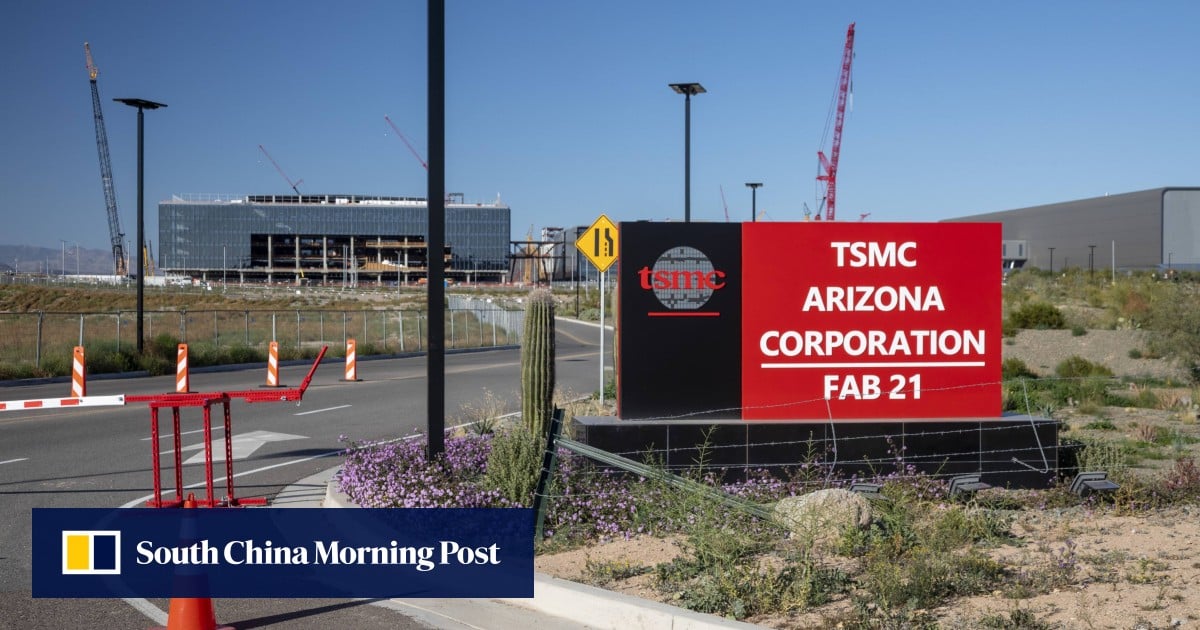
Amid a surging artificial intelligence market, TSMC is substantially increasing its investment in US chip manufacturing, adding US$100 billion to its Arizona complex for advanced chip production and packaging. This strategic move is designed to bridge the growing gap between the high demand for AI chips and current supply, reinforcing its commitment to key US customers.
Imagine a company that makes the super-smart brains for all the new talking robots and clever computers. Everyone wants these brains, so the company is spending a huge extra amount of money, like building a giant new toy factory in Arizona, to make even more and even tinier, faster brains to keep up with demand. They're also building another factory in Japan to make sure there are enough brains for everyone!
Analysis
A Monumental Arizona Commitment
TSMC, the world's largest contract chipmaker, has significantly escalated its investment in the United States, pledging an additional US$100 billion for its Arizona manufacturing facilities. This latest commitment brings the company's total investment in the US to an unprecedented US$265 billion, underscoring a long-term strategic focus on expanding its global production footprint. The expansion is slated to include facilities for 2-nanometre and below technologies, as well as advanced packaging fabs, which are crucial for integrating complex chip components.
This new pledge builds upon previous commitments, including an initial US$65 billion and a subsequent boost to US$165 billion in March 2025. The comprehensive Arizona complex is now planned to house multiple fabrication plants, advanced packaging facilities, and a dedicated research and development center in Phoenix. This multi-faceted approach aims to create a robust ecosystem for advanced semiconductor manufacturing within the United States.
Fueling the AI Revolution
The driving force behind TSMC's accelerated investment is the "booming demand driven by artificial intelligence," as stated by chairman CC Wei. The company reported a staggering 77 percent jump in net income to US$22 billion in the second quarter, directly benefiting from the AI boom. The advanced 2-nanometre and below technologies, along with sophisticated packaging capabilities, are vital for producing the high-performance chips required by leading US customers for their AI applications.
These cutting-edge chips are the backbone of modern AI systems, powering everything from large language models to advanced data centers. By expanding its capacity for these critical components, TSMC is directly addressing the supply-demand imbalance that has characterized the rapidly evolving AI sector. The company's commitment to proceed "as fast as possible" highlights the urgency it places on supporting the multi-year demand from its key clients.
Global Expansion and Supply Chain Resilience
While the Arizona expansion takes center stage, TSMC is also actively pursuing other global initiatives to enhance its manufacturing capabilities and diversify its supply chain. Chairman Wei noted that the firm is "accelerating the establishment of a new wafer fab in Japan." This parallel expansion strategy reflects a broader effort to narrow the significant gap between the escalating demand for AI chips and the current global supply.
The strategic diversification of manufacturing locations, including significant investments in both the US and Japan, is crucial for enhancing the resilience of the global semiconductor supply chain. This approach helps mitigate geopolitical risks and ensures a more stable and robust supply of advanced chips, which are increasingly vital for national economies and technological leadership worldwide.
Key points
- TSMC has pledged an additional US$100 billion for its Arizona manufacturing facilities.
- This new commitment increases TSMC's total US investment to US$265 billion.
- The expansion will focus on 2-nanometre and below technologies, as well as advanced packaging fabs.
- The investment is driven by the booming global demand for artificial intelligence chips.
- TSMC is also accelerating the establishment of a new wafer fab in Japan to address supply-demand gaps.
This substantial investment by TSMC is expected to significantly alleviate the current global shortage of advanced AI chips, thereby accelerating innovation and the widespread deployment of AI technologies across various industries. It also plays a crucial role in strengthening the US's domestic semiconductor manufacturing capabilities, enhancing national supply chain security and technological independence.
Despite the ambitious plans, the rapid expansion of TSMC's Arizona facilities could encounter significant challenges, including potential construction delays, labor shortages, or unforeseen market fluctuations. These factors could impact the projected timeline for meeting the surging AI chip demand and pose considerable financial risks for the company.