Tu Hai Meri Kiran movie review: Sonakshi Sinha-Zaheer Iqbal’s hare-brained film is good only for eye-rolls
The film "Tu Hai Meri Kiran," starring Sonakshi Sinha and Zaheer Iqbal, is critically panned for its convoluted time-travel plot and problematic glorification of a stalker, receiving a dismal 1-star rating.
Intelligence analysis by Gemini 2.5 Flash
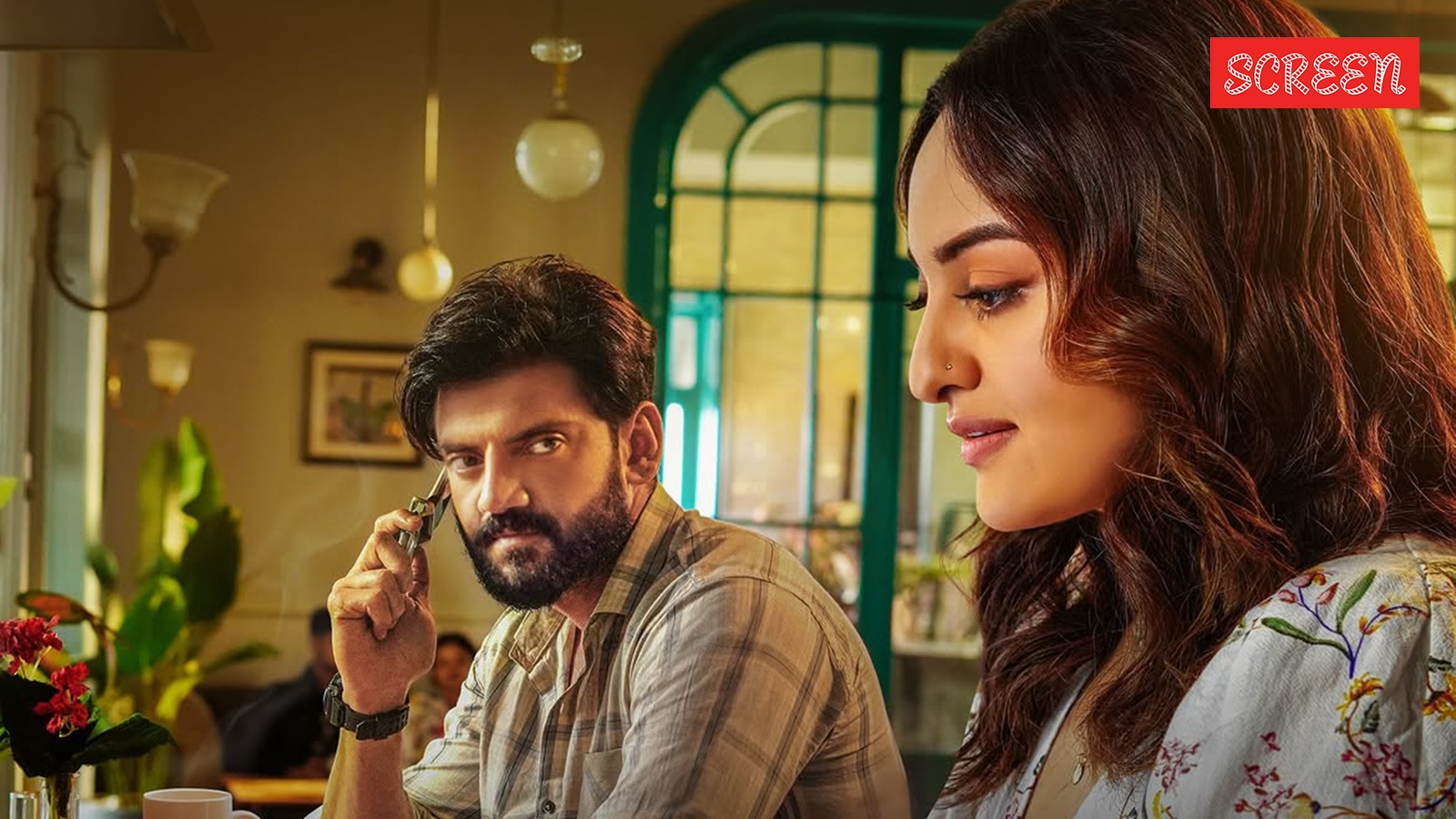
A new Bollywood film, "Tu Hai Meri Kiran," attempts a psychological thriller premise where a woman in 2026 connects with a man in 2016 through a flip-top phone. However, the movie is lambasted by critics for its "hare-brained" script, weak execution of time-travel elements, and a disturbing portrayal of the male lead as a stalker, ultimately failing to deliver on its ambition.
Imagine a movie where a lady finds an old phone that lets her talk to a guy ten years in the past! Sounds cool, right? But this movie, called "Tu Hai Meri Kiran," is like trying to build a super cool LEGO castle with missing pieces and no instructions – it just falls apart and isn't fun to watch, especially because the guy acts like a creepy stalker.
Analysis
The film "Tu Hai Meri Kiran" attempts to weave a complex narrative around time-travel and psychological suspense, but according to the review, it spectacularly fails to achieve any narrative coherence or emotional resonance. The core premise, involving a woman in 2026 communicating with a man a decade earlier through a seemingly miraculous flip-top phone, is described as having potential, yet the execution is deemed utterly lacking. The reviewer notes that while there's ambition in incorporating classic time-travel tropes like old instruments working miraculously and flashes of memory, the proceedings quickly devolve into a "hare-brained" mess, leaving the audience exhausted rather than engaged.
Kiran
Sonakshi Sinha's character, Kiran, is presented as a happily-married woman in 2026 whose life is disrupted by this inexplicable connection to the past. The narrative hinges on her interactions with Samar, the man from 2016, and the unfolding of their circuitous relationship across time. However, the film's inability to ground its fantastical elements in believable character motivations or a logical plot progression undermines any potential for the audience to empathize with Kiran's predicament or the extraordinary circumstances she faces. The reviewer implies that even a strong performance from Sinha would be insufficient to salvage a script so fundamentally flawed.
Samar
Zaheer Iqbal's portrayal of Samar is a central point of criticism, particularly regarding the film's problematic thematic choices. Initially, the film hints at a potential shift in Bollywood's often-criticized glorification of stalkers, with Samar revealing himself to be a "Class A creep" who secretly films the object of his affection. However, this brief moment of potential self-awareness quickly dissipates as the character falls back on typical Bollywood "aashiq" excuses, rapidly sending the narrative "downhill." This perpetuates a harmful trope in Hindi cinema where obsessive behavior is romanticized, raising concerns about the messages such films convey to their audience.
Double X L
The review also references the previous collaboration between Sonakshi Sinha and Zaheer Iqbal in the 2022 film "Double X L." While that film might have offered a different dynamic or critical reception, its mention here serves to highlight the stark contrast with the current project's failure. "Tu Hai Meri Kiran" was clearly intended to be a psychological thriller, but the reviewer asserts that neither the stalker nor the stalkee characters, nor the actors portraying them, could rescue this "convoluted mess" from sinking. The film's overall critical reception, encapsulated by its 1-star rating, underscores a significant misstep in its writing, direction, and thematic development, suggesting a profound disconnect between its ambitious premise and its disastrous execution.
Key points
- "Tu Hai Meri Kiran" is a psychological thriller starring Sonakshi Sinha and Zaheer Iqbal.
- The plot involves a woman in 2026 connecting with a man in 2016 via a flip-top phone.
- The film is heavily criticized for its "hare-brained" plot, convoluted writing, and poor execution of time-travel elements.
- The character of Samar is problematic, glorifying a stalker, which is a recurring issue in Hindi cinema.
- The movie received a 1-star rating, failing to achieve any narrative "lift-off."
The film's critical failure and problematic themes could reinforce negative perceptions of Bollywood's creative quality and its handling of sensitive subjects like stalking, potentially deterring audiences and critics from future projects by the involved cast and crew.