Tupac Shakur's 1996 murder was an 'act of revenge,' prosecutor tells jury in trial of accused mastermind
Prosecutor Binu Palal told the jury that Duane 'Keffe D' Davis handed a gun to someone in the back seat of a white Cadillac and ordered them to shoot Tupac Shakur in an act of revenge for the beating of his nephew. Davis is charged with murder with a deadly weapon with th…
Intelligence analysis by Llama
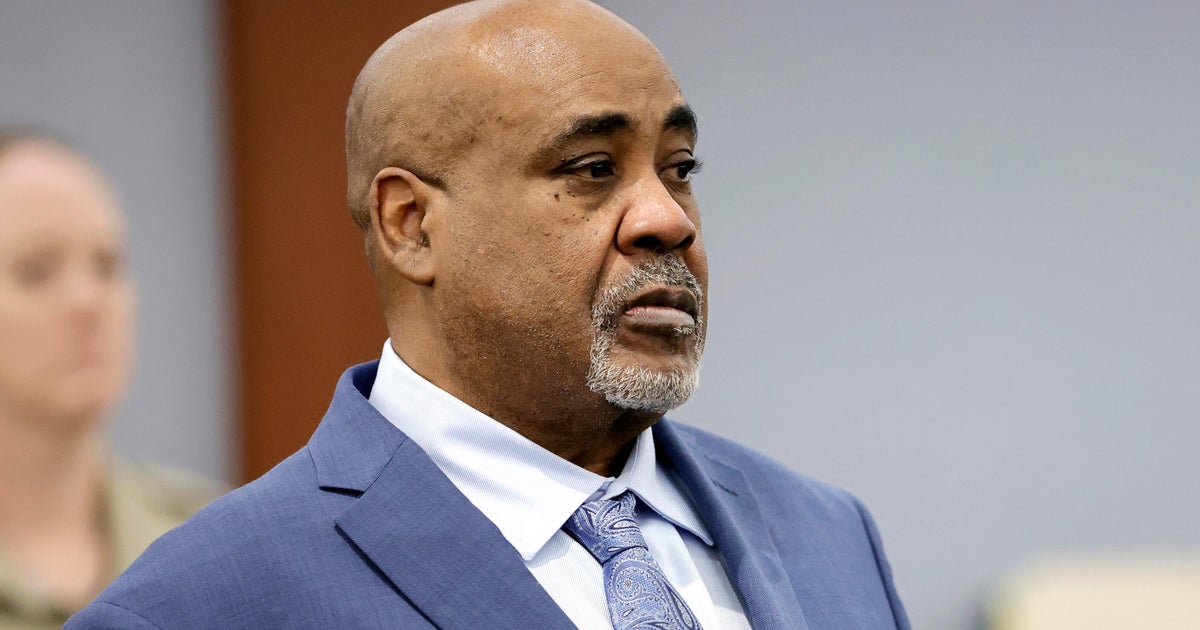
Prosecutors allege that Duane 'Keffe D' Davis orchestrated the killing of Tupac Shakur in 1996 as an act of revenge for the beating of his nephew. Davis is on trial for murder with a deadly weapon with the intent to promote, further or assist a criminal gang in Shakur's death.
Tupac Shakur was a famous rapper who was killed in a drive-by shooting in 1996. A man named Duane 'Keffe D' Davis is on trial for orchestrating the killing. Davis says he handed a gun to someone in the back seat of a white Cadillac and ordered them to shoot Shakur in revenge for the beating of his nephew.
Analysis
The Trial of Duane 'Keffe D' Davis: A Revisit to the Long-Unsolved Drive-By Shooting of Tupac Shakur
The trial of Duane 'Keffe D' Davis, accused of orchestrating the killing of rapper Tupac Shakur in 1996, began on Monday, August 17, 2026. Davis, 63, is charged with murder with a deadly weapon with the intent to promote, further or assist a criminal gang in Shakur's death. He pleaded not guilty, but if convicted, he faces life in prison.
Prosecutor Binu Palal showed jurors a picture of the Mike Tyson fight with the date 'September 7, 1996' and showed video of Shakur's entourage attacking Davis' nephew, Orlando 'Baby Lane' Anderson. 'On September 7, 1996, Tupac Shakur publicly, on camera, participated in a humiliating beating of Duane Davis' nephew, Orlando Anderson,' he said. 'Then, two and a half hours later ... Tupac is gunned down in a drive-by shooting from a white Cadillac in an act of revenge.'
Palal said Davis did not pull the trigger, but had handed the gun to someone sitting in the back seat of his car and ordered that person to shoot the rapper. 'Let's be clear, Duane Davis did not pull the trigger. But he did plan the shooting in retaliation of the beating of his nephew,' Palal said. 'Remarkably, you will learn that from Duane Davis himself.'
His lawyer in the defense opening called the prosecution's narrative 'fiction.' Sanft questioned why the Clark County DA's office did not charge Davis years ago, CBS affiliate KLAS-TV reported from inside the courtroom. 'No one corroborates any of this,' Sanft told the jury, adding: 'What facts do they have after 30 years?'
The long-unsolved drive-by shooting gripped the hip-hop community, partly because no one was charged until Davis was indicted in 2023. Shakur remains a cultural icon and is considered one of the most influential and versatile rappers of all time, despite dying at 25. He was nominated for six Grammy Awards and was inducted into the Rock & Roll Hall of Fame in 2017. In recent years, he received a posthumous star on the Hollywood Walk of Fame, had a street in Oakland named in his honor and inspired a character in the upcoming video game 'Stranger Than Heaven.'
A few fans lined up early Monday for a coveted seat in the courthouse to watch the first day of testimony. Din Malone took a bus from Denver and hopes to stay for the entire trial. 'As a brother and a fan, I felt like he talked through his music,' said Malone, who wore a Tupac shirt and played Shakur's music from his phone while waiting to get inside.
Over the course of the trial, which could span weeks, prosecutors plan to call 35 to 45 potential witnesses, and the defense will call only a handful to testify. Maurice Shakur recently told The Associated Press that sitting through the trial will be retraumatizing for the family, but it's important to be there. 'We're gonna stand by Pac as we always have,' he said.
All eyes on Tupac Along with Shakur's family, friends and fans traveled to Las Vegas to show their support during jury selection. Darryl Harper, a veteran music producer who collaborated with Shakur at Death Row Records on songs released after the 1996 shooting, said he booked a plane ticket as soon as the latest trial date was set. 'He became a personal friend of mine as I worked with him almost every day of his last days here,' said Harper, who flew in from his home in Georgia.
Shakur's cousins Kendrick Lesane and William Lesane flew in from Atlanta last week. William Lesane said he wants someone held accountable. 'For me, justice has long left the station 30 years ago,' he said.
Prosecutors allege Davis was the shot-caller The gunfire that killed Shakur came from a white Cadillac that Davis was riding in with three others, all of whom have since died. 'When he says he's the only person who can tell what happened, he's right,' Palal said.
In 2008, Davis spoke to investigators looking into the deaths of Shakur and Notorious B.I.G., born Christopher Wallace. He described handing a gun to the men in the back seat of a white Cadillac that fired on a black BMW with Shakur and Marion 'Suge' Knight inside. During the investigation, Davis was under an agreement that what he said about Shakur's killing couldn't be used against him. But nearly 10 years later, Davis published a book with those details and participated in media interviews in which he laid out his role in the shooting.
This undated photo provided by the Las Vegas Metropolitan Police Department shows the bloodied driver's seat that was occupied by Marion 'Suge' Knight in a car rapper Tupac Shakur was fatally shot in September 1996, in Las Vegas.
The book and his public statements revived the Las Vegas investigation and became key pieces of evidence, prosecutors say. 'Had he decided to never write the book, he would not, probably, have ever been prosecuted for the crime,' prosecutor Marc DiGiacomo recently said.
As prosecutors played audio of Davis explaining the moment Shakur was shot, members of Shakur's family, including his stepbrother Maurice Shakur, stared ahead and listened intently from the audience.
Palal told jurors that Davis held onto a visceral hatred for Shakur for decades that drove him to speak. He said the defendant talked to the FBI in 1998 and again in 1999, admitting to his role in the shooting.
Key points
- Duane 'Keffe D' Davis is on trial for orchestrating the killing of Tupac Shakur in 1996.
- Davis is charged with murder with a deadly weapon with the intent to promote, further or assist a criminal gang in Shakur's death.
- Prosecutors allege that Davis handed a gun to someone in the back seat of a white Cadillac and ordered them to shoot Shakur in revenge for the beating of his nephew.
- The trial is significant because it revisits the long-unsolved drive-by shooting of Tupac Shakur, a cultural icon and one of the most influential and versatile rappers of all time.
If Duane 'Keffe D' Davis is convicted, it could bring closure to the Shakur family and the hip-hop community, who have been waiting for justice for nearly 30 years.
If Davis is acquitted, it could be seen as a miscarriage of justice and a failure to hold accountable those responsible for Shakur's death.