Two KAUST graduates earn MIT-KACST fellowship
Two graduates from King Abdullah University of Science and Technology (KAUST), Rawan Alghamdi and Banan Alhazmi, have been awarded the prestigious MIT–KACST Ibn Khaldun Fellowship for Saudi Arabian Women.
Intelligence analysis by Gemini 2.5 Flash
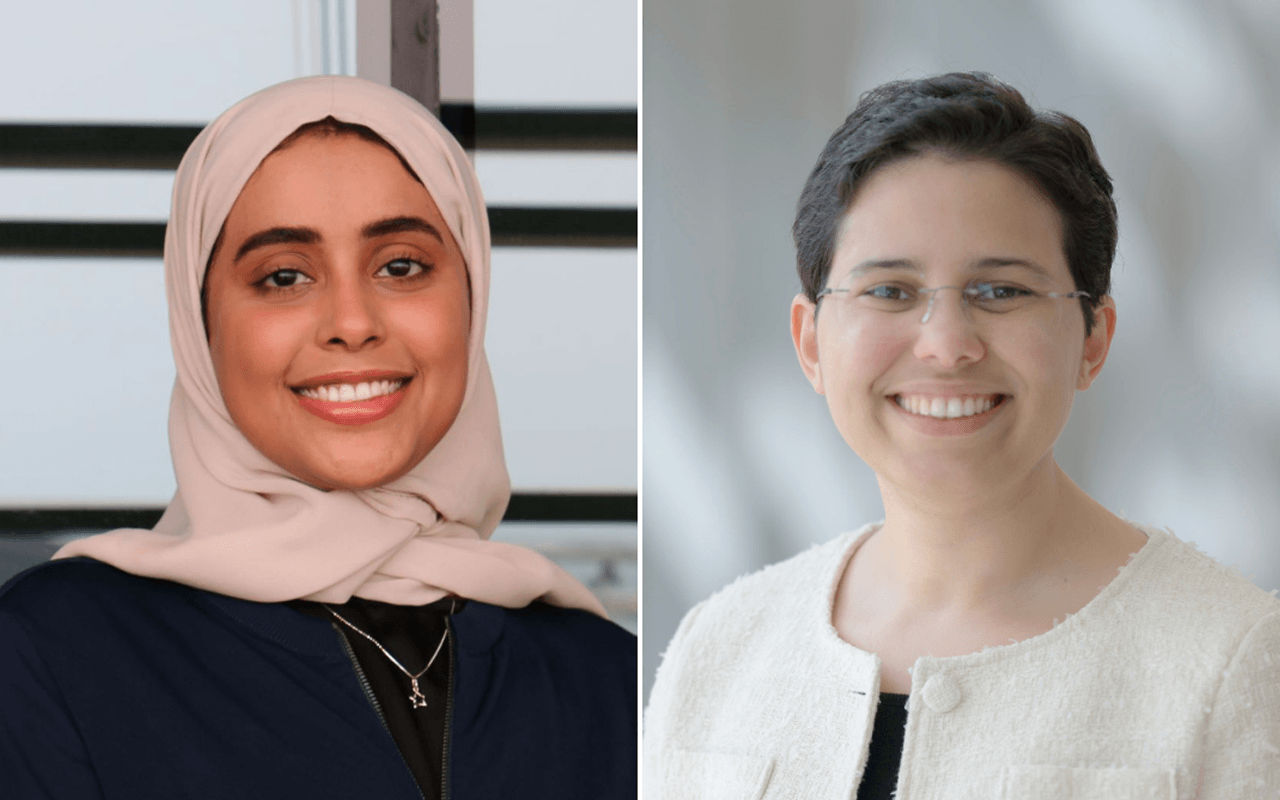
This fellowship enables Alghamdi and Alhazmi to pursue postdoctoral research at the Massachusetts Institute of Technology (MIT) in next-generation wireless communications and membrane science, respectively. The program aims to bolster the presence of Saudi women in advanced scientific and engineering fields, supporting critical research areas for Saudi Arabia's sustainable development.
Imagine two super smart Saudi women from a special science university called KAUST got a big scholarship to study at a very famous school in America, MIT! One, Rawan, is figuring out how to make internet signals work better and use less power, even in places far away or when regular internet breaks. The other, Banan, is inventing special filters that can separate tiny things using much less energy, which helps Saudi Arabia save power in big factories that make fuel or clean water. It's all about making things smarter and more eco-friendly!
Analysis
The MIT–KACST Ibn Khaldun Fellowship represents a significant stride in Saudi Arabia's efforts to cultivate a knowledge-based economy and enhance its global scientific standing. By supporting advanced research opportunities at a world-renowned institution like MIT, the program not only provides invaluable experience for individual researchers but also strengthens the Kingdom's overall scientific infrastructure. The focus on critical areas such as wireless communications and sustainable industrial processes directly aligns with national priorities for technological advancement and environmental responsibility. This fellowship serves as a powerful testament to the growing opportunities for Saudi women in science, technology, engineering, and mathematics (STEM), challenging traditional perceptions and fostering a new generation of female leaders and innovators.
Rawan Alghamdi
Rawan Alghamdi's postdoctoral research at MIT is centered on next-generation wireless communications, specifically investigating energy-efficient signal-processing techniques for non-terrestrial wireless networks. Her work is designed to address fundamental challenges in connectivity, aiming to provide affordable and efficient access to a broader user base. This includes extending network coverage to remote or hard-to-reach geographical areas, which is vital for bridging digital divides and ensuring equitable access to information and services. Furthermore, her research seeks to enhance communication resilience, maintaining vital connections even when conventional terrestrial infrastructure is compromised or fails, a crucial aspect for disaster response and national security.
Banan Alhazmi
Banan Alhazmi's research focuses on the development of precise membranes for molecular and gas separation. Her work is particularly significant due to its emphasis on energy efficiency, aiming to reduce the energy consumption typically associated with conventional industrial separation processes. This has profound implications for sustainability, especially within key sectors of the Saudi Arabian economy, including energy, water, and chemicals. By developing more efficient separation technologies, Alhazmi's research can contribute to lower operational costs, reduced environmental impact, and enhanced resource management, directly supporting the Kingdom's sustainability objectives and its transition towards a greener economy.
Ibn Khaldun Fellowship
The MIT–KACST Ibn Khaldun Fellowship for Saudi Arabian Women is a strategic partnership designed to empower outstanding Saudi women by facilitating their pursuit of advanced research at the Massachusetts Institute of Technology. The fellowship's core mission is to strengthen the presence and influence of Saudi women within the global scientific, technological, and engineering communities. Both Alghamdi and Alhazmi acknowledged the pivotal role of King Abdullah University of Science and Technology (KAUST) in preparing them for such international opportunities, highlighting KAUST's environment that actively encourages global collaborations and academic pursuits beyond its campus. This fellowship not only provides individual career advancement but also contributes to a broader national goal of fostering a diverse and highly skilled workforce capable of driving innovation and economic growth.
Key points
- KAUST graduates Rawan Alghamdi and Banan Alhazmi received the MIT–KACST Ibn Khaldun Fellowship.
- The fellowship supports outstanding Saudi women in advanced research at the Massachusetts Institute of Technology.
- Alghamdi's research focuses on energy-efficient signal processing for next-generation wireless networks.
- Alhazmi's work involves developing precise membranes for energy-efficient molecular and gas separation.
- The initiative aims to strengthen Saudi women's presence in science, technology, and engineering fields.
The success of these two researchers, supported by the MIT–KACST Ibn Khaldun Fellowship, could inspire a new generation of Saudi women to pursue advanced studies and careers in STEM, significantly boosting the Kingdom's innovation capacity. Their work in wireless communications and sustainable membrane technology has the potential to yield practical applications that enhance connectivity and resource efficiency, benefiting Saudi Arabia's economy and environmental goals.