Two trapped workers are pulled alive from Nepal tunnel more than a week after deadly floods
Two workers were rescued alive from a Nepal hydropower tunnel nine days after floods. Voices of other trapped workers were heard, with hundreds still missing.
Intelligence analysis by Gemini 2.5 Flash Lite
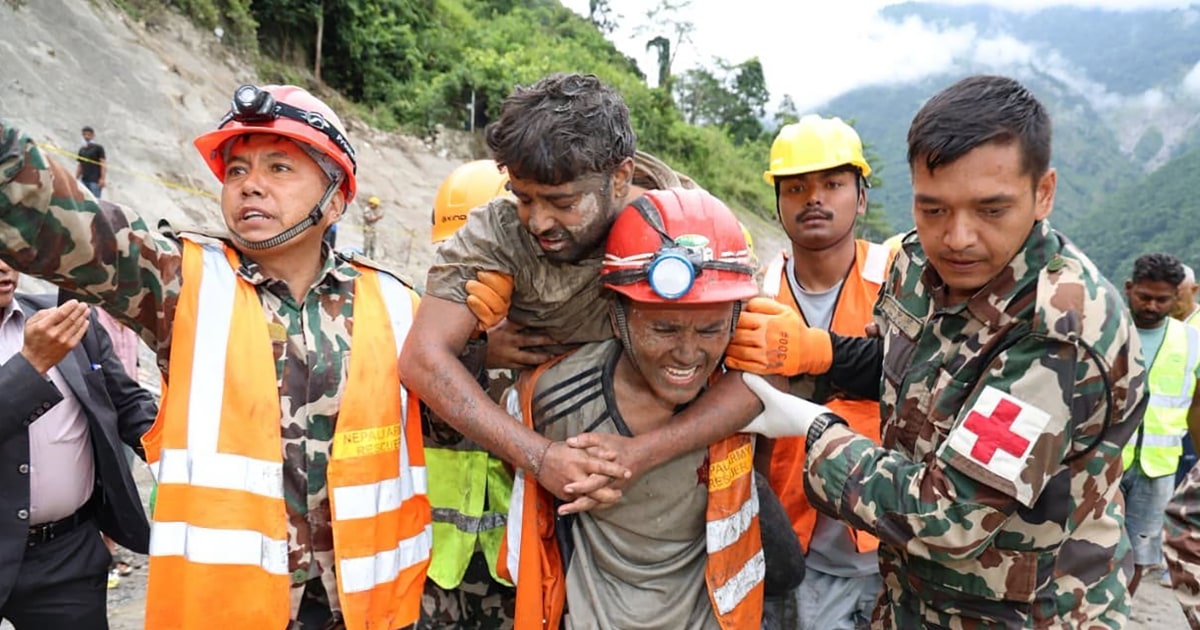
In a remarkable display of resilience, two workers have been rescued alive from a hydropower tunnel in Nepal, more than a week after devastating floods struck the region. The rescue offers a sliver of hope amidst a large-scale disaster that has left hundreds missing and presumed trapped.
Imagine a big flood trapped some workers inside a long underground tunnel. For nine days, people worried they wouldn't make it. But then, rescuers heard them and pulled two workers out alive! It's like finding a lost toy after a big storm, giving everyone hope that maybe others can be found too.
Analysis
Trishuli 3A Hydropower Project
The rescue of Sanjay Sah, 30, and Kabir Maharjan, 45, from the Trishuli 3A hydropower tunnel in Nepal's Rasuwa district marks a significant, albeit small, victory against the backdrop of a massive natural disaster. The project, situated along the Trishuli River, has become a focal point for rescue efforts after devastating floods, believed to be triggered by a high-altitude glacier collapse on the Nepal-China border, inundated the area. The survival of these two workers, found nine days after the initial event, is a testament to the dedication of the Nepali Army and other emergency teams who continued the search despite dwindling hopes.
The situation within the tunnel remains dire for many others. Officials reported hearing voices of additional workers, suggesting that more survivors might still be trapped within the debris-filled main tunnel. According to the Independent Power Producers Association of Nepal, approximately 115 workers are believed to be trapped in this specific tunnel, and a total of around 557 workers are still missing from the site. This grim reality underscores the scale of the tragedy and the immense challenge faced by rescue teams.
Nepal and China Disaster Impact
The floods have had a catastrophic impact across Nepal, with official figures indicating at least 1,287 deaths and over 5,000 people missing. The disaster's origin, a glacier collapse in the Himalayas near the border with China, has also led to significant consequences on the Chinese side. A mudslide in Tibet's Gyirong county, the site of a major land crossing, has resulted in at least 21 deaths and 541 missing persons. The interconnectedness of the disaster is evident, with rescue efforts ongoing in both countries and a significant number of foreign nationals, including 75 Americans, reported missing.
The popular trekking and pilgrimage routes in the affected region have been severely disrupted, impacting both local communities and international visitors. The reopening of the road to the Tibet site only on Wednesday highlights the logistical hurdles in accessing affected areas and conducting rescue and recovery operations. The sheer number of missing individuals, including foreign nationals, points to the widespread devastation and the complex international cooperation required for a comprehensive response.
Survival and Hope
The successful extraction of Sah and Maharjan, who were subsequently flown to a hospital in Kathmandu, has provided a much-needed morale boost. Images released by the Nepali Army depict the arduous nature of the rescue, with one survivor being carried from the site, covered in mud but alive. The army's caption, "When hope is alive, even the impossible becomes possible," encapsulates the spirit of the operation. Communication Minister Bikram Timilsina echoed this sentiment, stating that one of the survivors indicated more people were still alive inside the tunnel, fueling continued rescue efforts.
Despite this glimmer of hope, the overall situation remains precarious. With approximately 900 workers missing from 12 hydropower projects across Nepal, and about 500 believed to be trapped in tunnels, the scale of the ongoing crisis is immense. The rescue of these two individuals, while celebrated, is a stark reminder of the many others who remain unaccounted for and the urgent need for continued, intensive search and rescue operations in the face of overwhelming odds.
Key points
- Two workers were rescued alive from a Nepal hydropower tunnel nine days after devastating floods.
- Hundreds of workers remain missing and are believed to be trapped in tunnels following the disaster.
- The floods were reportedly triggered by a high-altitude glacier collapse on the Nepal-China border.
- Rescue efforts are ongoing in both Nepal and China, with significant casualties reported on both sides.
- The survival of the two workers offers a glimmer of hope amidst a large-scale humanitarian crisis.
The successful rescue of two workers alive after nine days offers a significant morale boost and demonstrates the resilience of rescue teams. It reinforces the possibility of finding more survivors, encouraging continued and intensified search efforts in the affected tunnel and surrounding areas.
Despite the successful rescues, the vast number of missing workers and the challenging conditions within the tunnels present a grim outlook. The possibility of finding more survivors diminishes with each passing day, and the scale of the disaster suggests many may not be recovered.