Two workers were temporarily stood down after near-miss collision at Sydney Airport
Two air-traffic staff were temporarily stood down after a Jetstar plane nearly collided with a Qatar Airways plane being towed across a Sydney Airport runway. Transport Minister Catherine King labelled the disruptions "unacceptable" and summoned the Airservices Australia …
Intelligence analysis by Llama
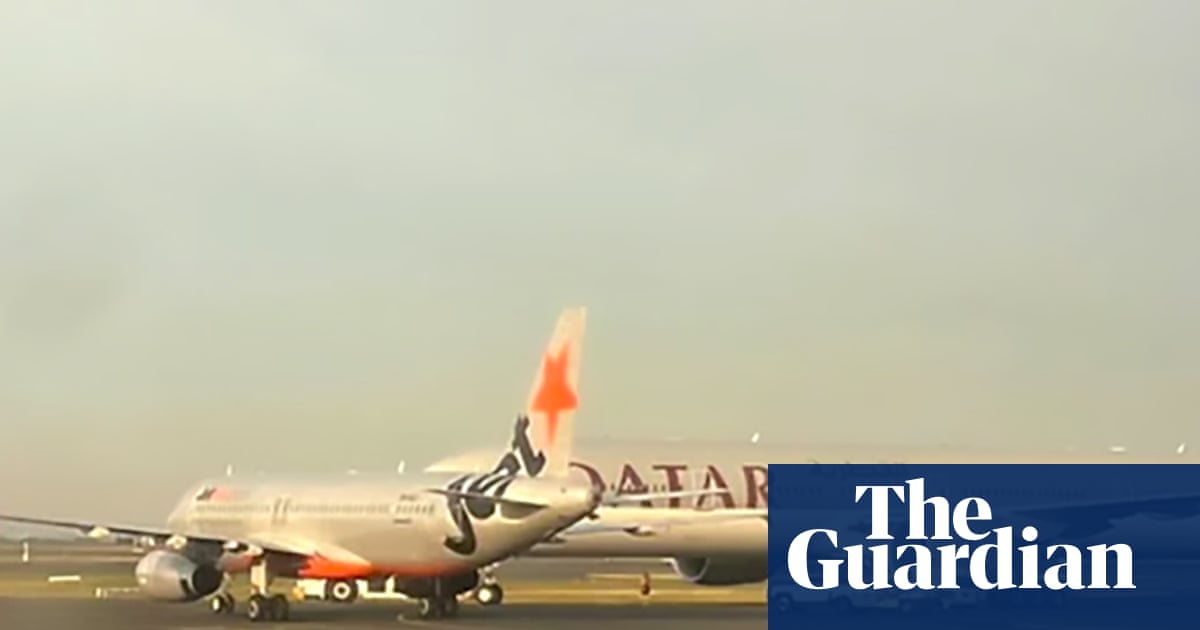
A runway near-miss between a Jetstar jet and a towed Qatar Airways aircraft at Sydney Airport triggered the temporary stand-down of two air-traffic staff, a minister-level summons of Airservices Australia's CEO, and an Australian Transport Safety Bureau investigation. The Sunday event follows a separate runway incident involving two Qantas planes on 27 July, sharpening scrutiny of con…
Picture two big airplanes almost bumping into each other on a busy airport taxiway. The grown-ups guiding them made a mistake, and now government leaders are checking why the people who direct planes are exhausted and there aren't enough of them.
Analysis
Catherine King summons Airservices chief Rob Sharp
On the day after Sunday's near-miss, Transport Minister Catherine King ordered Airservices Australia chief executive Rob Sharp to Canberra for a face-to-face meeting. She labelled the delays and disruptions "unacceptable" while still expressing confidence that the agency was "doing everything they can". Pulling a critical-safety agency chief into the minister's office telegraphs how seriously Canberra is treating the runway event and places Airservices on a visible short leash as it scrambles to stabilise operations at Australia's biggest airport.
King also confirmed an operational fix is coming. From early September, Airservices will roll out improved rostering practices for Sydney's air traffic controllers, with the rest of August to be "carefully" managed. The framing is measured, but the political pressure on Sharp is now public.
95 new controllers promised by end of 2026
King pointed to two capacity levers to address the chronic shortage: a freshly installed Sydney Tower simulator designed to expand training throughput, and a pipeline of 95 people expected to be endorsed as controllers by year's end. Six controllers are currently training in Sydney Tower, with another 15 expected to begin before the end of 2027. The numbers are concrete but also expose how thin the bench has become — losing a single trained controller to a stand-down visibly cascades into delays, exactly as Sunday's disruption demonstrated.
The Transport Workers' Union, which represents controllers and ground crews, has pushed harder language than the minister. National secretary Michael Kaine described the aviation industry as in "crisis" and the workforce as "understaffed and exhausted", pointing to a worker killed at Qantas Freight last year as evidence that the risks extend beyond near-misses.
The 27 July Qantas incident as a warning
Sunday's event is not an isolated lapse. Less than two weeks earlier, on 27 July, a Qantas flight was cleared to cross a runway directly in front of another Qantas aircraft that had just landed — also at Sydney. The Australian Transport Safety Bureau is now investigating both events in parallel. Its chief, Angus Mitchell, was blunt: "Planes should not be getting that close and we should never have to rely on... pilots at the last minute, making an emergency decision." That framing shifts responsibility from frontline crews back to system design, controller workload, and oversight — all of which sit squarely inside Airservices' remit.
Key points
- Two air-services staff — an air traffic controller and the tug driver towing the Qatar plane — were stood down while undergoing standard drug and alcohol testing.
- Transport Minister Catherine King summoned Airservices Australia CEO Rob Sharp to Canberra and called the delays and disruptions "unacceptable".
- Improved controller rostering will be rolled out from early September; 95 new controllers are expected to be endorsed by end of 2026.
- A Jetstar cabin crew member was injured and equipment was damaged when the planes stopped abruptly on the runway.
- The Australian Transport Safety Bureau is also investigating a separate 27 July runway crossing involving two Qantas planes at Sydney.
If Airservices Australia implements the improved rostering from early September and delivers the 95 endorsed controllers by year's end, Sydney Airport disruption could meaningfully ease. The new Sydney Tower simulator should also accelerate training throughput beyond the 15 new starters planned before end-2027.
The Transport Workers' Union's "crisis" framing and the second near-miss within two weeks suggest the controller shortage is not yet contained. If training pipelines slip or stand-downs repeat, further runway incursions — and the political pressure on Airservices' leadership — become realistic outcomes through the rest of August.