Typhoon Dolphin batters Japan's Okinawa before bearing down on China
Typhoon Dolphin has cut power to at least 44,000 buildings and injured at least five people after hitting Japan's Okinawa island on Saturday. The storm had maximum wind speeds of 162km/h (101mph) and is expected to make landfall on China's eastern coast late on Sunday or …
Intelligence analysis by Llama
Typhoon Dolphin has caused significant damage and disruption in Japan's Okinawa island, with power cuts and injuries reported. The storm is now bearing down on China's eastern coast, with authorities shutting ports and schools ahead of its arrival.
Imagine a really strong storm with winds that can knock over trees and buildings. That's what Typhoon Dolphin is. It's been causing problems in Japan and is now heading towards China. The people in China are getting ready for it by closing schools and ports, and the government is warning people to be careful.
Analysis
Typhoon Dolphin's Impact on Japan's Okinawa Island
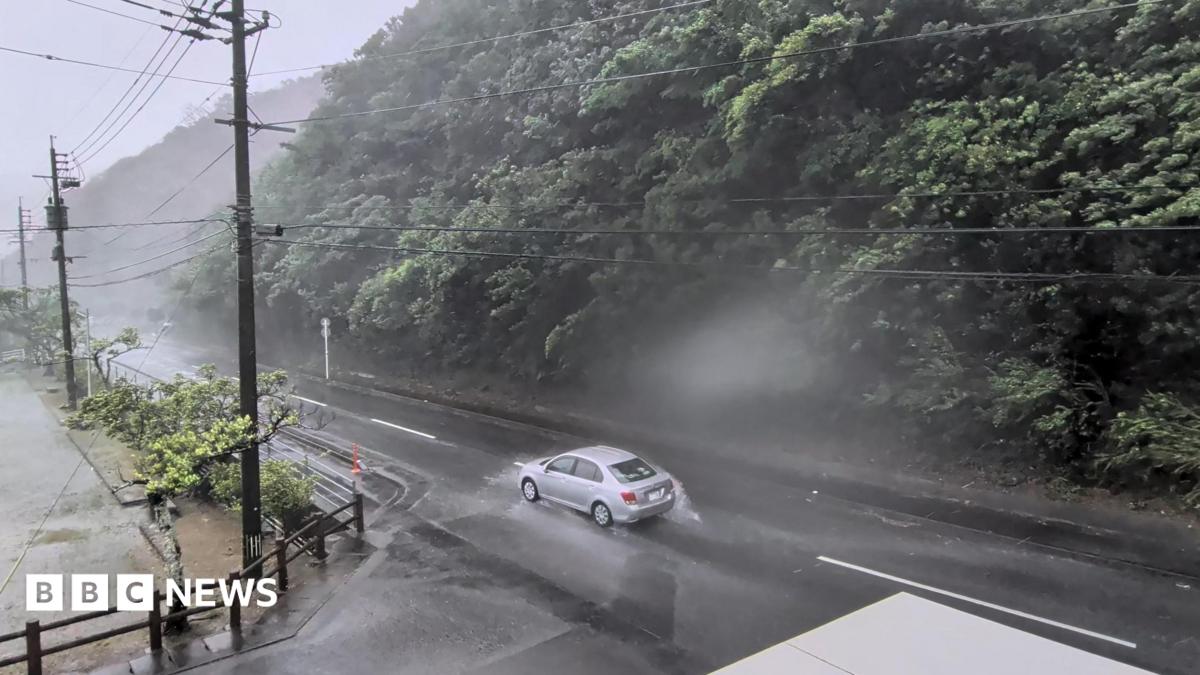
Typhoon Dolphin has left a trail of destruction in its wake, with at least 44,000 buildings without power and five people injured on Japan's Okinawa island. The storm's maximum wind speeds of 162km/h (101mph) have caused widespread disruption, with flights to and from Okinawa's main airport cancelled and trees toppled by strong winds throughout Nago city. The Okinawan prefectural government has reported that three elderly people fell due to the strong winds, while a car was found overturned and leaking oil in a parking lot. The storm's impact on Japan's Okinawa island highlights the importance of disaster preparedness and response in the face of severe weather events.
The Storm's Path and China's Preparations
Typhoon Dolphin is now bearing down on China's eastern coast, with authorities shutting ports and schools ahead of its arrival. The storm is expected to make landfall late on Sunday or early on Monday, with the Japan Meteorological Agency warning of high waves, storm surges, and lightning strikes. China's Zhejiang province has raised its coastal typhoon alert to its highest level, with port and ferry services halted in the province. The storm's landfall on China's eastern coast raises concerns about the potential for damage and disruption in a densely populated region.
The Role of El Niño in Typhoon Formation
This year is a strong El Niño year, which experts say means typhoons can grow to be more intense. In an average year of 25 cyclones reaching tropical storm strength in the region, around three usually make landfall in Japan, according to the country's meteorological agency. Some of these will be strong enough to be classified as typhoons – as was the case with Dolphin. A typhoon is the term used for storms that form in the north-west Pacific, whereas a hurricane is the term used for storms that form in the Atlantic or eastern Pacific.
Key points
- Typhoon Dolphin has caused significant damage and disruption in Japan's Okinawa island.
- The storm is now bearing down on China's eastern coast, with authorities shutting ports and schools ahead of its arrival.
- The storm's maximum wind speeds of 162km/h (101mph) have caused widespread disruption, with flights to and from Okinawa's main airport cancelled.
- China's Zhejiang province has raised its coastal typhoon alert to its highest level, with port and ferry services halted in the province.
If Typhoon Dolphin passes over China without causing too much damage, it could be a relief for the country. The storm's impact on Japan's Okinawa island has already been significant, but if China can prepare well, the damage might be minimized. Additionally, the storm's passage could bring much-needed rain to the region, helping to alleviate drought conditions.
However, the storm's landfall on China's eastern coast also raises concerns about the potential for damage and disruption in a densely populated region. The high winds and storm surges could cause significant damage to buildings and infrastructure, and the lightning strikes could pose a threat to people's safety. Furthermore, the storm's impact on China's economy and daily life could be substantial, with ports and schools closed for an extended period.
Market signals
- Gold Escalation drives safe-haven demand for gold, per the article's framing of investor reaction.
AI-generated analysis of potential market relevance. Not financial advice.