Typhoon Narra: record flood waters submerge homes and force mass evacuations in China
Typhoon Narra has triggered widespread flooding in southern China, forcing mass evacuations and submerging homes. Authorities have relocated over 54,000 people in the Guangxi region, with heavy rain expected to persist across parts of Vietnam and southern China.
Intelligence analysis by Llama
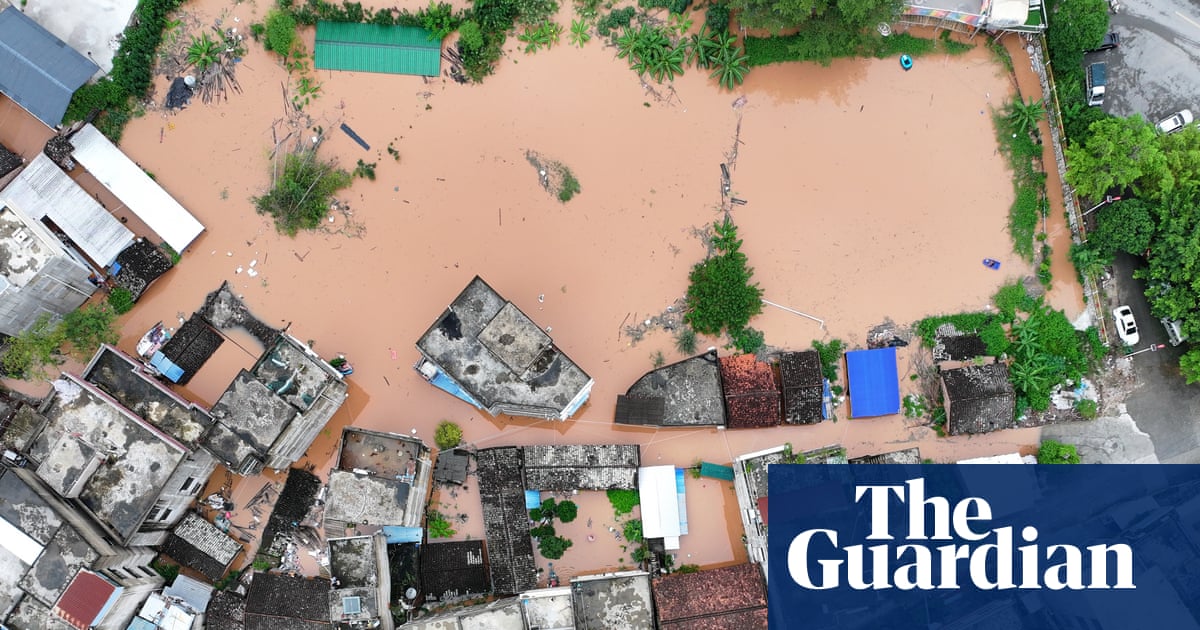
Typhoon Narra has caused record flood waters to submerge homes and force mass evacuations in southern China. The storm has also brought heavy rain to parts of Vietnam and southern China, with authorities relocating over 54,000 people in the Guangxi region.
Imagine a big storm that brings a lot of rain and causes flooding in a big area. That's what happened with Typhoon Narra in southern China. The storm made landfall and caused a lot of damage, with many people having to evacuate their homes. It's like a big flood that happened because of the storm.
Analysis
Typhoon Narra's Impact on Southern China
Typhoon Narra has brought record flood waters to southern China, forcing mass evacuations and submerging homes. The storm made landfall in the Guangxi region on Tuesday evening, dumping heavy rain on the area and causing widespread flooding. Authorities have relocated over 54,000 people in the region, with many more expected to be displaced as the storm continues to bring heavy rain to the area.
The flooding caused by Typhoon Narra has highlighted the vulnerability of communities in southern China to extreme weather events. The region's infrastructure and economy are particularly susceptible to damage from heavy rain and flooding, and the storm's impact will be significant. The Chinese government has been working to prepare for the storm, with emergency responders and relief teams on standby to assist those affected.
The Role of Climate Change in Typhoon Narra
Typhoon Narra is just the latest example of the impact of climate change on extreme weather events. Rising global temperatures are leading to more frequent and intense storms, and the consequences are being felt around the world. In southern China, the combination of heavy rain and flooding has caused widespread damage and displacement, and it serves as a reminder of the need for effective disaster preparedness and response measures.
The Humanitarian Response to Typhoon Narra
The humanitarian response to Typhoon Narra has been significant, with emergency responders and relief teams working to assist those affected by the storm. The Chinese government has been working to provide aid and support to those displaced by the storm, and international organizations have also been providing assistance. The response to Typhoon Narra highlights the importance of effective disaster preparedness and response measures, and the need for continued support for those affected by extreme weather events.
Key points
- Typhoon Narra has caused record flood waters to submerge homes and force mass evacuations in southern China.
- The storm has brought heavy rain to parts of Vietnam and southern China, with authorities relocating over 54,000 people in the Guangxi region.
- The flooding caused by Typhoon Narra highlights the vulnerability of communities in southern China to extreme weather events.
- The Chinese government has been working to prepare for the storm, with emergency responders and relief teams on standby to assist those affected.
- The humanitarian response to Typhoon Narra has been significant, with emergency responders and relief teams working to assist those affected by the storm.
If Typhoon Narra's impact is mitigated, the region's infrastructure and economy may be able to recover quickly. The Chinese government's emergency response efforts and international aid may help to alleviate the suffering of those affected by the storm.
The long-term impact of Typhoon Narra on southern China's infrastructure and economy may be significant, with the region potentially taking years to recover. The storm's effects on the environment and human health may also be long-lasting.