Uber aims for 1 million daily drone deliveries with Zipline partnership
Uber has partnered with drone operator Zipline to scale Uber Eats deliveries by air, targeting one million daily drone deliveries by the end of 2029.
Intelligence analysis by Llama
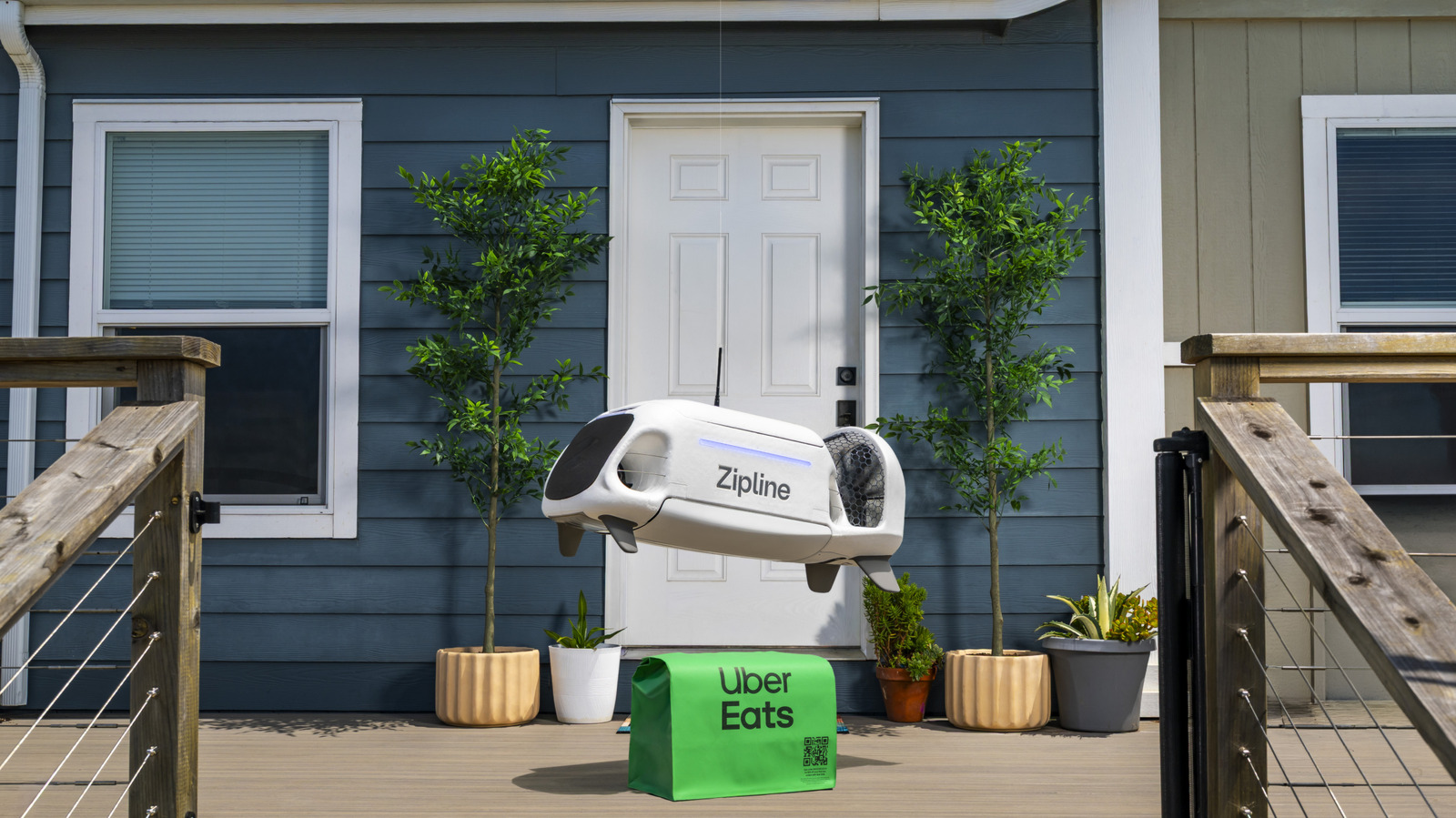
Uber is making a strategic investment in Zipline and plans to launch drone-powered Uber Eats orders later this year, starting in Pea Ridge, Arkansas and Dallas-Fort Worth before expanding to dozens of cities.
Imagine ordering food and having a little flying robot bring it to your house instead of a person in a car. Uber is teaming up with a company called Zipline that already flies drones, and they want to do this one million times every day by 2029. It is like having a sky-delivery service for your lunch.
Analysis
One million deliveries a day by the end of 2029
Uber's stated target of completing one million drone deliveries daily by the end of 2029 is aggressive even by the standards of an industry that has spent the last decade promising aerial delivery at scale. To put the number in perspective, Zipline itself has completed roughly 2.7 million deliveries in its entire operating history, meaning Uber's daily goal would equal about 37 percent of that lifetime total in a single 24-hour window. The company is also choosing to anchor the announcement to a specific calendar year, which suggests drone delivery is being treated as a core logistics layer rather than a publicity-friendly pilot. Whether Uber hits the figure exactly is less important than the directional signal: management is publicly committing capital and reputation to aerial fulfillment as a long-term business, not a marketing exercise.
Zipline's 2.7 million-delivery operating record
The most underappreciated element of the deal is what Zipline actually brings to the table. The company has logged more than 2.7 million deliveries spanning healthcare products, food, and retail, and has already built integrations with Walmart and Chipotle. That matters because the hardest part of drone delivery is rarely the aircraft; it is the unglamorous operational backbone, including airspace coordination, weather contingencies, ground handling, and customer support when a payload lands somewhere unexpected. By leaning on Zipline, Uber Eats effectively inherits a system that has already been pressure-tested in real conditions, including medical logistics where failure is not an option. The strategic investment Uber made in Zipline, the size of which was not disclosed, is a signal that the ride-hailing company wants more than a vendor relationship; it wants alignment on the next phase of scale.
Going head-to-head with DoorDash and Wing
The competitive stakes are real. DoorDash and Wing have been operating their drone delivery partnership since 2022 and recently expanded into metro Atlanta, which gives them a multi-year head start in customer acquisition and route data. Uber's counter-move is volume and breadth: rather than city-by-city rollouts, the company is pairing Zipline's existing US markets, including Pea Ridge, Arkansas and the Dallas-Fort Worth metro, with a stated plan to reach dozens of additional cities. The drone push is also part of a broader autonomous strategy that includes Uber's 2025 partnership with Flytrex for Uber Eats and robotaxi work with Lucid and Momenta. If Uber can credibly execute on the 2029 target, the platform becomes a coordinating layer across multiple modes of autonomous transport, which is a very different business from the ride-hailing app it started as.
Key points
- Uber is partnering with Zipline and has made an undisclosed strategic investment in the company.
- The two companies are targeting one million drone deliveries per day by the end of 2029.
- First Uber Eats drone deliveries will start later this year in Pea Ridge, Arkansas and the Dallas-Fort Worth metro, then expand to dozens of cities.
- Zipline has completed more than 2.7 million deliveries to date across healthcare, food, and retail.
- The move puts Uber in direct competition with DoorDash and Wing, which have been running their own drone partnership since 2022.
If the 2029 target is even partially achieved, Uber Eats could leapfrog traditional road-based delivery on speed and per-order cost in suburban and exurban markets where road congestion is worst. Zipline's existing healthcare and retail relationships also open a credible path beyond food into medical supplies and convenience retail, multiplying the addressable use cases for the same fleet.
Drone delivery has repeatedly run into FAA limits, local noise ordinances, and public skepticism in dense US markets, and the 2029 target assumes those friction points are resolved faster than regulators are currently moving. Zipline is also competing simultaneously with Amazon Prime Air, Wing, and Flytrex, which means customer acquisition costs and pricing pressure could erode the unit economics Uber is betting on.
Market signals
- UBER The Zipline partnership and 2029 volume target position Uber as a platform for multiple autonomous delivery modes, but no market reaction is reported in the article.
AI-generated analysis of potential market relevance. Not financial advice.


