Uganda opposition leader refuses court-appointed lawyers at treason trial
Ugandan opposition leader Kizza Besigye has rejected court-appointed lawyers for his treason trial, stating he has no confidence in them after his chosen legal team was arrested or barred from the country. Besigye, a long-time rival of President Museveni, claims his right…
Intelligence analysis by Gemini 2.5 Flash
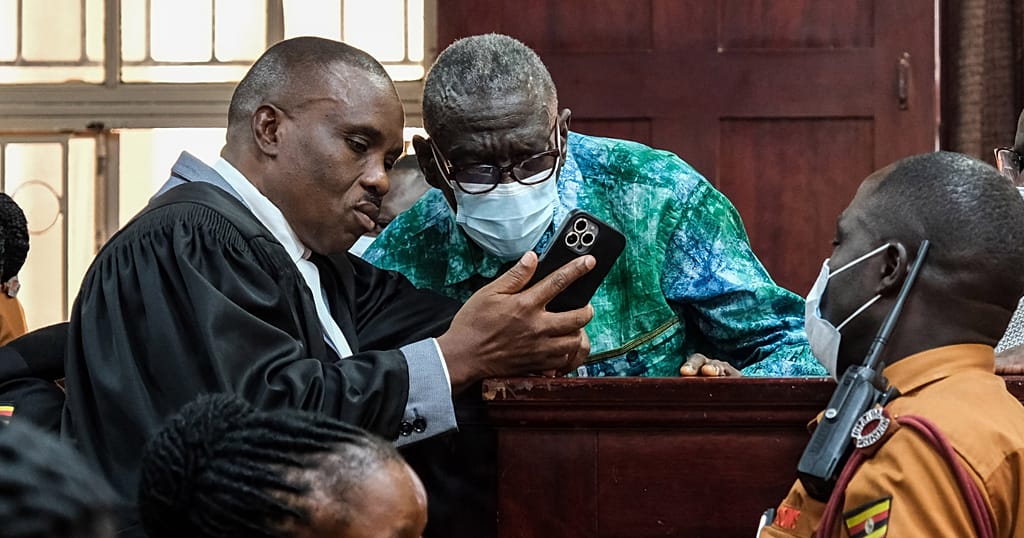
Kizza Besigye, a prominent Ugandan opposition figure, is on trial for treason but has refused to accept state-appointed legal representation. This refusal stems from the alleged abduction, jailing, or barring of his preferred lawyers, highlighting concerns about the fairness of the judicial process and broader political repression under President Museveni's government, which is increa…
Imagine a famous opposition leader in Uganda, Kizza Besigye, is on trial for a serious crime called treason. But his usual lawyers, who he trusts, have either been put in jail or stopped from coming into the country. So, the court wants him to pick new lawyers from a list they give him, but he says no, because he doesn't think it will be fair without his own team. It's like being forced to play a game with a referee who is on the other team's side.
Analysis
The Erosion of Legal Representation
Kizza Besigye's refusal to accept court-appointed lawyers underscores a critical challenge to the right to a fair trial in Uganda. His decision is a direct response to the alleged targeting of his legal team, with his main lawyer, Erias Lukwago, reportedly seized by the army and jailed, and another, Martha Karua, barred from entering the country. This systematic removal of his chosen advocates raises serious questions about the state's commitment to due process and the independence of the judiciary.
The court's insistence that Besigye choose from a list of state-approved lawyers, despite these circumstances, further exacerbates concerns. Human rights lawyer Eron Kiiza articulated this sentiment, stating that Besigye's "chosen lawyers have been deported, abducted and terrorised," transforming the court into "an instrument of the very power it exists to restrain." This situation suggests a deliberate effort to control the legal narrative and limit Besigye's ability to mount an effective defense.
A Pattern of Political Repression
Besigye's treason trial is not an isolated incident but rather indicative of a broader pattern of escalating political repression in Uganda. Recent months have seen the army actively involved in arresting opposition figures and lawyers, alongside the closure of a major media group. This crackdown points to a concerted effort by the government to silence dissent and consolidate power, particularly following President Museveni's seventh election victory.
The political landscape is further complicated by the increasing influence of President Museveni's son, General Muhoozi Kainerugaba, who heads the army and is exerting growing control. This shift in power dynamics, coupled with the historical rivalry between Besigye and Museveni dating back to their insurgent days, frames the current trial within a long-standing struggle for political dominance. Besigye's assertion that "this trial won't be fair" and that "Our rights have been abused and laws are not followed" reflects a deep-seated distrust in the state's institutions.
Judicial Independence Under Scrutiny
The journey of Besigye's case from a court martial to a civilian court, following a Supreme Court ruling against trying civilians in military courts, initially offered a glimmer of hope for adherence to constitutional principles. However, the subsequent delays in the civilian trial, with the state only presenting evidence in June just as Besigye was losing access to his lawyers, undermine this progress. These procedural irregularities suggest a manipulation of the legal timeline to disadvantage the accused.
Furthermore, Besigye's claims of being illegally denied bail and medical treatment add another layer to the concerns regarding judicial independence and human rights. The confluence of targeted legal representation, broader political repression, and procedural delays paints a grim picture of the rule of law in Uganda. The international community will likely view this trial as a litmus test for the country's commitment to democratic governance and fundamental freedoms.
Key points
- Ugandan opposition leader Kizza Besigye refused court-appointed lawyers for his treason trial after his chosen legal team was arrested or barred.
- His main lawyer was jailed by the army, and another lead lawyer was denied entry into Uganda.
- Besigye, a long-time rival of President Museveni, claims his rights are being abused and the trial will not be fair.
- The incident highlights mounting political repression in Uganda, with the army targeting opposition figures and lawyers.
- The case was adjourned for two weeks, with Besigye also alleging illegal denial of bail and medical treatment.
If the current trajectory continues, Besigye's trial could set a dangerous precedent for the suppression of political dissent in Uganda, further eroding judicial independence and human rights. This could lead to increased instability and international condemnation, as the government appears to be consolidating power through authoritarian means.


