UK begins first human trial of Bundibugyo Ebola vaccine
The University of Oxford in the UK has launched the first human trial of a vaccine against Bundibugyo ebolavirus. The early-stage trial will evaluate the safety and immune response of the ChAdOx1 BDBV vaccine in 50 healthy adults.
Intelligence analysis by Llama
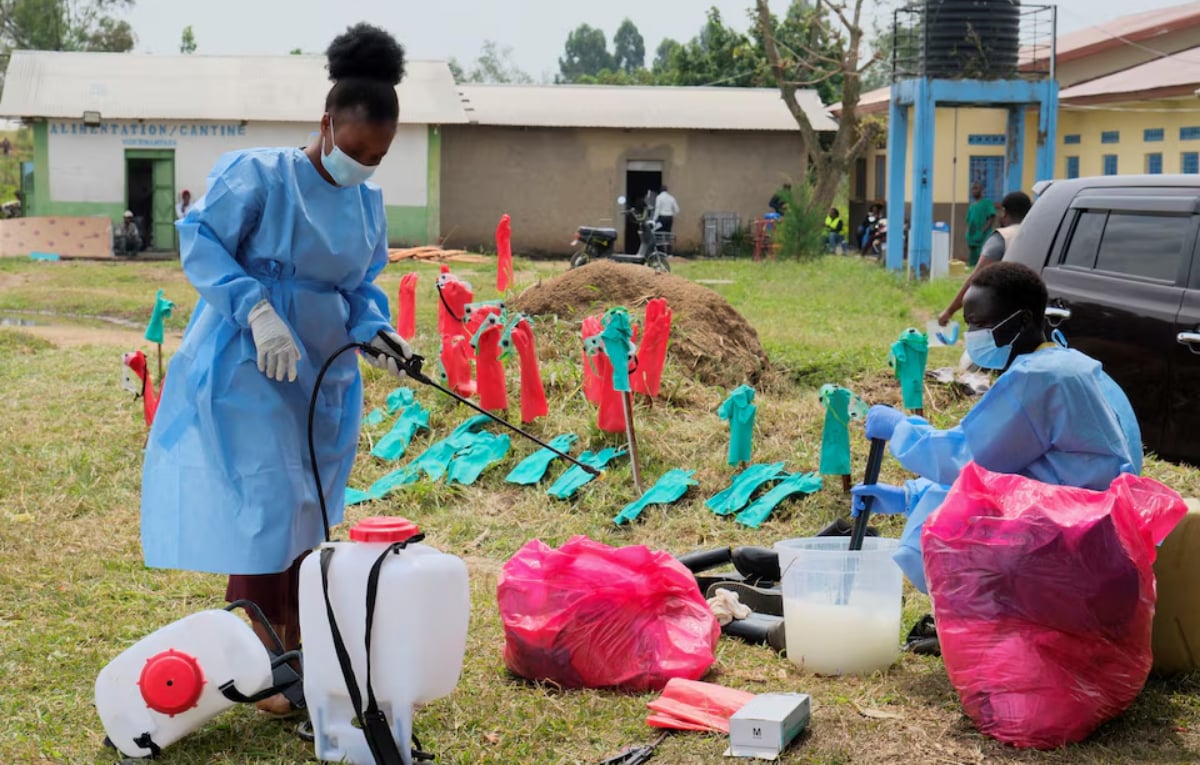
The University of Oxford has launched the first human trial of a vaccine against Bundibugyo ebolavirus. The trial will evaluate the safety and immune response of the ChAdOx1 BDBV vaccine in 50 healthy adults.
Imagine you have a special medicine that can help stop a bad virus from spreading. This medicine is called a vaccine. Scientists at the University of Oxford are testing a new vaccine to see if it can help stop the Bundibugyo ebolavirus from spreading. They are giving the vaccine to healthy adults to see if it works and if it's safe.
Analysis
A $60B Vote of Confidence
The University of Oxford's decision to launch the first human trial of a vaccine against Bundibugyo ebolavirus is a significant development in the fight against the ongoing outbreak in the Democratic Republic of Congo and Uganda. The early-stage trial will evaluate the safety and immune response of the ChAdOx1 BDBV vaccine in 50 healthy adults, providing valuable insights into the efficacy of the vaccine.
The vaccine was developed by scientists at Oxford's Vaccine Group and Pandemic Sciences Institute using the same viral vector platform as the Oxford/AstraZeneca COVID-19 shot. This platform has proven to be effective in developing vaccines against various diseases, including COVID-19. The use of this platform in developing the ChAdOx1 BDBV vaccine increases the chances of its success.
The Coalition for Epidemic Preparedness Innovations (CEPI) has invested up to $8.6 million in the development of the vaccine. This investment is a testament to the importance of developing vaccines against emerging diseases. CEPI's support will enable the partners to conduct late-stage studies needed to seek emergency-use authorisation or full regulatory approval.
The partners aim to ensure rapid and affordable vaccine supplies for affected countries. This is crucial in containing the outbreak and preventing further spread of the disease. The development of a vaccine against Bundibugyo ebolavirus is a significant step towards achieving this goal.
Why CEPI Matters
CEPI's investment in the development of the ChAdOx1 BDBV vaccine is a significant vote of confidence in the Oxford/AstraZeneca COVID-19 shot. The use of the same viral vector platform in developing the ChAdOx1 BDBV vaccine increases the chances of its success. CEPI's support will enable the partners to conduct late-stage studies needed to seek emergency-use authorisation or full regulatory approval.
The Road Ahead
The success of the early-stage trial will pave the way for late-stage studies. The partners aim to ensure rapid and affordable vaccine supplies for affected countries. This is crucial in containing the outbreak and preventing further spread of the disease. The development of a vaccine against Bundibugyo ebolavirus is a significant step towards achieving this goal.
Key points
- The University of Oxford has launched the first human trial of a vaccine against Bundibugyo ebolavirus.
- The early-stage trial will evaluate the safety and immune response of the ChAdOx1 BDBV vaccine in 50 healthy adults.
- The vaccine was developed by scientists at Oxford's Vaccine Group and Pandemic Sciences Institute using the same viral vector platform as the Oxford/AstraZeneca COVID-19 shot.
- CEPI has invested up to $8.6 million in the development of the vaccine.
- The partners aim to ensure rapid and affordable vaccine supplies for affected countries.
If the early-stage trial is successful, the partners aim to ensure rapid and affordable vaccine supplies for affected countries. This will help contain the outbreak and prevent further spread of the disease.
The development of a vaccine against Bundibugyo ebolavirus is a complex process. If the early-stage trial is unsuccessful, it may delay the availability of a vaccine, allowing the disease to spread further.