Ukraine strikes Russian oil refineries as Moscow continues attacks on Ukrainian cities – Europe live
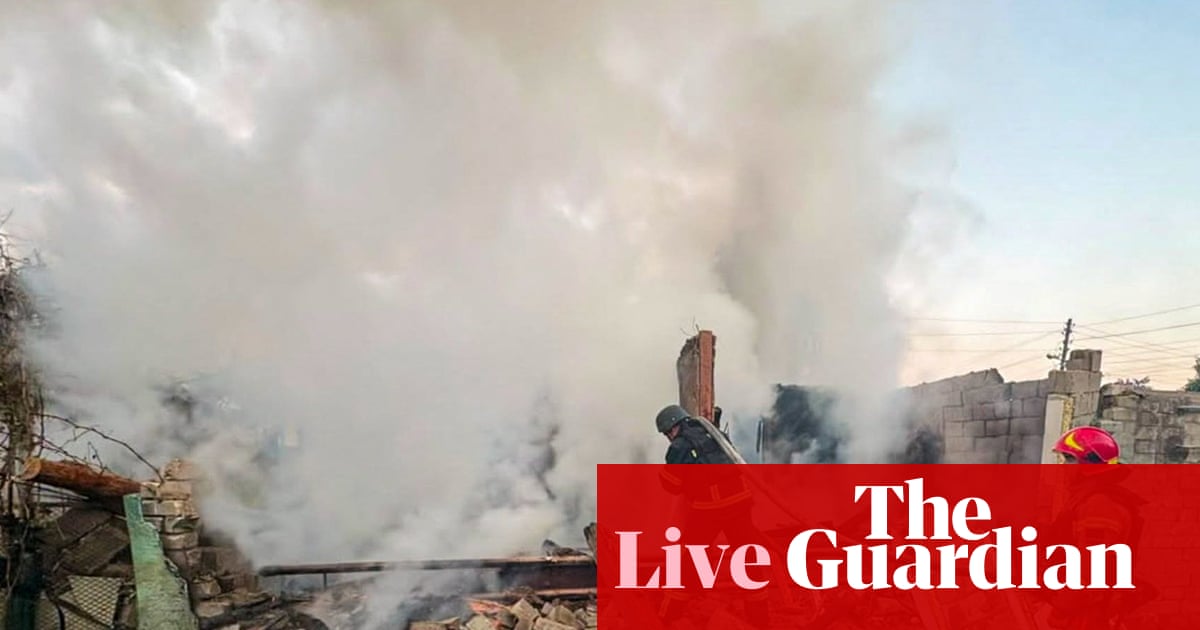
Ukraine has targeted two Russian oil refineries, hitting "Russia's oil revenues," according to President Zelenskyy. This comes amid continued Russian overnight attacks on Ukrainian cities, which killed at least six people.
Intelligence analysis by Gemini 2.5 Flash Lite
Ukraine's military has successfully struck two Russian oil refineries deep within Russian territory, a move President Zelenskyy highlighted as a blow to Russia's war financing. This strategic strike occurs while Russia continues its own attacks on Ukrainian cities, causing casualties. The development also coincides with Ukraine's urgent need for air defense systems and ongoing discuss…
Imagine two kids fighting. One kid is hitting the other, but the second kid is also finding ways to hit the first kid's piggy bank, where they keep their allowance money for toys. Ukraine is hitting Russia's oil money (like a piggy bank) to stop them from buying more weapons to fight. Meanwhile, Ukraine is also asking friends for more shields (air defense) because the other kid is still throwing punches.
Analysis
Ukraine's Deep Strikes on Russian Infrastructure
The Ukrainian military's successful targeting of two oil refineries, the Bashneft-Novoil refinery in Bashkortostan and the Slavneft-YANOS refinery in the Yaroslavl region, represents a significant escalation in Ukraine's strategic offensive capabilities. These strikes, occurring over 1,300 kilometers and nearly 700 kilometers from the front lines respectively, underscore Ukraine's growing reach and its intent to cripple Russia's economic capacity to fund the war. President Zelenskyy explicitly linked these attacks to "Russia's oil revenues, which it uses to finance the war and the killing of Ukrainians," framing them as a direct countermeasure to Moscow's continued aggression.
This development is particularly noteworthy given Ukraine's persistent pleas for enhanced air defense systems. The timing of these refinery strikes, while Ukraine grapples with a shortage of Patriot missiles, suggests a calculated effort to inflict maximum damage on Russia's financial lifelines while simultaneously drawing attention to its own defensive vulnerabilities. The attacks serve as a stark reminder that the conflict is not confined to the eastern and southern fronts but can extend into the heart of Russia's industrial and economic infrastructure.
The Urgent Need for Air Defense
President Zelenskyy's emphasis on hitting Russian refineries comes at a critical juncture for Ukraine's air defense capabilities. The article notes that NATO Secretary General Mark Rutte pledged to "urgently" address Ukraine's concerns about a lack of air defense missiles after speaking with Zelenskyy. This urgency is amplified by reports that US negotiators are expected in Kyiv to discuss potential licensing for Ukraine to manufacture Patriot missiles, a move that could significantly bolster its defensive posture.
Ukraine's proven ability to develop and deploy cost-effective indigenous drone and missile technology, often matching or exceeding Western counterparts in effectiveness, adds another layer to these discussions. The potential for a "cut-price" Patriot missile project, as reported by Reuters, could offer a more accessible solution to Ukraine's critical missile shortage, allowing it to better defend its cities and infrastructure against continued Russian aerial assaults.
Broader European Concerns
Beyond the immediate military developments, the article touches upon broader European security and environmental concerns. Germany's interior minister, Alexander Dobrindt, has hinted at the potential involvement of "foreign powers" in hybrid threats targeting Europe, a statement that, while not explicitly naming Russia, carries significant geopolitical weight in the current climate. This suggests a recognition within European governments of the multifaceted nature of the conflict, extending beyond conventional warfare to include cyber threats, disinformation, and other forms of destabilization.
Furthermore, the report highlights the extreme weather conditions gripping central and southeastern Europe, with several countries on red alert due to record-breaking temperatures. Italy's decision to place all 27 of its major cities on the highest heat alert underscores the growing impact of climate change and the need for coordinated responses to environmental crises, even as geopolitical tensions remain high.
Key points
- Ukraine has successfully struck two Russian oil refineries, targeting Russia's war financing.
- Russia continues its overnight attacks on Ukrainian cities, resulting in casualties.
- Ukraine is urgently seeking more air defense missiles, with discussions underway for potential Patriot missile production.
- Germany has indicated concerns about "foreign powers" engaging in hybrid threats against Europe.
- Extreme heatwaves are affecting several European countries, prompting high alert levels.
Ukraine's successful strikes on Russian oil refineries could significantly degrade Russia's financial capacity to sustain its war effort, potentially leading to a reduction in offensive operations. Increased international support for Ukraine's air defense, including potential domestic production of Patriot missiles, could bolster its ability to protect its cities and infrastructure.
Continued Russian attacks on Ukrainian cities, coupled with a persistent shortage of air defense missiles, could lead to further civilian casualties and destruction of critical infrastructure. Escalation of Ukrainian strikes deep into Russia could provoke more severe retaliatory measures from Moscow, potentially widening the conflict.