Umno seeks early Malaysian election to cement conservative Malay bloc
Malaysia's Umno president Ahmad Zahid Hamidi has called for an immediate general election, signaling the party's ambition to move beyond the current governing alliance. This push is fueled by deepening ties with the opposition Islamist party PAS, aiming to consolidate the…
Intelligence analysis by Gemini 2.5 Flash
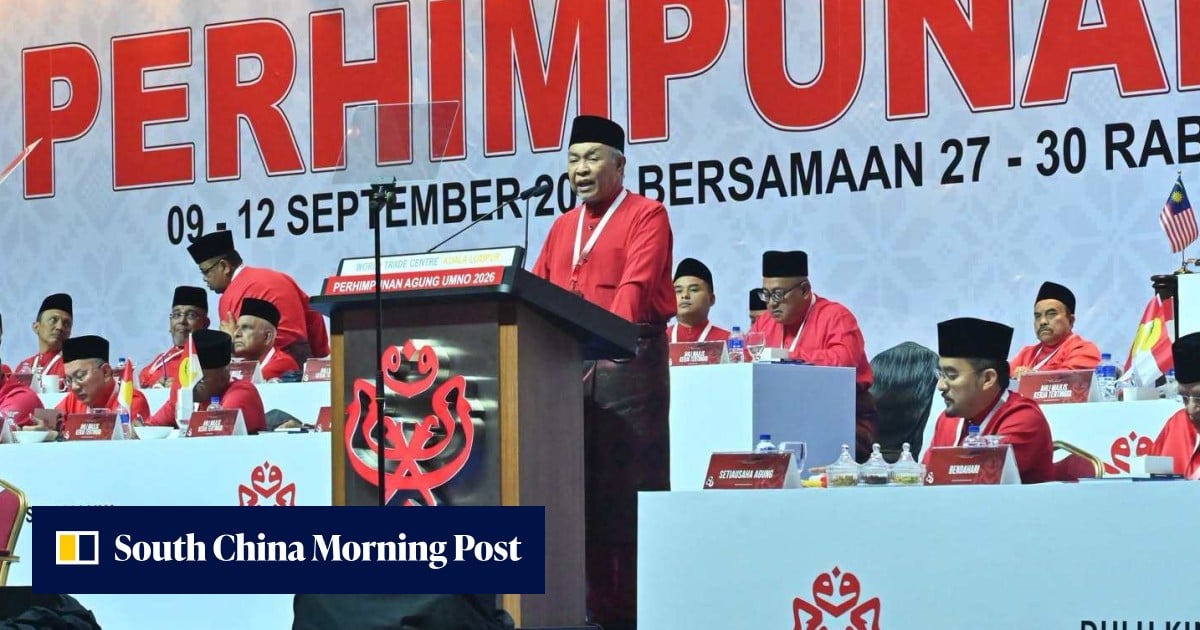
Malaysia's once-dominant Umno party, led by Ahmad Zahid Hamidi, is advocating for an early general election to solidify a conservative Malay political bloc. The party is strengthening its alliance with the opposition Pan-Malaysian Islamic Party (PAS), buoyed by recent state victories, in a bid to consolidate Malay support and challenge the existing government.
Imagine a big club in Malaysia called Umno wants to have a new election right now, even though they don't have to until much later, like when you're in high school. They want to team up with another club, PAS, to get more votes from people who share similar ideas. They hope to win big and lead the country, like wanting to play a game early because you think you have a super strong team now!
Analysis
The call for an immediate general election by Umno president Ahmad Zahid Hamidi marks a significant development in Malaysian politics, indicating a clear strategic pivot for the party. This move suggests Umno is actively seeking to reshape the political landscape, moving away from its current alliance within Anwar Ibrahim's government. The party's confidence appears to stem from recent state-level electoral successes, which it views as a mandate to pursue a more consolidated conservative Malay agenda.
Ahmad Zahid Hamidi
Ahmad Zahid Hamidi's demand for an early election represents a hardening of Umno's stance, contrasting with his earlier, more flexible position on the timing of the polls. As deputy prime minister in the current administration, his public call for an immediate election underscores internal tensions and a potential fracturing of the ruling coalition. Zahid's rhetoric, including warnings against 'betrayal' without naming specific partners, suggests a calculated move to pressure current allies or prepare for a complete political realignment. This assertive leadership aims to rally Umno's base and project strength ahead of a potential electoral contest.
Pan-Malaysian Islamic Party (PAS)
Umno's deepening ties with the opposition Islamist party PAS are central to its strategy of forming a conservative Malay bloc. This alliance is designed to consolidate the Malay vote, which is a crucial demographic in Malaysian elections. By uniting with PAS, Umno aims to create a formidable political force that can appeal to a significant portion of the electorate based on shared conservative and religious values. This collaboration could fundamentally alter the balance of power, potentially marginalizing more centrist or multi-ethnic political parties and leading to a more religiously and ethnically defined political landscape.
2028
The push for an early election, well before the scheduled date of early 2028, highlights Umno's belief that the current political climate is opportune for them to seize power. The party likely perceives a window of opportunity, perhaps due to perceived weaknesses in the current government or a surge in conservative sentiment, that they wish to capitalize on before it wanes. Holding elections sooner rather than later would prevent the current government from consolidating its position further and allow Umno to leverage its recent momentum and the growing alignment with PAS to secure a stronger mandate.
Key points
- Umno president Ahmad Zahid Hamidi called for an immediate general election in Malaysia.
- Umno is deepening its ties with the opposition Islamist party PAS to consolidate the Malay vote.
- The move signals Umno's intent to look beyond the country's current governing alliance.
- Malaysia's next general election is not constitutionally required until early 2028.
- Zahid, who is also deputy prime minister, warned against betrayal among current government partners.
If the conservative Malay bloc successfully consolidates power through an early election, it could lead to a more stable government with a clear mandate, potentially fostering policy consistency and reducing political infighting in Malaysia. This could bring a period of predictable governance, which might be seen as beneficial for long-term planning and investment.
An early election driven by a conservative bloc could exacerbate political polarization within Malaysia, potentially leading to increased ethnic or religious tensions and instability within the nation's diverse society. Such a shift might also lead to policies that are less inclusive, potentially alienating minority groups and creating social friction.