UN chief Guterres presents options for future Lebanon presence
Guterres urged the Security Council to keep a uniformed U.N. presence in Lebanon after UNIFIL's mandate ends, and laid out three force options.
Intelligence analysis by GPT-5.4 Mini
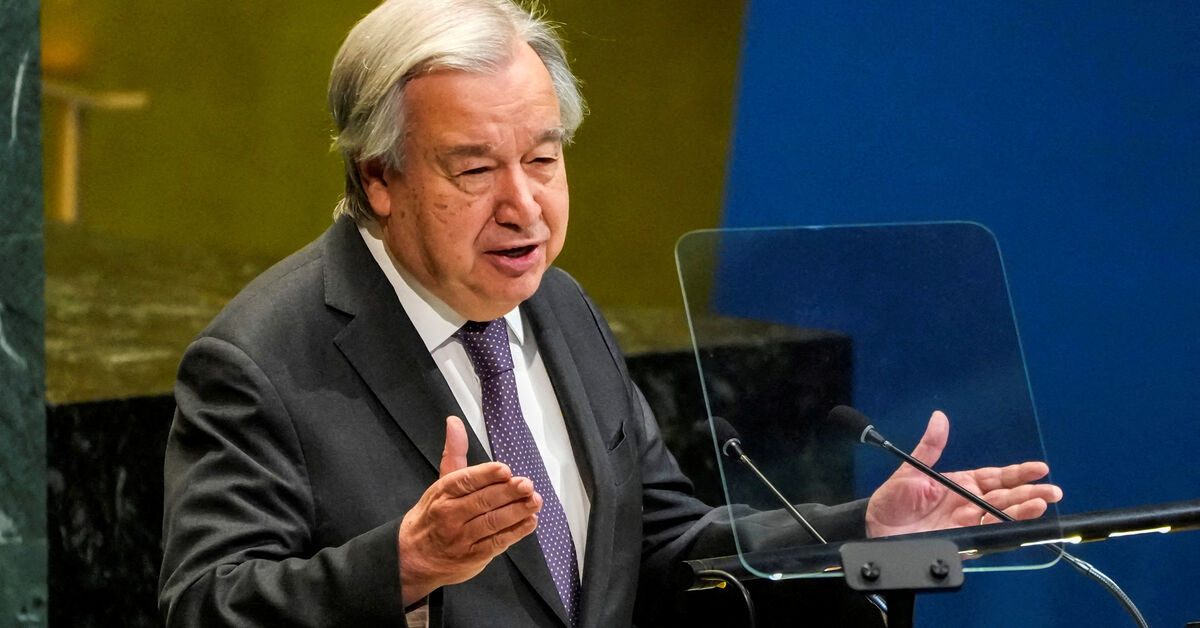
The U.N. secretary-general is warning that Lebanon's situation has worsened and says some form of uniformed U.N. presence will still be needed after UNIFIL expires at year-end. He outlined three scaled options, ranging from a lighter observer mission to a more robust force with greater monitoring and de-escalation powers.
The U.N. is deciding how many helpers to keep in Lebanon after one team leaves. Guterres offered three sizes, like choosing between a big, medium, or small neighborhood watch, to keep an eye on the border and calm trouble.
Analysis
What Guterres proposed
Antonio Guterres wrote to Security Council members arguing that Lebanon’s situation has deteriorated sharply since March and that a uniformed U.N. presence would still be needed after the mandate of the 7,500-strong UNIFIL force expires at the end of the year. He said that presence should support a strengthened U.N. political mission aimed at a long-term solution to the conflict.
He set out three options. The first is the most robust: 350 unarmed military observers backed by armed force-protection troops, including four infantry battalions of 750 troops each and a 700-person reserve. Guterres said this version would have the best ability to observe developments along the Blue Line and up to the Litani River.
The second option is smaller, with 285 observers, two infantry battalions of 750 troops each, and a 450-person reserve. It would focus on the area between the Litani River and the Blue Line and could monitor parts of the line through patrols and static observation posts.
The third option is the lightest, with 215 observers, two light infantry battalions of 450 troops each, and a 350-person quick reaction force. It would monitor the Blue Line and areas several kilometers north of it, but not continuously without technological support. Guterres said it would also lack the ability to place itself between Lebanese and Israeli forces to help de-escalate tensions.
He added that any future mission would need air assets for medical evacuation, plus de-mining and engineering capabilities. Radar, helicopters, drones, and satellite imagery would improve the mission’s monitoring capacity.
Key points
- Guterres wants a continued uniformed U.N. presence in Lebanon after UNIFIL's mandate ends at year-end.
- He told Security Council members that the situation in Lebanon has deteriorated dramatically since March.
- Three options were outlined, ranging from 1,980 to 5,525 uniformed personnel.
- The strongest option would offer the best monitoring along the Blue Line and up to the Litani River.
- The lightest option would have limited ability to monitor violations or physically separate Lebanese and Israeli forces.
If the Security Council backs one of the options, the U.N. could keep watching the border and collecting information on violations. A stronger presence could also help support de-escalation and a longer-term political solution.
A lighter mission may not be able to watch the whole Blue Line all the time or stand between the two sides if tensions rise. If the council cannot agree on enough personnel or equipment, the U.N.'s ability to monitor and deter escalation could be weakened.