UNESCO-listed Alamut reflects Iran’s military architecture, enduring cultural legacy: expert
Iran's Alamut Castle and Related Fortifications were inscribed on UNESCO's World Heritage List, recognizing its military architecture, historical significance, and cultural legacy.
Intelligence analysis by Llama
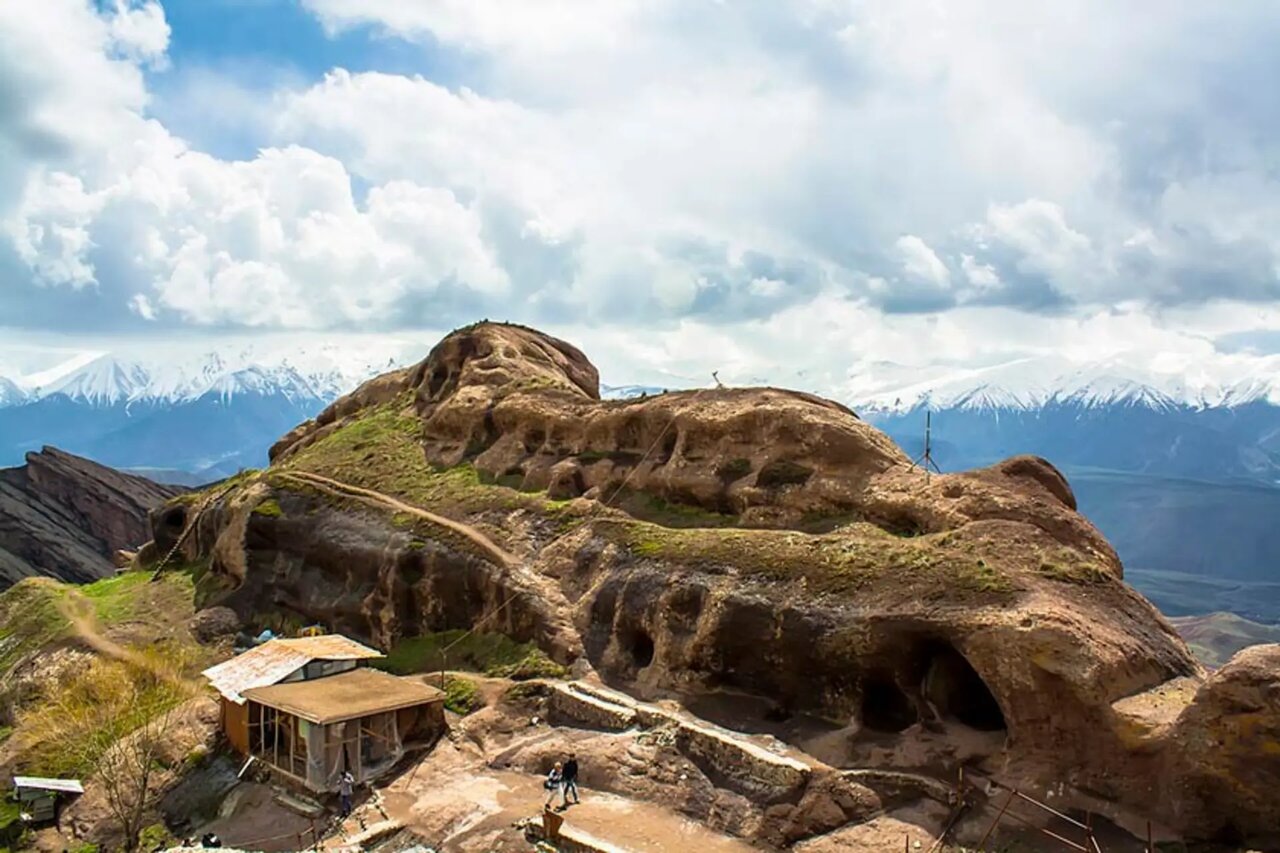
Iran's Alamut Castle, a UNESCO World Heritage site, reflects the country's military architecture and enduring cultural legacy, according to veteran archaeologist Rajab-Ali Labaf-Khaniki.
Alamut Castle is a very old and important place in Iran that shows how people lived and fought a long time ago. It's like a big, strong house with many rooms and walls that helped keep people safe. The castle is also special because it was a place where people who wanted to be free from the government lived and fought for their rights.
Analysis
A Lasting Legacy of Military Architecture and Cultural Significance
Iran's Alamut Castle and Related Fortifications, inscribed on UNESCO's World Heritage List, is a testament to the country's rich cultural and historical heritage. The site's military architecture, historical significance, and cultural legacy have captivated the imagination of people for centuries. As veteran Iranian archaeologist Rajab-Ali Labaf-Khaniki notes, sites admitted to UNESCO's World Heritage List possess values that extend beyond national boundaries and are considered significant for humanity as a whole.
A Symbol of Resistance and Enduring Influence
The Ismailis, centered at the mountain fortress of Alamut, became an influential political and religious movement whose opposition to ruling powers stemmed from a combination of religious beliefs, political aspirations, and patriotic motivations. The castle's historical importance is also linked to resistance against the Abbasid Caliphate and later the Mongol invasions. The Mongol ruler Hulagu Khan entered Iran with two principal objectives: eliminating the Ismaili movement and overthrowing the Abbasid Caliphate in Baghdad, both of which were ultimately achieved.
A Masterpiece of Military and Residential Design
The castle's architecture is an exceptional example of military and residential design. Architecture is the setting for human life, and Alamut should be viewed not only as a political and military stronghold but also as a remarkable architectural achievement. The fortress contains an extensive range of functional spaces, including residential quarters, defensive installations designed to withstand sieges, and elite sections whose scale and structural sophistication rivaled those of royal palaces. The combination of monumental construction, carefully selected building materials, and refined architectural decoration demonstrates the engineering capabilities of medieval Iranian builders.
Key points
- Iran's Alamut Castle and Related Fortifications were inscribed on UNESCO's World Heritage List.
- The site recognizes Iran's military architecture, historical significance, and cultural legacy.
- The Ismailis, centered at the mountain fortress of Alamut, became an influential political and religious movement.
- The castle's architecture is an exceptional example of military and residential design.
The inscription of Alamut Castle on UNESCO's World Heritage List could lead to increased tourism and economic benefits for the local community, promoting cultural exchange and understanding between Iran and the international community.
The potential for increased tourism and economic benefits may also lead to concerns about over-development and the potential loss of the site's cultural and historical integrity.