United States – Africa: The American Senate avoided the worst on AGOA, without dispelling uncertainty
The US Senate has extended the African Growth and Opportunity Act (AGOA) until 2028, a crucial trade preference law for Africa, but a promised overhaul remains pending.
Intelligence analysis by Gemini 2.5 Flash
The American Senate unexpectedly renewed AGOA in early August, preventing a potential trade dispute with a future Donald Trump administration. While the extension offers temporary relief for African nations benefiting from preferential access to the US market, the long-awaited comprehensive reform of the act is still absent, leaving significant uncertainty about its future direction a…
Imagine a special club where African countries can sell their cool stuff like clothes and food to America without paying extra taxes, making it cheaper for everyone. This club is called AGOA. Recently, the grown-ups in America decided to keep this club open until 2028, which is good news! But they still haven't decided how to make the club even better or fairer, so everyone is a bit unsure about what will happen next, especially with some big changes that might come with a new leader.
Analysis
The recent decision by the US Senate to extend the African Growth and Opportunity Act (AGOA) until 2028 marks a critical moment for US-Africa trade relations. This extension, made in the early hours of August 8, was an unexpected move, particularly as it occurred just before the Senate's summer recess. The primary motivation behind this swift action appears to be a strategic effort to preempt potential trade confrontations, especially with the looming possibility of a future administration led by Donald Trump, known for his protectionist stances.
African Growth and Opportunity Act (AGOA)
AGOA serves as the bedrock of commercial ties between Washington and various African nations, granting eligible countries duty-free access to the American market for thousands of products. This preferential trade arrangement has been instrumental in fostering economic growth and diversification in many African economies, particularly in sectors like textiles and agriculture. The extension until 2028 provides a much-needed period of stability for African exporters and American importers who rely on these trade preferences.
However, the article highlights that while the extension prevents an immediate crisis, it does not resolve the underlying issues surrounding AGOA's future. A comprehensive overhaul of the act, which has been promised for months, is still conspicuously absent. This delay in reform means that the fundamental structure and criteria of AGOA remain unchanged, leaving stakeholders to wonder about its long-term efficacy and adaptability to evolving global trade dynamics. The lack of clarity on future reforms contributes to an environment of uncertainty for businesses and governments alike.
Donald Trump
The Senate's decision to extend AGOA was notably influenced by the desire to avoid a potential showdown with a future Donald Trump administration. Trump's previous presidency was characterized by a willingness to challenge established trade agreements and impose tariffs, creating significant unpredictability in global commerce. By extending AGOA now, senators aimed to insulate this crucial trade framework from potential disruptions or renegotiations that might arise under a new Trump presidency.
This pre-emptive move underscores the political complexities surrounding US trade policy and its implications for international partners. The article implicitly suggests that the current legislative body sought to secure AGOA's continuity before a potentially less favorable political climate could emerge. The memory of Trump's previous trade policies, which included raising tariffs and questioning multilateral agreements, clearly played a role in the urgency of the Senate's decision, even if it only offers a temporary reprieve from deeper policy debates.
Katherine Tai
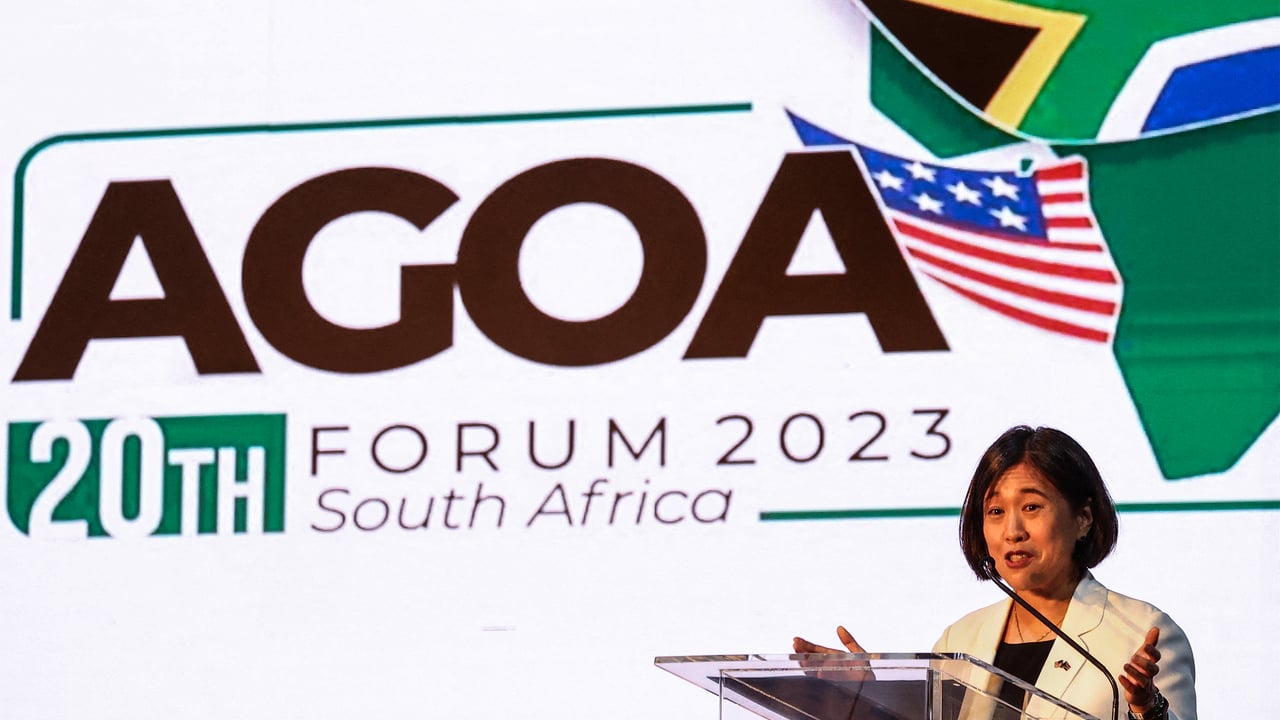
The context of AGOA's extension also brings into focus the role of key figures like Katherine Tai, the US Trade Representative. Tai was notably present at the AGOA forum in Johannesburg in November 2023, where discussions about the act's future and potential reforms were undoubtedly central. Her presence at such a high-profile event signifies the importance the current administration places on US-Africa trade relations and the ongoing dialogue with African partners regarding AGOA's effectiveness and necessary adjustments.
While the article doesn't detail Tai's specific comments on the extension, her involvement in the broader discourse surrounding AGOA suggests a commitment to its principles, even as the path to reform remains unclear. The forum in Johannesburg served as a platform for African leaders to voice their concerns and aspirations regarding the trade agreement, emphasizing the need for a more predictable and mutually beneficial framework. The continued engagement of high-level officials like Tai is crucial for navigating the complexities of trade policy and addressing the uncertainties that persist despite the recent extension.
Key points
- The US Senate extended the African Growth and Opportunity Act (AGOA) until 2028.
- The extension was an unexpected decision made in early August, before the Senate's summer recess.
- The move aims to prevent potential trade conflicts with a future Donald Trump administration.
- A promised comprehensive overhaul of AGOA, a cornerstone of US-Africa trade, is still pending.
- The lack of reform creates uncertainty about the act's future direction and effectiveness.
The extension of AGOA until 2028 provides crucial stability and predictability for African exporters, allowing them to continue benefiting from duty-free access to the US market. This continuity can encourage further investment and economic planning in eligible African countries, supporting job creation and industrial development without immediate fear of trade disruption.
Despite the extension, the lack of a comprehensive overhaul for AGOA leaves significant uncertainty regarding its long-term effectiveness and relevance. Without reforms, the act may fail to adapt to modern trade challenges or fully address the needs of African economies, potentially limiting its impact and leaving it vulnerable to future political shifts or challenges.