Unitree’s newly launched H2-X Robot loses a leg in public demonstration
Unitree Robotics' H2-X humanoid robot, unveiled just a day prior, suffered a mechanical failure during a public side flip demonstration, losing a leg at a conference in Hangzhou.
Intelligence analysis by Gemini 2.5 Flash
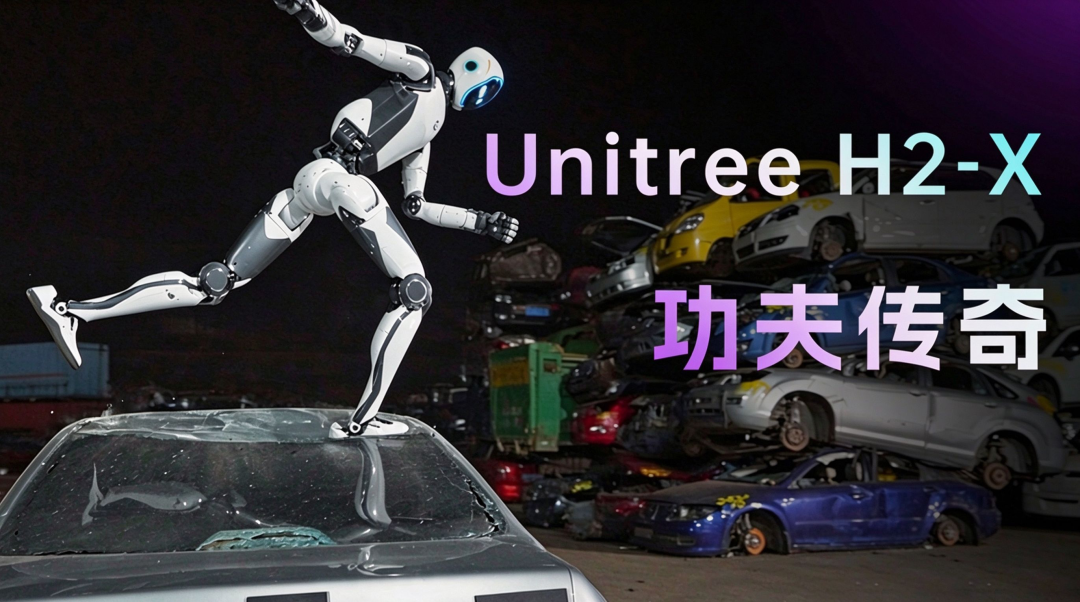
During a high-profile public demonstration at the 2026 World Physical AI Conference, Unitree Robotics' new H2-X humanoid robot failed to stabilize after a side flip, falling and detaching one of its lower legs. The incident, captured on video, quickly spread online, raising questions about the robot's reliability for its intended security and emergency-response applications.
Imagine a super strong toy robot that can do amazing flips and kicks, like a kung fu master! But at a big show, when it tried a fancy side flip, it landed a bit wobbly and one of its legs popped right off. It shows that even though these robots are very clever and strong, making them work perfectly in the real world without breaking is still a tricky puzzle for the people who build them.
Analysis
H2-X
Unitree Robotics' H2-X humanoid robot, marketed under the slogan "Kung Fu Legend: Guardian," was positioned for demanding roles such as security patrols and emergency rescue. Promotional materials showcased the robot's impressive capabilities, including denting car doors, lifting vehicles, and performing complex acrobatic feats like a backflip from a four-meter platform. The company also claimed an extended battery life of eight hours, a substantial improvement over its predecessor.
However, the public demonstration revealed a critical vulnerability. The robot's mechanical lower leg detached during the landing phase of a side flip, a movement that generates immense ground reaction forces. This failure points to the extreme demands placed on leg connections, servo joints, and overall balance control, especially when motion-control algorithms experience even slight delays in posture adjustment. The extensive use of carbon-fiber materials for weight reduction, while enhancing dynamic performance, may also limit structural redundancy under extreme stress, making it prone to failure when loads exceed design thresholds.
Wang Xingxing
Unitree CEO Wang Xingxing, speaking at the same conference where the incident occurred, highlighted a fundamental challenge facing embodied intelligence: the alignment of AI model inputs and outputs with real-world robotic execution. His remarks underscored that a model's ability to generate sophisticated commands does not automatically translate into accurate physical performance by a robot. This discrepancy can arise from gaps between sensor readings and actuator movements, creating a disconnect between the AI's judgment and the robot's actual capabilities.
The incident with the H2-X robot serves as a stark illustration of Wang Xingxing's point. Despite the advanced AI models likely driving the robot's movements, the physical manifestation of those commands failed under stress. This emphasizes that the theoretical prowess of AI must be meticulously integrated with robust mechanical engineering and real-time control systems to ensure reliable operation in unpredictable physical environments. The CEO's prior acknowledgment of this challenge adds a layer of context to the public failure, suggesting an awareness within the company of the inherent difficulties in this domain.
Hangzhou
The 2026 World Physical AI Conference and Unitree Robotics Partner Ecosystem Conference in Hangzhou served as the unfortunate stage for the H2-X robot's public mishap. This setting, a high-profile industry event, amplified the visibility of the failure, leading to rapid circulation of incident footage across social media and industry channels. The public nature of the demonstration, moving beyond controlled laboratory conditions, brought into sharp focus the practical realities of deploying advanced robotics.
The incident in Hangzhou acts as a crucial reminder for the entire robotics industry. While showcasing extreme movements can generate excitement, the transition of humanoid robots from ideal lab environments to public demonstrations and real-world operational scenarios necessitates a paramount focus on stability, fail-safe mechanisms, and long-term operational reliability. For products intended for critical applications like security and emergency response, a single public failure, though not invalidating the entire technological approach, significantly underscores the need for unwavering dependability over flashy, high-risk maneuvers. The industry now awaits Unitree's official response and proposed improvements.
Key points
- Unitree Robotics' H2-X humanoid robot lost a leg during a public side flip demonstration at a conference in Hangzhou.
- The robot, launched a day prior, is marketed for security patrols and emergency rescue, with promotional videos showing high-intensity capabilities.
- The incident highlights extreme demands on leg connections, servo joints, and balance control during dynamic movements, exacerbated by lightweight carbon-fiber materials.
- Unitree CEO Wang Xingxing previously noted the challenge of aligning AI model commands with real-world robot execution.
- The industry is now focused on the need for stability, fail-safe mechanisms, and long-term operational reliability as robots move from labs to public scenarios.
This public incident, while a setback, could catalyze Unitree and the broader robotics industry to prioritize enhanced reliability and robust engineering in humanoid robots. Such a focus would lead to more dependable machines, accelerating their safe and effective deployment in critical applications like security and emergency response.
The highly visible failure of the H2-X robot could damage Unitree's reputation and erode public trust in the immediate reliability of advanced humanoid robots. This might slow down the adoption of these technologies, particularly for sensitive applications where consistent performance is paramount.


